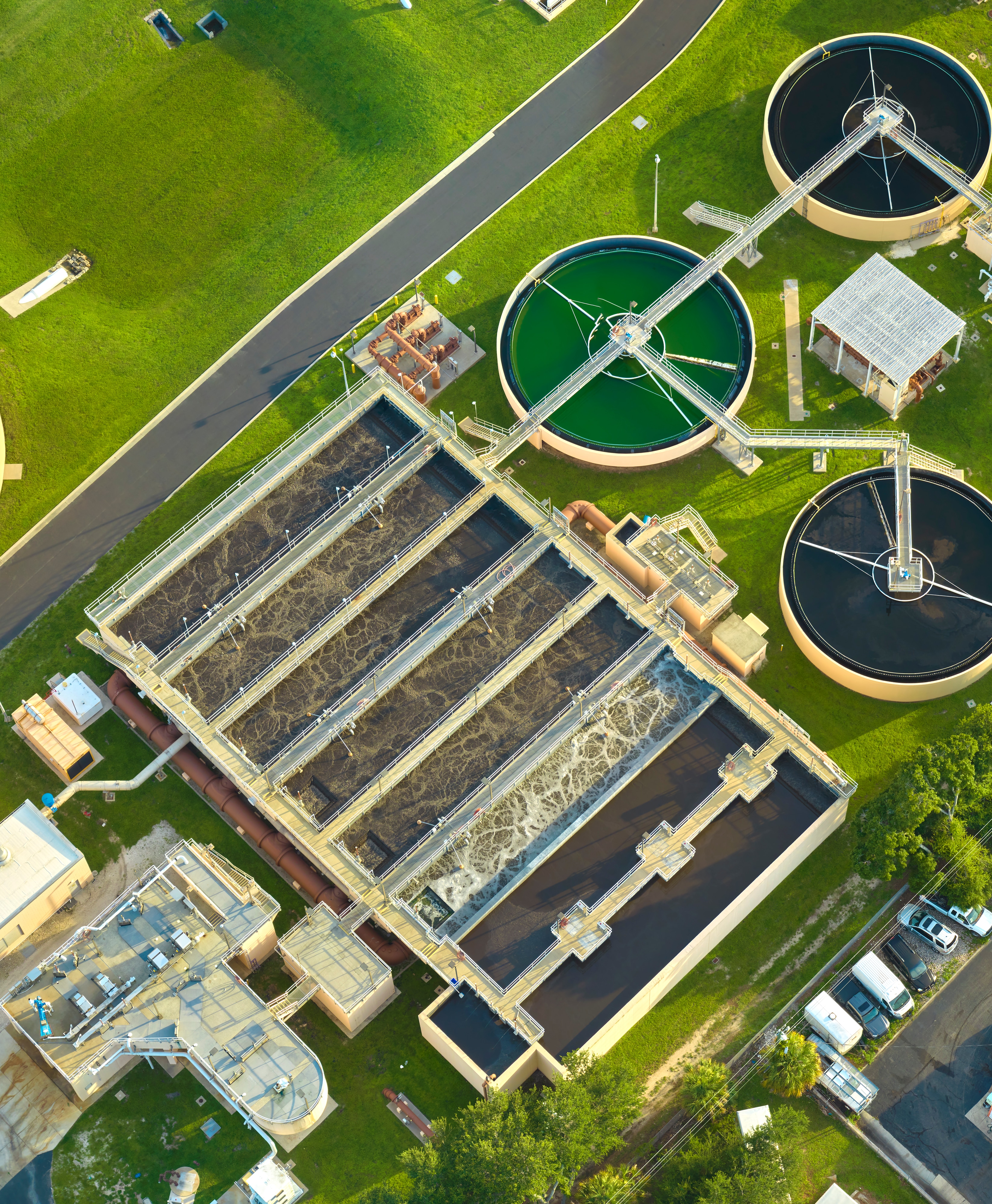
A wastewater facility responsible for delivering water and wastewater services to a medium-sized city and parts of its surrounding area undertook a significant renovation project at one of its treatment centers. Part of this project included the replacement of two aging anaerobic digesters with a single, larger digestion tower.
The new unit was designed with a capacity of 7,500 m³, providing increased volume for sludge processing while supporting more stable and efficient plant operation. In parallel with the mechanical upgrades, the facility also renewed its electrical, instrumentation, and control systems to align with current operational requirements.
Key Instrumentation Upgrade: Universal Signal Conditioners and Transmitters
A key requirement for the renovation project was the implementation of robust and flexible instrumentation capable of supporting multiple functions. Universal signal conditioners and transmitters were specified to consolidate functionality, including:
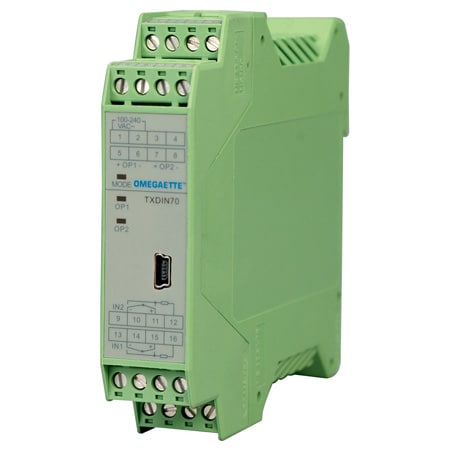
- Monitoring valve position and status inputs
- Supplying power to pressure transmitters
- Supplying power to flow measurement devices
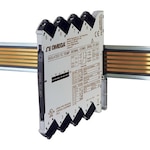
These devices are commonly used in process control panels, sensor replacement projects, and systems that require integration of mixed temperature and process inputs. They also support signal isolation, PLC input scaling, alarm relay functions, and retrofit applications where a single configurable transmitter can replace multiple dedicated devices.
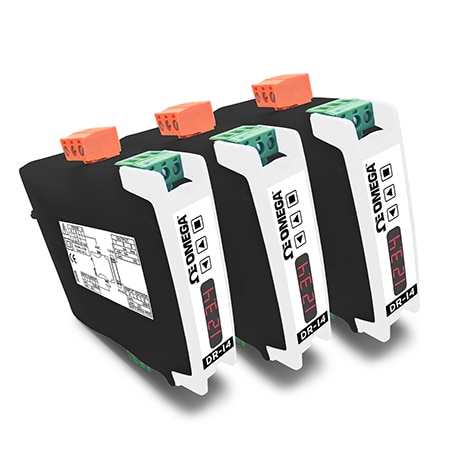
Typical capabilities include:
- Converting RTD, thermocouple, potentiometer, current (mA), and voltage inputs
- Providing isolated process outputs to protect signal integrity
- Supporting configuration through local displays or software tools
- Enabling diagnostics, simulation, calibration, and password protection features
- Integrating into DIN rail–mounted process and control panel designs
In addition to environmental resilience, signal flexibility was a core requirement. The transmitters needed to support both active and passive input signals to ensure compatibility with a mix of legacy instrumentation and newly installed field devices. This capability simplified system integration during the upgrade and reduced the need for additional signal conditioning components.
Overall, the selected instrumentation approach prioritized flexibility, reliability, and system efficiency, aligning with the facility’s broader objective of modernizing its process control infrastructure while maintaining continuity with existing assets.
Innovative Solutions from DwyerOmega
TX12 RTD Head Mount Temperature Transmitter with User Trim
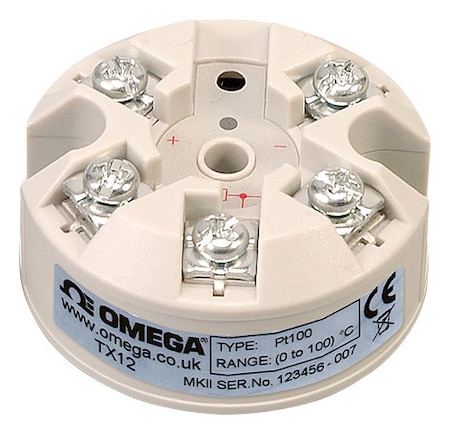
The TX12 RTD Head Mount Temperature Transmitter was selected for its ability to provide stable, field-configurable temperature measurement within a compact, sensor-integrated form factor. Designed for direct connection to standard Pt100 RTD elements, the transmitter converts linearized temperature signals into a reliable 4–20 mA output suitable for integration with existing control systems.
Its two-wire design simplifies installation while supporting user configuration over a wide operating temperature range using an onboard push-button interface. Additional configuration menus allow for zero and span trimming, enabling compensation for sensor deviations and improving overall measurement accuracy. This capability is particularly useful in applications where sensor tolerances or installation conditions may introduce minor offsets.
Advanced internal circuitry supports stable performance across the varying ambient conditions typically encountered in head-mounted installations. A built-in program LED provides continuous visual indication of sensor status during operation and guides the user through configuration steps, reducing setup errors and simplifying commissioning.
Together, these features support dependable temperature measurement, reduced calibration effort, and consistent performance in demanding process environments.
SC4 RTD & Thermocouple Signal Conditioners
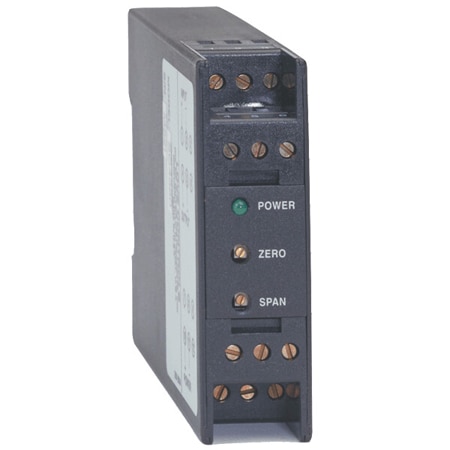
The SC4 RTD & Thermocouple Signal Conditioners were selected for their ability to provide isolated, flexible signal conversion across a range of temperature and process measurement inputs. Designed for integration with RTD and thermocouple sensors, these DIN rail–mountable modules linearize, isolate, and retransmit signals in standard formats, supporting consistent communication between field instruments and control systems.
With isolation ratings up to 1500 VAC RMS, the modules electrically separate input, output, and ground, reducing the risk of ground loop interference and improving signal integrity in panel-mounted installations. Compatibility with industry-standard 35 mm DIN rail simplifies deployment in both new builds and retrofit applications.
Within the series, models such as the SC4380 process signal converter support a wide range of input types and allow field configuration for direct or reverse action, as well as single-ended or bipolar signal handling. Dedicated RTD and thermocouple transmitters offer fixed input ranges with linearized outputs selectable between 4 to 20 mA and 0 to 10 VDC via simple switch settings. Low-voltage variants extend applicability in systems with constrained power requirements.
These capabilities support reliable signal isolation and conversion in control panels, enabling accurate transmission of temperature and process data for boilers and other automated systems while reducing susceptibility to electrical noise and installation complexity.