Deutschland 07056-9398-0 | Internationale Rufnummer ++49 (0) 7056-9398-0 | Willkommen auf unserer neuen Website! Haben Sie einen Fehler oder ein Problem entdeckt? Bitte melden Sie es hier.



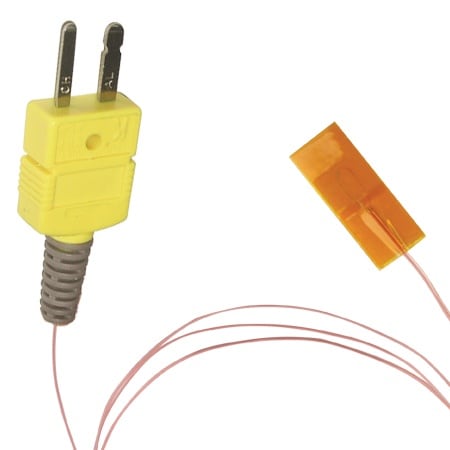
SA3
Selbstklebende Polyimid-Schnellansprechende Oberflächenthermoelemente – Hohe Temperatur
Termocoppie da Superficie Autoadesive in Polimmide ad Alta Velocità di Risposta - Alta Temperatura- Polyimid-Träger
- Selbstklebende Rückseite
- Niedrige Masse im Verbindungsbereich für schnelle Reaktion
- Beständig gegen viele Chemikalien und Öle
SA3
Von
TWD
1,506


Produktübersicht
- Zusätzliche Merkmale 1 Keiner
- Kabeldurchmesser 0.04 in
- Anschlusstemperatur, max. 180 °C
- Anschlusstemperatur, min. -29 °C
- Isolierung PFA
- Isolationswiderstand 100 MΩ
- Isolationswiderstand Hinweis Mindestens 100 MΩ bei 100 Vdc bei Raumtemperatur und Sensor auf der Oberfläche montiert
- Anschlusstyp Nicht geerdet
- Prozesstemperatur, max. 260 °C
- Prozesstemperatur, min. -17 °C
- Sensorhöhe 0.02 in
- Sensorlänge 1 in
- Sensorbreite 0.38 in
- Serien-ID SA3
- Drahtstärke 30 AWG
Queste termocoppie possono essere utilizzate in ambienti esterni e umidi, inclusa la luce solare diretta, con scarso o nullo effetto sulle prestazioni o sulla precisione. Le nostre tecniche di costruzione uniche forniscono una giunzione termocoppia a risposta rapida in un supporto di montaggio sottile e flessibile. Queste termocoppie SA3 sono disponibili in 2 versioni, con cavi solidi #30AWG spelati o con connettore miniaturizzato codificato a colori.
Specifiche
Termocoppia: Codice colore ANSI J/K/T/E o codice colore IEC JI/KI/TI/EI
Precisione: Limiti di errore speciali
Tipo di giunzione: Costruzione sensore non messa a terra
• Base in nastro di poliimmide con adesivo in silicone e foglio di carta distaccabile
• Copertura in nastro di poliimmide
• Cavo 30 AWG isolato e rivestito in PFA
• Connettore in nylon caricato vetro se specificato
Intervallo di temperatura:
Sensore: -17 a 260°C (0 a 500°F)
Connettore: -29 a 180°C (-20 a 356°F)
Resistenza di isolamento: minimo 100 MΩ a 100 Vdc a temperatura ambiente e sensore montato sulla superficie
Specifiche
Termocoppia: Codice colore ANSI J/K/T/E o codice colore IEC JI/KI/TI/EI
Precisione: Limiti di errore speciali
Tipo di giunzione: Costruzione sensore non messa a terra
• Base in nastro di poliimmide con adesivo in silicone e foglio di carta distaccabile
• Copertura in nastro di poliimmide
• Cavo 30 AWG isolato e rivestito in PFA
• Connettore in nylon caricato vetro se specificato
Intervallo di temperatura:
Sensore: -17 a 260°C (0 a 500°F)
Connettore: -29 a 180°C (-20 a 356°F)
Resistenza di isolamento: minimo 100 MΩ a 100 Vdc a temperatura ambiente e sensore montato sulla superficie