Deutschland 07056-9398-0 | Internationale Rufnummer ++49 (0) 7056-9398-0 | Willkommen auf unserer neuen Website! Haben Sie einen Fehler oder ein Problem entdeckt? Bitte melden Sie es hier.



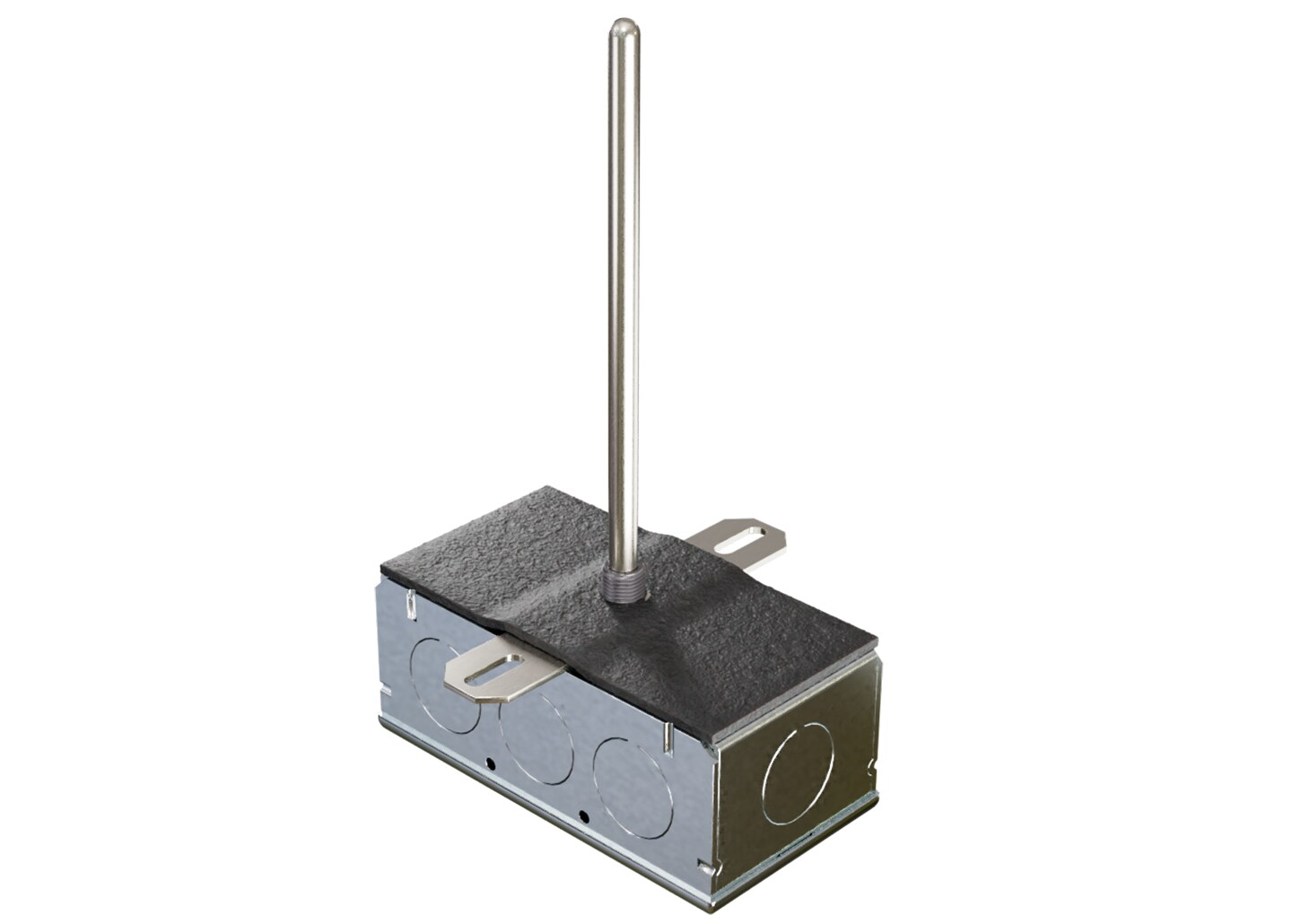
Transmitter-Duct
Kanaltransmitter
- Dachgeräte
- Zufuhr-/Abluft-/Rückluft-/Mischlufttemperaturen
Transmitter-Duct
Von
€
341,55


Produktübersicht
- Genauigkeit ± 0.2 %
- Genauigkeit Detail < Span von 260 °C: +/- 0,2 %, Temp.-Spannen > 500 °F (260 °C): +/- 0,5 %>
- Legierungsmaterial (-) Kupfer
- Legierungsmaterial (+) Kupfer
- Anwendungen Luft- und Klimatechnik, Bauwesen und Zollstandhaltung
- Elektrischer Anschluss Schraubklemme
- Gehäuse-Nennwerte IP10, NEMA Typ 1
- Armatur Polyamid 66 (Hochleistungsnylon)
- Einbaulänge 12 in
- Isolierung PTFE
- Leitungslänge 14 in
- Betriebsfeuchtigkeit 10 bis 90 % rF, nicht kondensierend
- Betriebstemperatur, max. 85 °C
- Betriebstemperatur, min. -40 °C
- Ausgangssignal Spannung
- Sondendurchmesser 0.25 in
- Reaktionszeit 8 sunden nominal
- Serien-ID Transmitter-Duct
- Mantelwerkstoff Edelstahl 304
- Besondere Hinweise true
- Besondere Hinweise Hinweis Erforderlicher Messbereich z.B. (-30 bis 130) oder (40 bis 90)
- Stabilität +/- 0,03 % nach 1000 Stunden bei 300 °C (572 °F)
- Lagertemperatur, max. 85 °C
- Lagertemperatur, min. -40 °C
- Temperaturmessbereich -40 bis 85 °C
- Anzugsmoment 0,37 ft-lb (0,5 Nm) nominal
- Drahtstärke 26 AWG
Supported Applications
The ACI Duct Series is a family of single-point, duct-mounted temperature transmitters built for building automation and HVAC control. Each unit pairs a platinum RTD probe with an integral signal conditioner that delivers a calibrated analog output to a building automation system (BAS) or controller, so duct-air temperature can be read directly by the control loop without a separate signal converter.
The probe is inserted through a 3/8" hole drilled in the duct wall and secured with the supplied enclosure. A foam pad ships attached to every enclosure to seal the mounting surface; on the no-enclosure "DO" option the pad is included but must be installed prior to mounting. The stainless probe and the range of enclosure styles let the same transmitter serve supply, return and mixed-air duct positions across commercial mechanical systems.
Operating Conditions & Performance
The sensing element is a platinum RTD with a positive temperature coefficient (PTC) and a single sensing point, conforming to DIN EN 60751 (IEC 751). The A/TT100 and A/TTM100 build on a 100 Ω nominal element and the A/TT1K and A/TTM1K on a 1 KΩ nominal element, each referenced at 0°C (32°F). Sensor tolerance is Class A, and the sensor operating range spans -40 to 200 °C (-40 to 392 °F) with a nominal response time of 8 Seconds at a 63% step change.
The transmitter is loop powered from +8.5 to 32 VDC (reverse-polarity protected) drawing 25 mA minimum. Maximum load resistance follows the supply: a 250 Ω load needs +13.5 to 32 VDC while a 500 Ω load needs +18.5 to 32 VDC. Output is field-selectable as 4-20 mA (2-Wire loop powered) current or 1-5 VDC or 2-10 VDC (3-Wires) voltage, wired to polarity-sensitive screw terminal blocks accepting 16 AWG to 26 AWG conductors.
Calibrated accuracy is +/- 0.2% for temperature spans under 500°F (260°C) and +/- 0.5% for spans over 500°F (260°C); temperature drift is +/- 0.04%/°F for spans under 100°F (38°C) and +/- 0.02% for spans over 100°F (38°C). The unit operates over an ambient range of -40°F (-40°C) to 185°F (85°C), stores at -40 to 80 °C (-40 to 176 °F), and tolerates 0 to 90% non-condensing humidity. Every transmitter includes Zero and Span adjustments for field calibration and is factory calibrated with NIST-certified equipment.
Configuration Options
The lineup differs first by sensing element: TT100 and matched TTM100 use the 100 Ω element, while TT1K and matched TTM1K use the 1 KΩ element. The matched (TTM) versions are supplied with a defined calibrated span and carry NIST certification points, and the calibrated span may be set anywhere from a minimum of 50°F (28°C) up to a maximum of 500°F (260°C). Matched TTM models cover a range of -45 to 155 °C (-49 to 311 °F).
Output type is a second differentiator: current models provide a 4-20 mA (2-Wire loop powered) signal, while voltage models provide 1-5 VDC or 2-10 VDC (3-Wires). Probe insertion length is selectable at 4", 6", 8", 12" or 18" to suit different duct depths, and each probe uses a 0.250" (6.35mm) 304 Stainless Steel sheath.
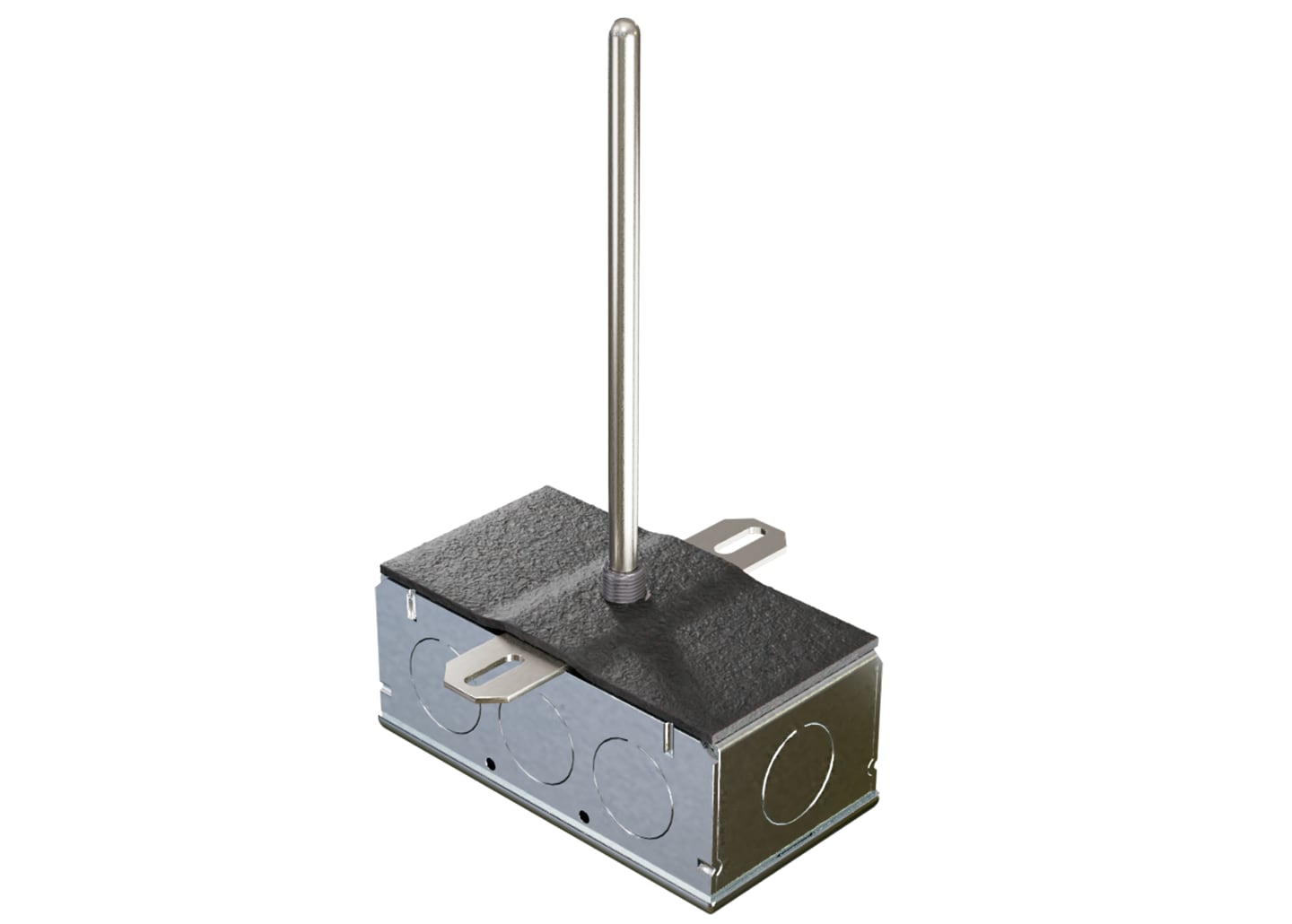
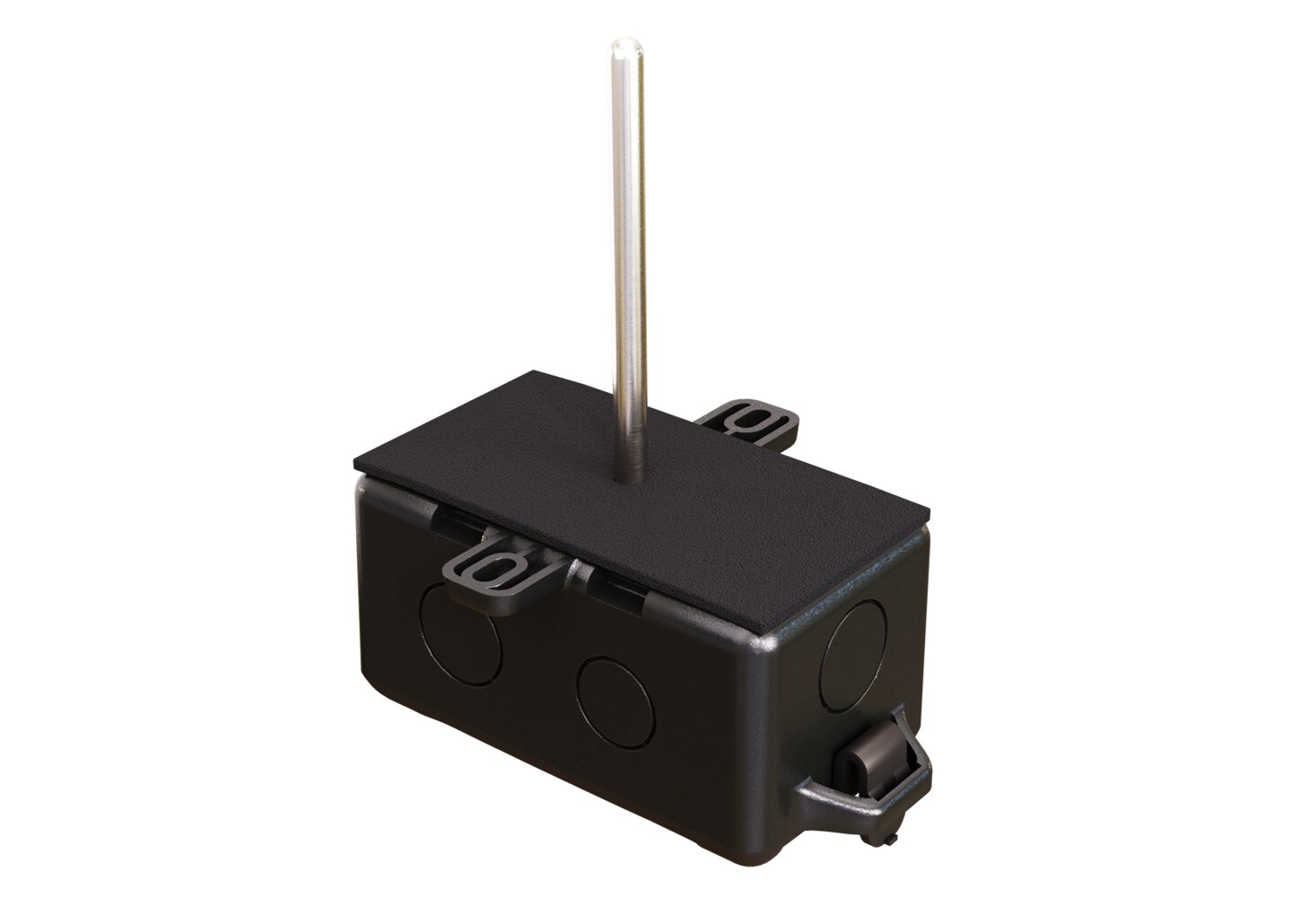
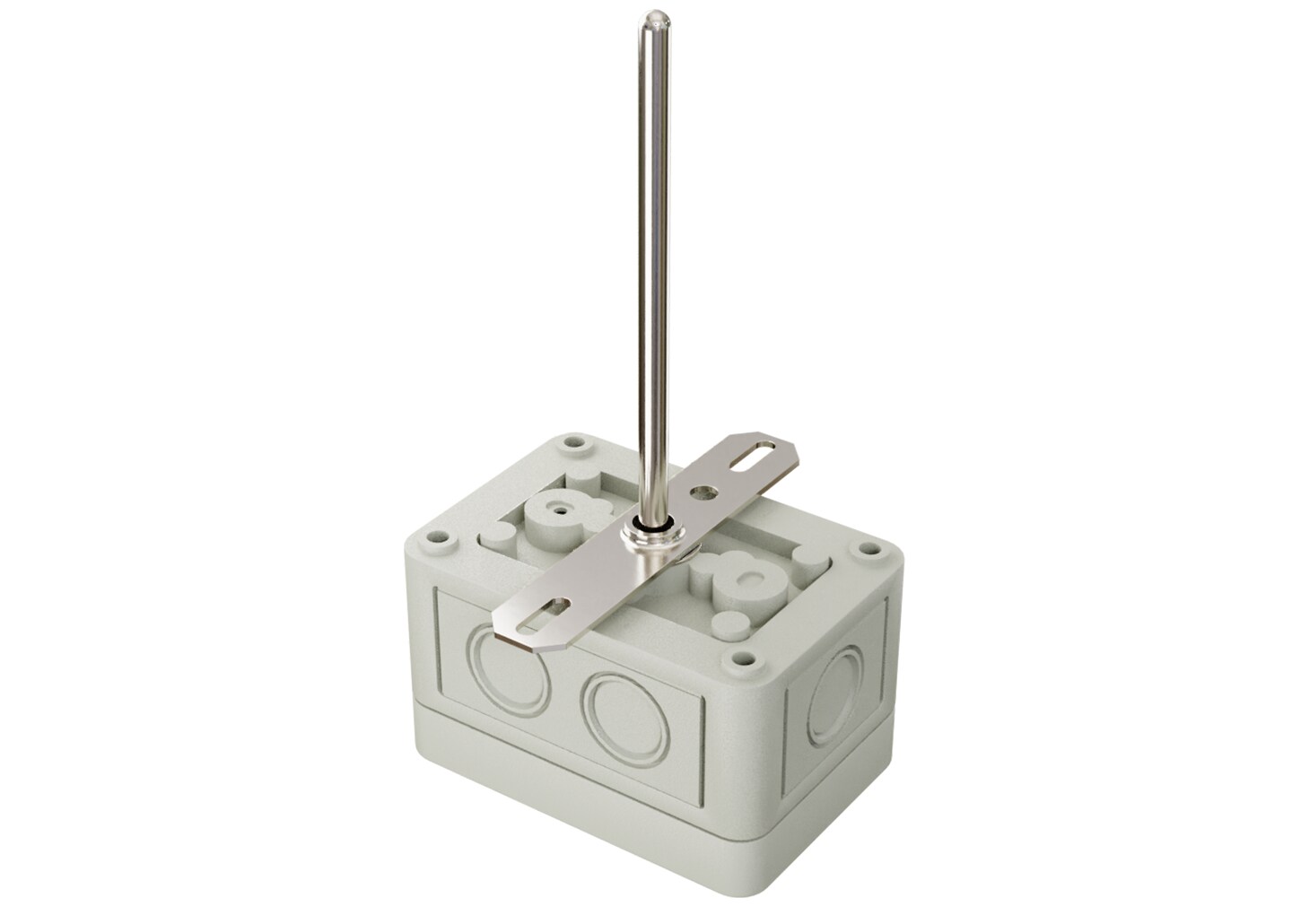
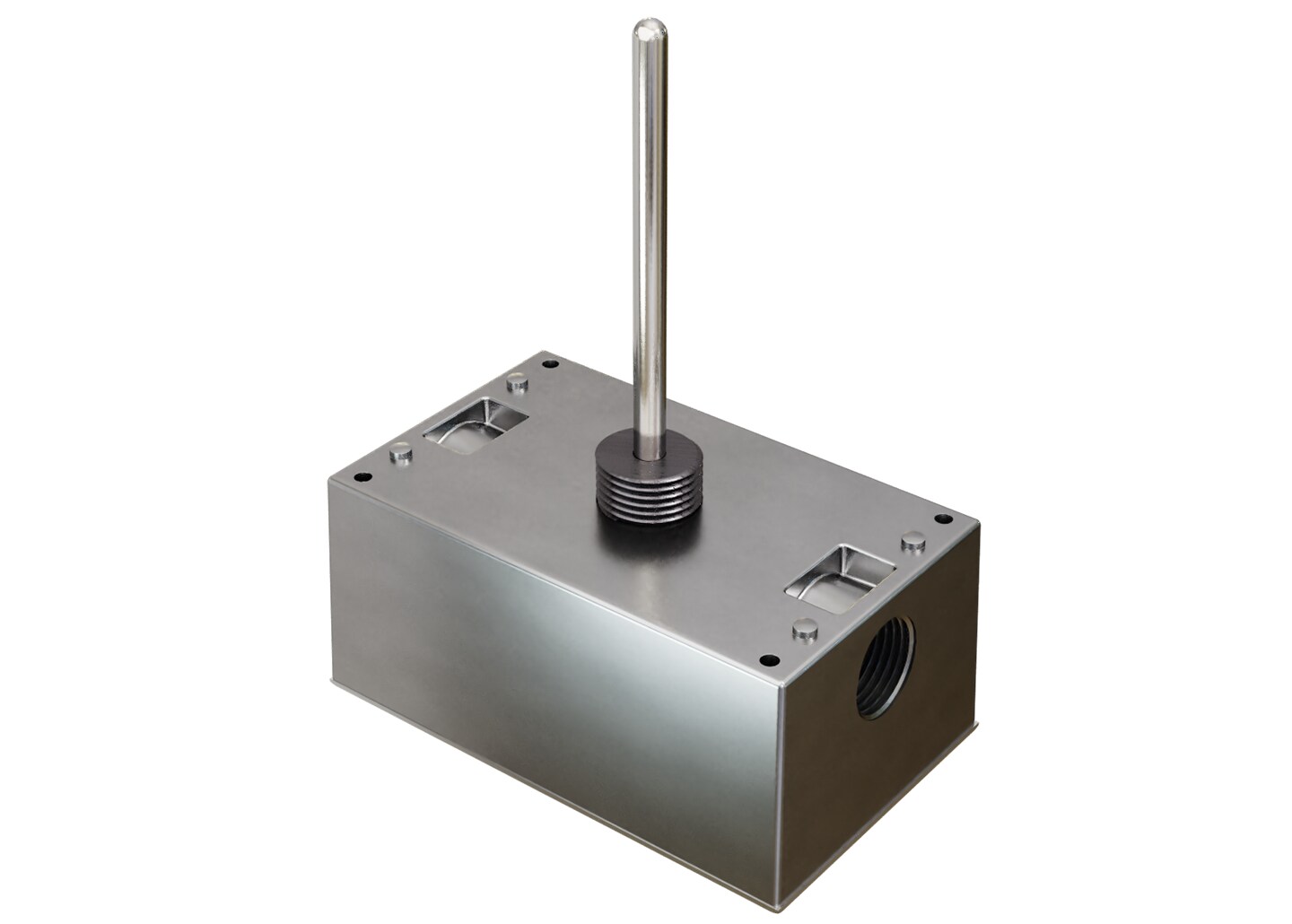
Enclosure choice sets the environmental rating and material. The ABS Plastic -PB housing is UL94-HB plenum rated; the Galvanized Steel -GD is NEMA 1 (IP10) rated for -40 to 121 °C (-40 to 250 °F); the Aluminum bell-box -BB is NEMA 3R (IP 14); and the Polystyrene -4X is UL94-V2, NEMA 4X (IP 66).
Key Product Differences
Part numbers follow the pattern A/xx-D-yy-<ENCLOSURE>, assembled from the sensor series, probe length, output signal and enclosure. The sensor series selects the element and matching: TT100 = 100Ω, TTM100 = Matched 100Ω, TT1K = 1KΩ and TTM1K = Matched 1KΩ.
- Sensor / element: TT100 and TT1K standard elements; TTM100 and TTM1K matched, NIST-certified elements.
- Probe length: 4", 6", 8", 12" and 18" insertion options.
- Output signal: current 4-20 mA (2-Wire loop powered) or voltage 1-5 VDC or 2-10 VDC (3-Wires).
- Enclosure: ABS Plastic (-PB), Galvanized Steel (-GD), Aluminum bell box (-BB) and Polystyrene NEMA 4X (-4X).
Representative catalog part numbers include A/TT100-D-12"-2-GD, A/TT1K-D-18"-4-4X and A/TT100-D-4"-4-BB. Matched TTM100 and TTM1K parts default to a 3 Point NIST certificate; a 5 point certificate can be specified by adding -5PTNIST to the end of any TTM part number.
PDFs & Handbücher