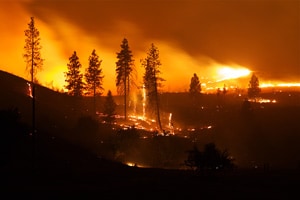
Wildland fire season presents a persistent challenge for air quality management. Smoke from large-scale fires can travel hundreds of miles, introducing fine particulates and gases into areas far beyond the burn zone. As outdoor air quality degrades, guidance often shifts toward staying indoors and limiting exposure.
However, remaining indoors does not inherently ensure safe air conditions. Without proper filtration, monitoring, and ventilation control, indoor environments can accumulate harmful contaminants. For facilities with high occupancy or critical operations, maintaining indoor air quality (IAQ) becomes an active engineering requirement rather than a passive outcome.
Why Indoor Air Quality Requires Active Management
Wildfire smoke contains fine particulate matter (PM), including PM2.5, which can penetrate deep into the respiratory system. These particles are small enough to infiltrate buildings through ventilation systems, envelope leakage, and frequent door openings.
During extended smoke events, several conditions tend to converge:
- Increased reliance on recirculated indoor air
- Reduced intake of outdoor air to limit contamination
- Higher occupant density in enclosed spaces
- Accelerated loading of filtration systems
Filter Status Monitoring
Improving filtration efficiency is a common response to wildfire smoke. Higher MERV-rated filters are more effective at capturing fine particulates, but they also introduce greater airflow resistance. Under heavy smoke conditions, filters will load more quickly than under normal operation.
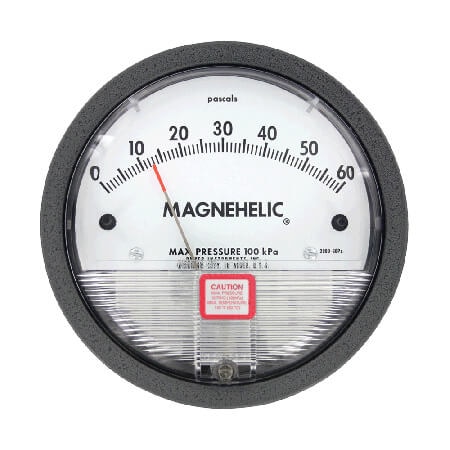
Without visibility into filter condition, systems may operate with reduced airflow or increased strain. Differential pressure monitoring across filters provides a practical indicator of filter loading.
Why it matters:
- Identifies when filters are approaching capacity
- Prevents excessive strain on HVAC systems
- Helps maintain designed airflow rates
- Supports scheduled, condition-based maintenance
- Increased energy consumption
- Reduced airflow and ventilation effectiveness
- Elevated equipment temperatures
- Degraded indoor comfort and air quality
Particulate Monitoring
While filtration helps reduce indoor particulate levels, it does not eliminate them entirely. Continuous monitoring of particulate concentration provides direct insight into IAQ conditions and system effectiveness.
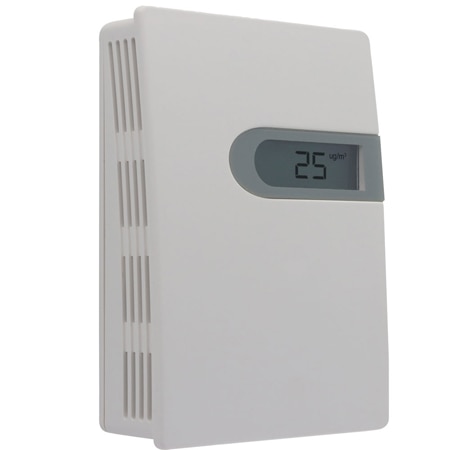
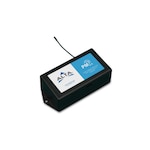
Particulate matter transmitters measure real-time concentrations of airborne particles such as PM2.5 and PM10.
Operational value:
- Confirms whether filtration strategies are effective
- Identifies localized air quality issues within a facility
- Guides placement of portable air cleaners or filtration units
- Supports decisions on when to increase filtration or isolate zones
CO₂ and VOC Monitoring
During smoke events, facilities often reduce outdoor air intake to limit contamination. While this reduces particulate intrusion, it can also lead to elevated CO₂ levels due to occupant respiration.

Higher CO₂ concentrations are associated with reduced cognitive performance and occupant comfort in enclosed spaces.
At the same time, VOCs from building materials, cleaning products, and indoor activities can accumulate when ventilation is limited.
CO₂/VOC transmitters provide dual monitoring of occupancy-related and air quality-related parameters.
Why combined monitoring is beneficial:
- CO₂ levels indicate when ventilation may need to increase
- VOC detection can identify non-particulate contaminants
- Enables controlled ventilation strategies during periods of lower outdoor pollution or lower occupancy
- Supports demand-controlled ventilation without over-reliance on outside air
Ventilation Strategy: Filtration and Control Must Work Together
Monitoring alone is not sufficient without corresponding control strategies. During wildfire events, effective IAQ management typically includes:
- Closing or reducing fresh-air intake when outdoor air quality is poor
- Using high-efficiency filters on both return and intake air streams
- Ensuring proper sealing and system integrity to minimize infiltration
- Conditionally increasing ventilation when outdoor air quality temporarily improves
Why Monitoring Is a Critical Layer of Protection

Without measurement, facilities are effectively operating blind during rapidly changing air quality conditions.
An integrated IAQ monitoring approach provides:
- Visibility into real-time indoor conditions
- Validation of filtration and ventilation strategies
- Early detection of system performance issues
- Data-driven decision-making for facility operators
Grippers Introduction to Grippers