
When it comes to reducing building energy consumption and carbon emissions, owners, contractors, and engineers can implement several energy-saving strategies. Lighting is often one of the first areas addressed through measures such as LED fixtures, lighting controls, and building designs that maximize natural light. However, another significant source of energy consumption, particularly in enclosed parking structures and garages, is the ventilation system.
In the United States, enclosed parking garages require adequate ventilation and are subject to ventilation standards to help prevent CO and other harmful vehicle emissions from accumulating to unsafe levels. These standards require garage ventilation systems to run continuously during building occupied hours, with an exception made for those that deploy carbon monoxide sensor-based demand-controlled ventilation (DCV) systems.
Innovative Solutions from DwyerOmega
What is Demand-Controlled Ventilation in a Parking Garage?
Demand-controlled ventilation (DCV) is a ventilation strategy that adjusts ventilation operation based on actual demand, such as measured carbon monoxide concentrations within an enclosed parking garage. Rather than operating exhaust fans continuously at full capacity, a DCV system can activate or adjust ventilation as conditions within the garage change.
Ventilation demand can vary significantly throughout the day. CO concentrations may increase during morning and evening periods when occupants are entering or leaving the parking structure, as well as during other periods of increased vehicle activity. During periods of low activity, ventilation demand may decrease.
By monitoring these changing conditions, a DCV system can operate ventilation equipment according to actual garage conditions rather than maintaining maximum ventilation when it is not required.
Carbon Monoxide Switch-Based Demand-Controlled Ventilation
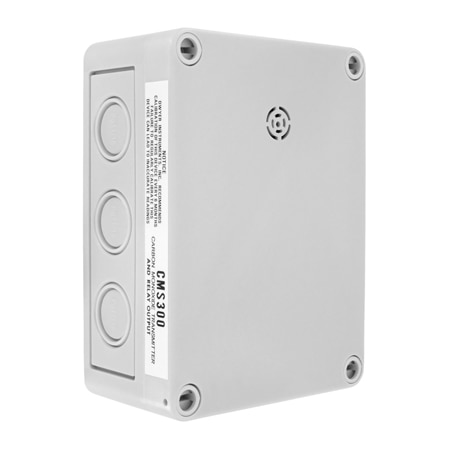
One of the simplest forms of demand-controlled ventilation uses a carbon monoxide switch to monitor CO concentrations within the parking structure.
When CO concentrations reach a predetermined setpoint, the switch relay contacts energize and activate the exhaust fans. The fans continue operating until CO concentrations decrease to an acceptable level. The relays can then de-energize and shut off the fans until CO concentrations rise again.
This type of on/off control can reduce energy consumption compared with continuously operating exhaust fans because the fans run only when ventilation is required. However, when the fans are activated, they typically operate at full speed. This limits the amount of additional energy savings that can be achieved as ventilation demand changes.
Using VFDs for More Efficient Parking Garage Ventilation
A more flexible approach combines demand-controlled ventilation with variable frequency drives (VFDs). Instead of simply switching exhaust fans on or off, a VFD allows fan motor speed to be adjusted according to changing ventilation requirements.
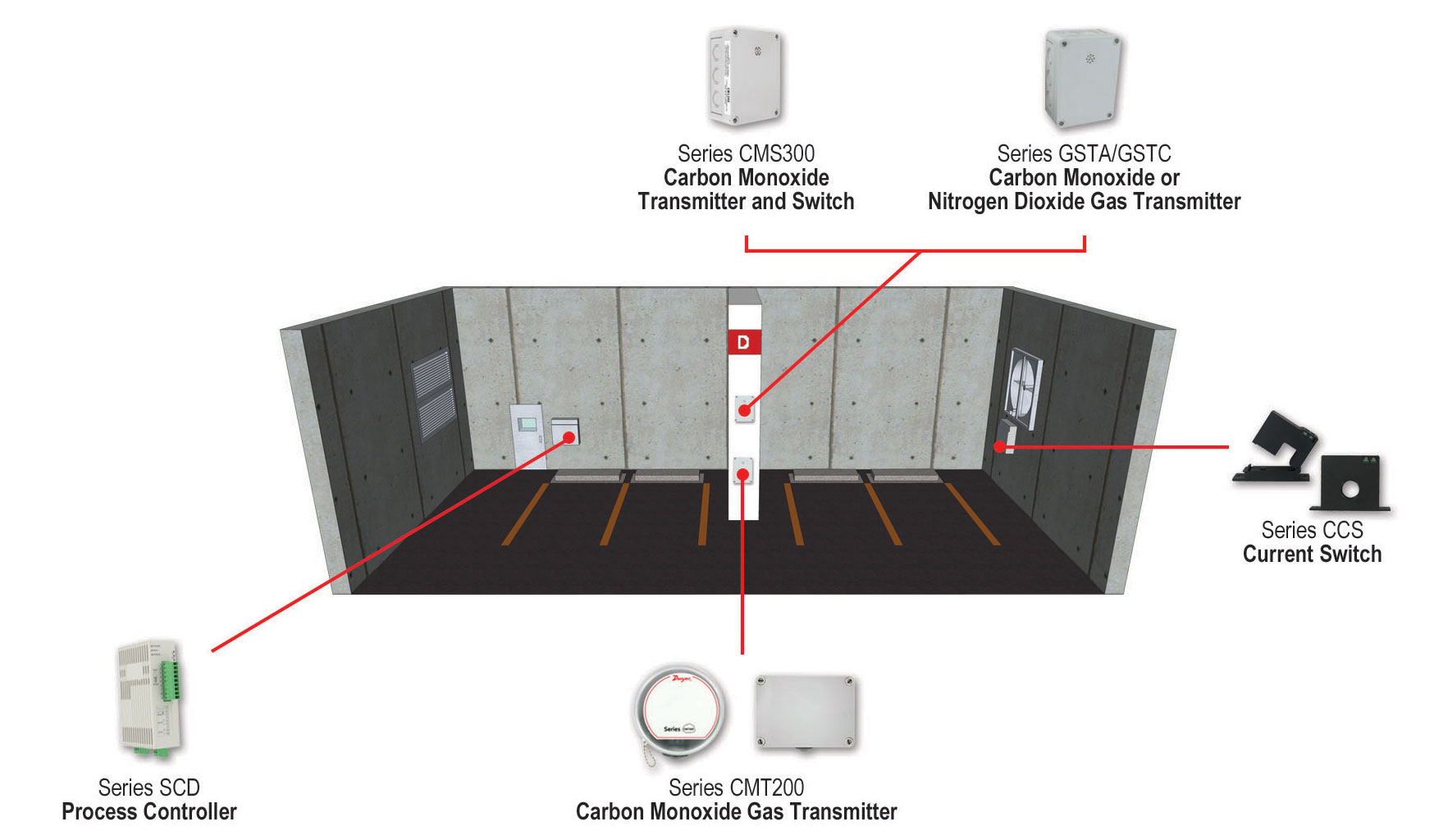
In this type of system, a carbon monoxide sensor continuously measures CO concentrations and sends the measured value to a building management system (BMS) or dedicated garage control panel. Depending on the equipment, the signal may be transmitted using an analog current or voltage output or through a digital communications protocol such as BACnet or Modbus.
The BMS or garage control panel uses this information to control the VFD, which adjusts the speed of the exhaust fan motor according to programmed control setpoints. As CO concentrations increase, fan speed can be increased to provide additional ventilation. As concentrations decrease, fan speed can be reduced.
The basic control sequence is:
Carbon Monoxide Sensor → BMS or Garage Control Panel → VFD → Exhaust Fan
This approach allows the ventilation system to respond more closely to actual conditions within the parking garage instead of relying solely on full-speed on/off operation.
Innovative Solutions from DwyerOmega
Series GSTA CO & NO₂ Gas Transmitters
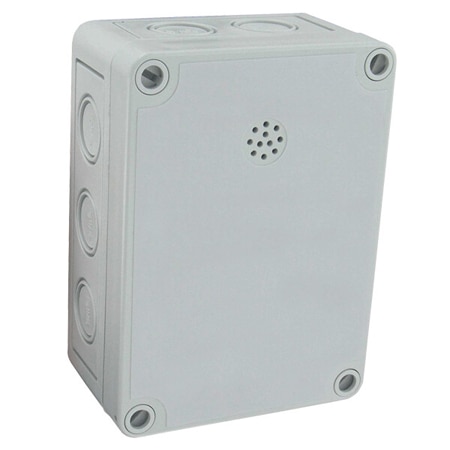
Series GSTA CO and NO₂ Gas Transmitters provide continuous gas concentration monitoring in underground parking garages, loading docks, and other areas exposed to vehicle exhaust. Industrial-grade, field-replaceable electrochemical sensors measure carbon monoxide from gasoline engines or nitrogen dioxide from diesel engines, with typical sensor life of four years. Field-selectable current and voltage outputs provide flexibility for integration with building automation and ventilation control systems, while CO models offer selectable and adjustable measurement ranges. An optional integral LCD supports local setup, calibration, and status monitoring, while models without a display can be configured using the optional remote service display. The IP64-rated, UV-resistant glass-filled polycarbonate housing supports installation in demanding environments.
Key Features:
- Field-selectable 4-20 mA or voltage outputs with normal or reverse operation
- CO ranges adjustable up to 0 to 599 PPM; NO₂ models feature a 0 to 10 PPM range
- Optional integral LCD for setup, calibration, and sensor status
- Field-replaceable CO or NO₂ electrochemical sensors
- Wall- and duct-mount configurations available
Series CCS Self-Powered Current Switches for Fans & Pumps
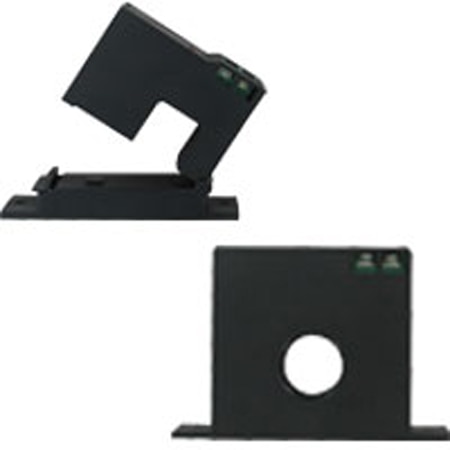
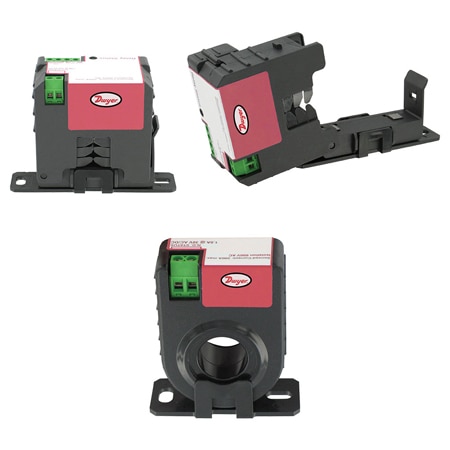
Series CCS Self-Powered Current Switches provide reliable operating status monitoring for fans, pumps, motors, and other electrically powered equipment. Designed to detect AC current flowing through the conductor, the switches require no external power supply and provide LED indication for visual confirmation of equipment status. Solid core models support new installations, while split core configurations simplify retrofit applications by allowing installation without disconnecting existing cables. Fixed and adjustable set point models accommodate different monitoring requirements, with adjustable versions using a potentiometer for straightforward threshold configuration. The Series CCS supports currents up to 200 A AC and is housed in UL 94 V-0 rated ABS plastic for durable installation.
Key Features:
- Self-powered operation eliminates the need for an external power supply
- Solid core and split core configurations for new or retrofit installations
- Fixed or adjustable current set points for application flexibility
- LED indicators provide visual confirmation of current status
- Integral mounting flange supports quick, straightforward installation
Series CMT200 Carbon Monoxide Transmitters
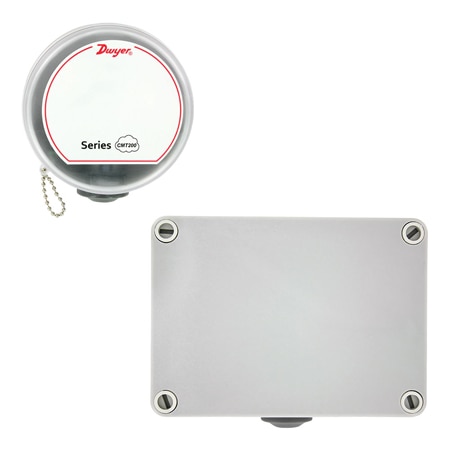
Series CMT200 Carbon Monoxide Transmitters provide continuous CO concentration monitoring for underground parking garages, vehicle maintenance facilities, and mechanical rooms. A field-replaceable electrochemical sensor measures carbon monoxide across a fixed 0 to 200 PPM range, with a typical sensor life of four years. Field-selectable 4-20 mA or 2-10 V outputs provide flexibility for integration with ventilation, control, and building automation systems. Onboard span and zero adjustments support field calibration, while available calibration kits simplify ongoing sensor maintenance. Offered with round or rectangular housing configurations, the Series CMT200 provides flexible installation options for applications requiring dependable carbon monoxide monitoring.
Key Features:
- Field-selectable 4-20 mA or 2-10 V output
- Replaceable electrochemical CO sensor with a typical four-year lifespan
- 0 to 200 PPM carbon monoxide measurement range
- Field calibration using onboard span and zero adjustments
- Round or rectangular housing configurations available
Series SCD DIN Rail PID Temperature & Process Controllers
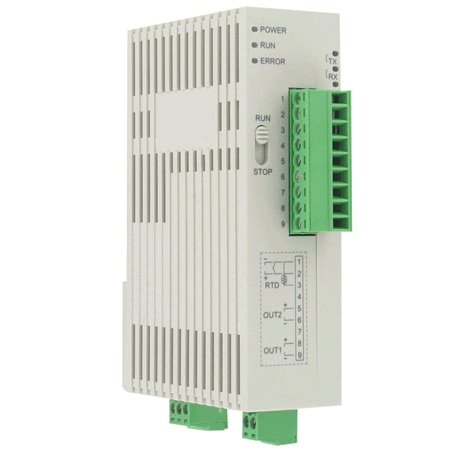
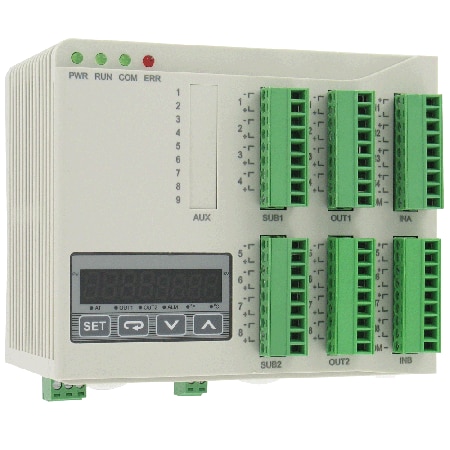
Series SCD DIN Rail PID Temperature/Process Controllers provide flexible regulation for heating, cooling, and process control applications requiring single- or multi-loop operation. Universal inputs support thermocouples, RTDs, and linear voltage or current signals, allowing the controllers to monitor temperature transmitters, process sensors, and other compatible devices. A master SCD-1000 controller can be expanded with up to seven SCD-2000 slave controllers to create an eight-loop system without additional power or communication wiring between units. PID, ON/OFF, manual, and programmable PID control methods support a range of control strategies, while configurable auxiliary outputs provide relay, voltage pulse, 4-20 mA, or 0-10 V operation. RS-485 Modbus® communication enables process values, set points, and output status to be integrated with supervisory control systems.
Key Features:
- Expandable from one to eight process control loops
- Universal thermocouple, RTD, voltage, and current inputs
- PID, ON/OFF, manual, and programmable PID control
- Configurable relay, voltage pulse, 4-20 mA, or 0-10 V auxiliary output
- RS-485 Modbus® RTU/ASCII communication
How VFDs Reduce Parking Garage Ventilation Energy Consumption
A variable frequency drive controls the speed of an AC motor by adjusting the frequency of the electrical power supplied to it. For centrifugal fans, reducing motor and fan speed can significantly decrease the power required to operate the ventilation system.
According to the fan affinity laws, airflow is approximately proportional to fan speed, while power varies approximately with the cube of fan speed under ideal conditions. For example, operating a centrifugal fan at 50% of its rated speed corresponds to approximately 12.5% of the theoretical power required at full speed. Actual energy savings vary based on fan efficiency, system resistance, minimum ventilation requirements, and other operating conditions.
In addition to reducing energy consumption, VFD-based control limits unnecessary full-speed operation, reducing mechanical stress while allowing the ventilation system to respond to changing CO concentrations and ventilation demand.
Grippers Introduction to Grippers