France 0805 541 038 | Intl +31 01 57 32 48 17 | Bienvenue sur notre nouveau site web! Vous avez rencontré un problème ou un bug ? Veuillez le signaler ici.



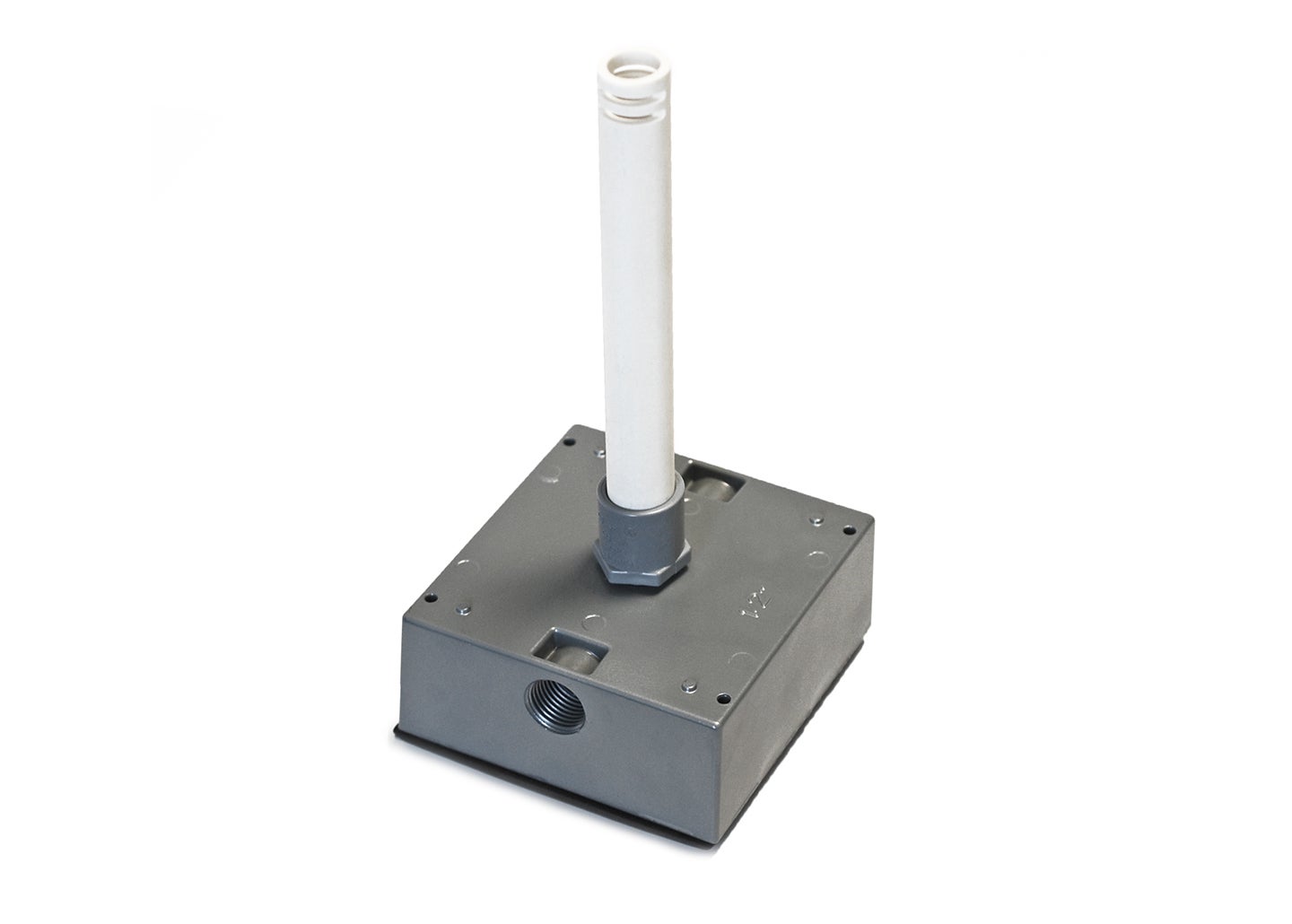
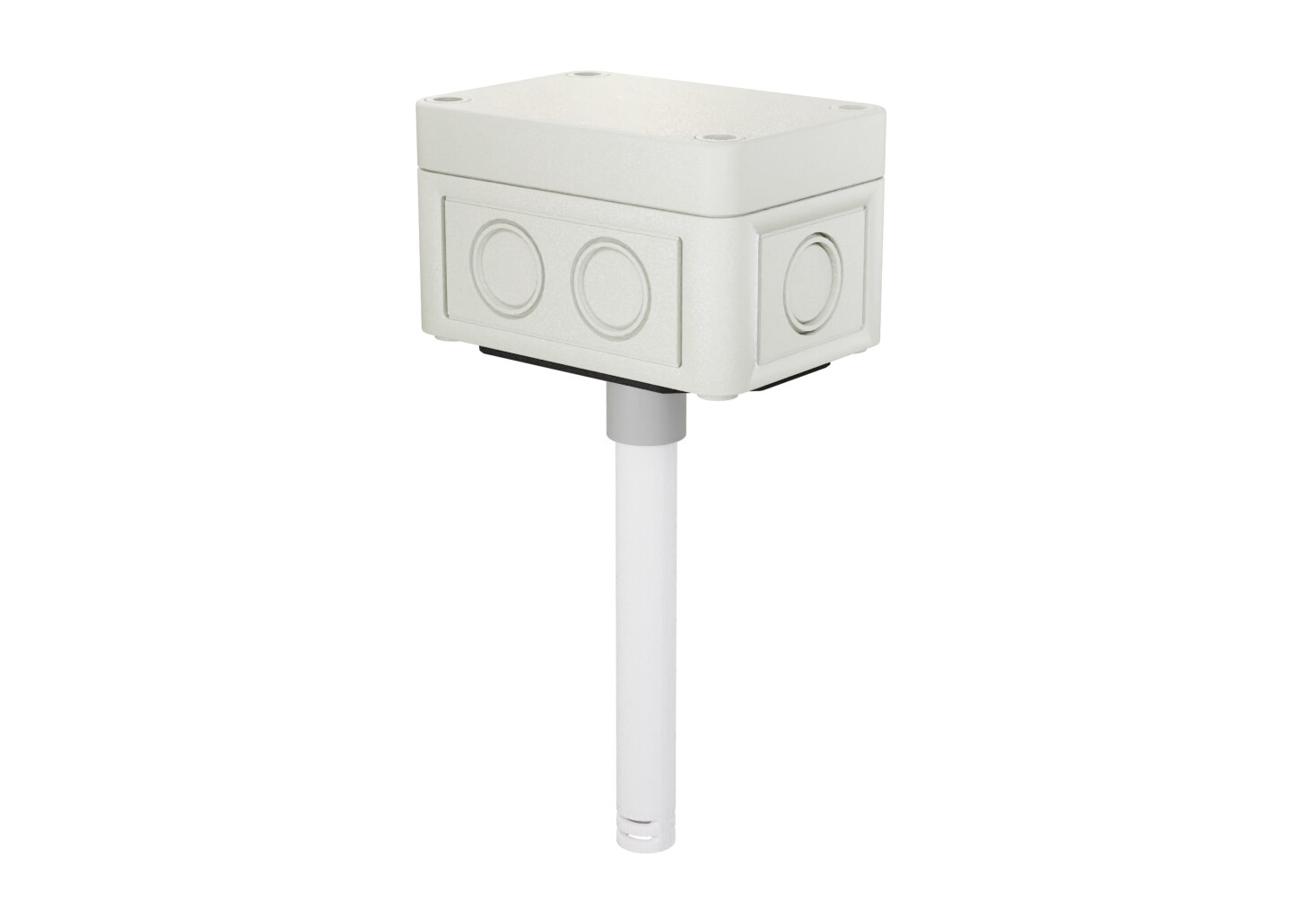
RH-Combo-Duct-Temp-Transmitter
Transmetteur de température avec humidité relative pour conduit
Trasmettitore di temperatura con umidità relativa per condotto- Humidification
- Déshumidification
- Air d'alimentation / d'évacuation / de retour
- Salles blanches
- Centres de données
- Contrôle des processus
- Écoles
- Hôpitaux
- Immeubles de bureaux
RH-Combo-Duct-Temp-Transmitter
À partir de
€
980,07


Aper çu du produit
- Option d'étalonnage N/A
- Connexion électrique Borne à vis
- Filtre Filtre hydrophobe
- Courant, max 8 mA
- Type de mesure Humidité ; température
- Orientation de montage Support pour conduit
- Température de fonctionnement, max 60 °C
- Température de fonctionnement, min -40 °C
- Détails de la sortie 0-5 VCC : 12 - 40 VCC / 18 - 28 VAC
- Diamètre de la sonde 0.75 in
- Longueur de la sonde 7.76 in
- Humidité relative 10 à 95 %
- Type de capteur d'humidité relative Capacitif avec filtre hydrophobe
- Répétabilité 0,5 % HR, ± 0,05 °C
- Temps de réponse 20 secondes typique
- Sensibilité 0,1 % HR
- ID de série RH-Combo-Duct-Temp-Transmitter
- Stabilité Stabilité de l'humidité relative : Dérive inférieure à 2 % / 5 ans, Stabilité du capteur RTD en platine : +/-0,03 % après 1000 heures à 572°F (300°C)
- Température de stockage, max 65 °C
- Température de stockage, min -40 °C
- Type d'approvisionnement électrique CC
- Tension d'alimentation 24 Vcc
- Couple de serrage 4,43 à 5,31 lb-pouce (0,5 à 0,6 Nm)
- Calibre du fil 26 à 16 AWG
Supported Applications
The ACI Relative Humidity with Temperature Duct series is a combination transmitter that measures duct air humidity and temperature for commercial heating and cooling building management systems. It uses a thermoset polymer capacitive sensing element with a factory-fitted hydrophobic filter, and the sensor's multilayer construction gives resistance to dust, dirt, oils, and common environmental chemicals found in duct air.
The transmitter mounts in the middle of the duct, where air circulation is well mixed, and works with electronic controllers through a 4 to 20 mA current output or a field-selectable voltage output. On-board DIP switches allow configuration, making the series suited to a wide range of HVAC and building automation installations.
Operating Conditions & Performance
The RH measurement range is 0 to 100%, with an operating range of 0 to 95% RH, non-condensing. At 77 °F (25 °C), RH accuracy is ±1% over a specified 20% RH range between 20 to 90%, or ±2% or 3% from 10 to 95%. The capacitive sensor has a T63 response time of 20 Seconds Typical and stability of less than 2% drift over 5 years.
The current output is 4 to 20 mA (2-wire, loop powered), and voltage outputs of 0-5 VDC or 0-10 VDC are available on a 3-wire connection; the paired temperature transmitter provides a 1-5 VDC or 2-10 VDC output. The temperature transmitter is powered from 8.5 to 32 VDC (reverse polarity protected) at 25 mA minimum, and the RH output drives up to 700 Ohms maximum on the 4 to 20 mA output.
- Operating temperature: -40 to 140 °F (-40 to 60 °C); storage -40 to 149 °F (-40 to 65 °C).
- Temperature accuracy: ±0.2% for spans below 500 °F (260 °C), and ±0.5% for spans above 500 °F.
- Wiring: screw terminal blocks, polarity sensitive, accepting 16 to 26 AWG conductors.
- Sensing tube: 7.20" (182.88 mm) long by 0.840" (21.34 mm) in diameter, slotted PVC.
- Enclosure: NEMA 4X (IP 66) polystyrene or NEMA 3R aluminum, rated -40 to 158 °F (-40 to 70 °C) for the plastic enclosure.
- Approvals: RoHS2 and WEEE.
Each transmitter is calibrated at 71 °F (22 °C) nominal, and a stabilization time of 30 minutes is recommended before verifying accuracy.
Configuration Options
Every model in this series shares the capacitive RH sensing element, hydrophobic filter, and 4 to 20 mA output. Models differ by accuracy grade, the temperature-sensing RTD element, the enclosure configuration, and the transmitter output.
Accuracy Grade
The RH1, RH2, and RH3 codes select accuracy: RH1 is ±1% over a specified 20% range between 20 to 90% RH, RH2 is ±2%, and RH3 is ±3%.
RTD Element
The model series code sets the temperature element: TT100 uses a 100 Ohms RTD and TT1K uses a 1K Ohms RTD, while the TTM100 and TTM1K matched versions add a factory NIST calibration.
Enclosure Configuration
The D-4X configuration provides a NEMA 4X polystyrene plastic enclosure, while the D-BB configuration provides a NEMA 3R aluminum enclosure for more rugged mounting.
Key Product Differences
A catalog number is assembled from the A/ sensor series prefix, the accuracy grade, the model series, the enclosure configuration, the transmitter output, and the calibrated span. For example, A/RH2-TT1K-D-4X-4 pairs a ±2% RH sensor with a 1K Ohms RTD in a NEMA 4X enclosure.
Representative configurations include:
- A/RH1-TT100-D-4X-4 — ±1% RH accuracy with a 100 Ohms RTD in a NEMA 4X enclosure.
- A/RH2-TT1K-D-BB-4 — ±2% RH accuracy with a 1K Ohms RTD in a NEMA 3R aluminum enclosure.
- A/RH3-TTM1K-D-BB-4 — ±3% RH accuracy with a matched, NIST-calibrated 1K Ohms RTD.
For matched TTM100 or TTM1K models, the default NIST certificate is 3 points, and a 5-point certificate can be specified by adding -5PTNIST to the end of the part number.
PDF & Manuels