


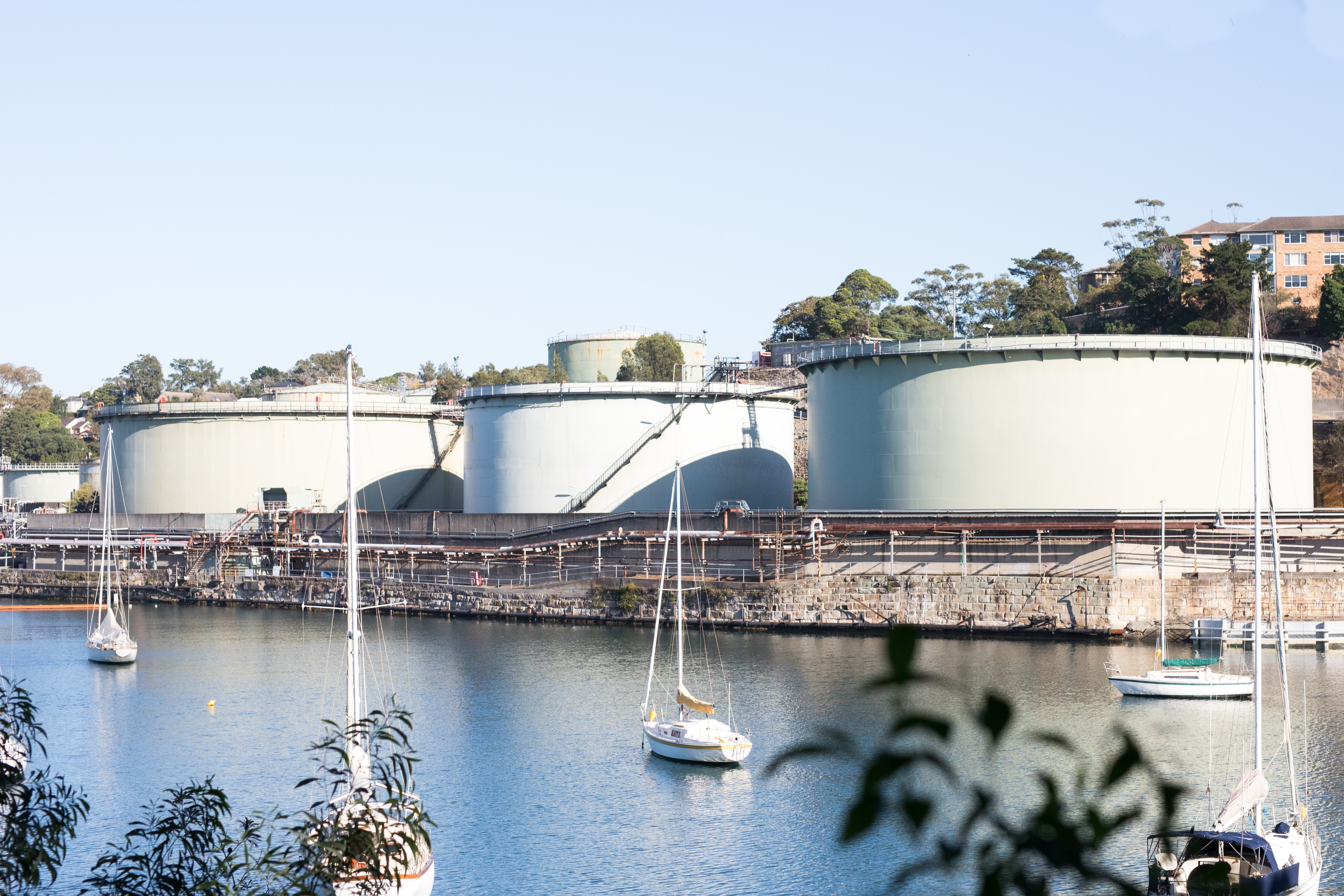
Submersible level transmitters are pressure sensors designed to read hydro-static pressure from inside the fluid. These devices are submerged in tanks, wells, reservoirs, or open bodies of water, and they output a signal directly proportional to the fluid height above the sensor location.
Engineers and operators rely on them for accurate, continuous level measurement in applications such as water treatment, groundwater monitoring, oil and gas production, food and beverage processing, and chemical storage, where reliable data is essential for both efficiency and safety.
How Submersible Level Transmitters Work
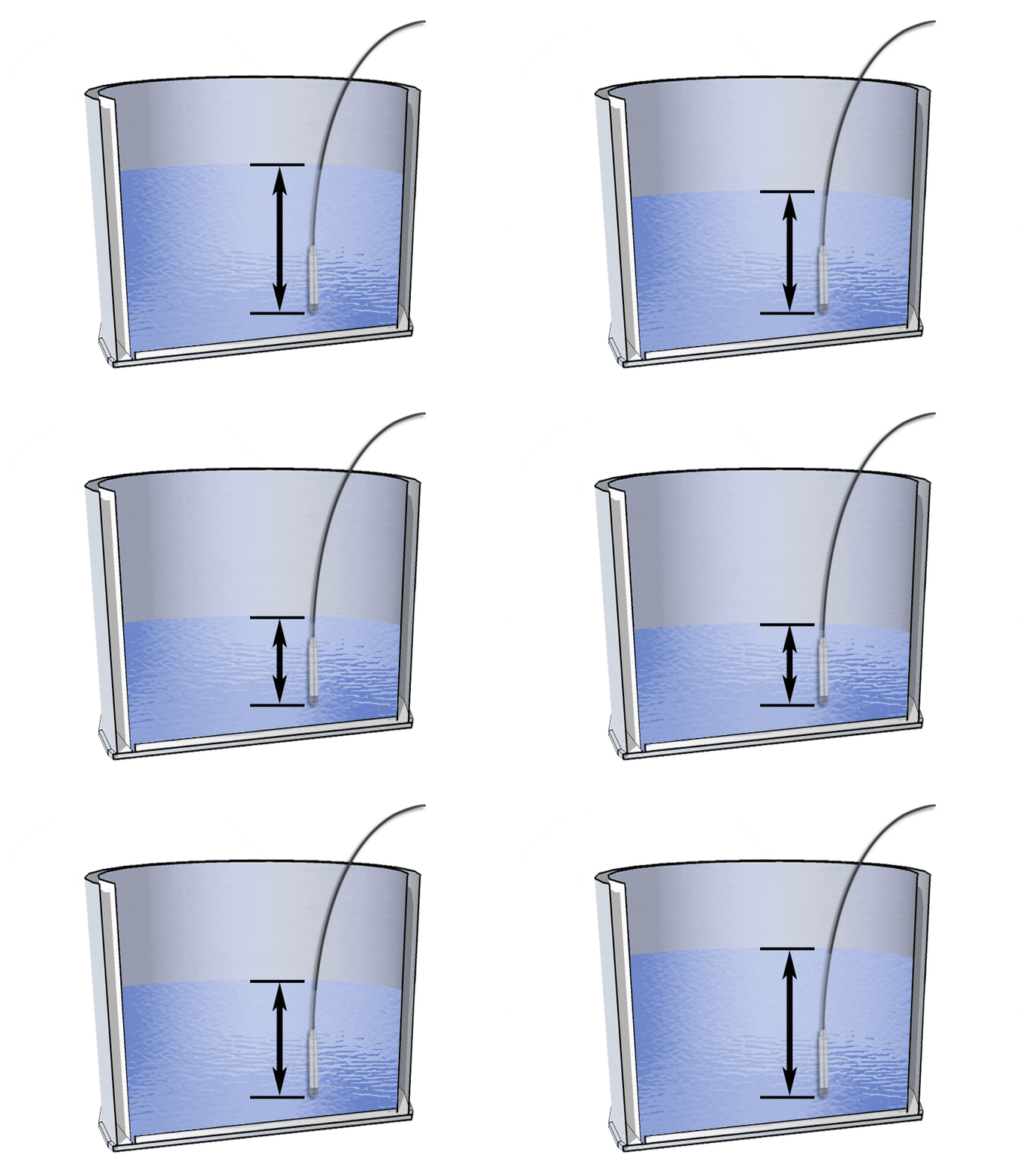
The working principle is based on hydrostatic pressure—the pressure exerted by a liquid at rest.
Hydrostatic Pressure
Where:
P = hydrostatic pressure
ρ = liquid density
g = gravitational acceleration
h = height of liquid above the sensor
Atmospheric Pressure Compensation
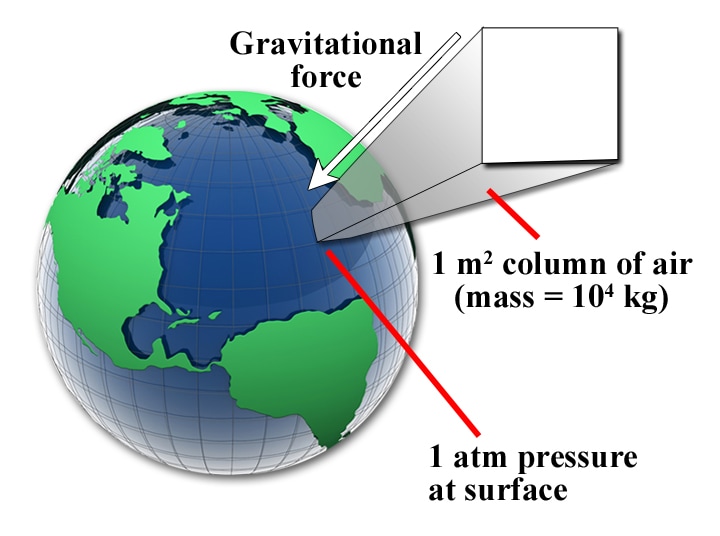
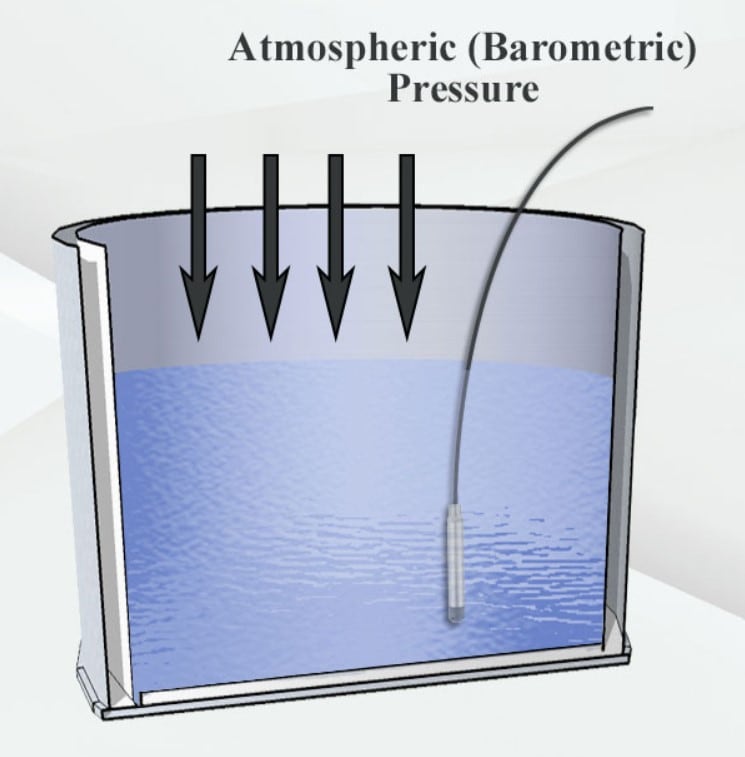
Because atmospheric pressure acts on the liquid surface, a submersible level transmitter must account for the weight of the atmosphere pressing down on the liquid surface. If this atmospheric pressure isn’t accounted for, changes in weather or elevation can throw off the readings.
To prevent this, most transmitters use a vent tube built into the cable. The tube allows the sensor to “breathe” with the atmosphere, canceling out barometric effects so that the transmitter only reports the true hydrostatic pressure of the liquid column.
Benefits of Submersible Level Transmitters
- Continuous, real-time monitoring: Unlike float switches, they provide uninterrupted analog or digital level signals
- Reliable in harsh environments: Designed with corrosion-resistant housings (stainless steel, titanium, or Teflon®) and rugged cables
- Versatile applications: Effective in clean water, wastewater, slurries, oils, and even corrosive chemicals
- Compact & easy installation: Simply lower into the fluid with no external mounting hardware needed
Common Applications
- Water & Wastewater: Tank monitoring, lift stations, groundwater wells
- Industrial Processing: Chemical tanks, oil reservoirs, fuel storage
- Agriculture: Irrigation and slurry level monitoring
- Food & Beverage: Storage tanks and batching systems
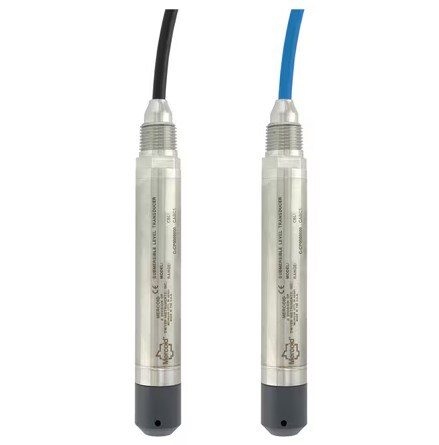
Selecting the Right Submersible Level Transmitter
Choosing the right submersible level transmitter comes down to understanding the environment of the application and the conditions the device will encounter. The first consideration is the measurement range—the sensor needs to handle the full depth of the liquid column, whether that’s only a few feet in a small tank or several hundred feet in a deep well. The type of liquid also matters; its density, potential chemical reactivity, and whether it tends to cause buildup will determine the best materials for the housing and diaphragm. For applications where even slight variations matter, accuracy and resolution are critical, with many transmitters offering tolerances between ± 0.1 % and ± 0.25 % of full scale.
Innovative Solutions from DwyerOmega
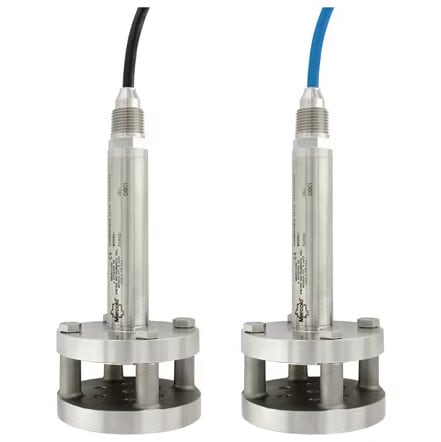
Series PBLT2 Submersible Level Transmitters
The Series PBLT2 Submersible Level Transmitters is designed for wastewater, slurry, and other harsh liquid applications. It uses a 316 stainless steel diaphragm seal and protective cage that resists clogging and damage from solids. To ensure long-term reliability, the PBLT2 also incorporates dual surge arrestor technology, protecting the unit from power supply surges and lightning ground strikes.Key Features:
- Durable 316 SS diaphragm and cage for clog- and damage-resistance
- Surge protection extends service life in demanding environments
- Maintenance-free filter blocks particulates and moisture
- Rugged 270 lb tensile strength cable with chemical resistance
Applications: Wastewater treatment, sludge pits, clarifiers, digesters, alum tanks, chemical storage, oil tanks, lime slurry, sumps, reservoirs.
Series PBLTX Submersible Level Transmitters
The Series PBLTX Submersible Level Transmitter shares the same rugged 316 stainless steel construction as the PBLT2 but is specially designed for hazardous locations. With UL approval for intrinsic safety (when used with a proper barrier), it provides dependable level measurement in environments where safety standards are critical.
Applications:Hazardous wastewater environments, sludge pits, clarifiers, digesters, chemical tanks, oil tanks, and reservoirs.
Series FBLT Flush Tip Submersible Level Transmitters
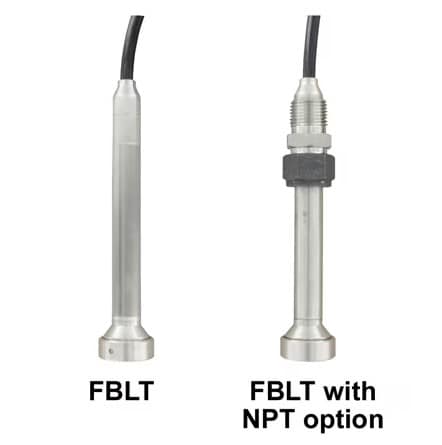
The Series FBLT Submersible Level Transmitter is built for challenging applications where clogging is a concern. Featuring a PTFE-coated flush diaphragm tip in a narrow 316 stainless steel housing, the FBLT eliminates blockages and provides long operating life in demanding environments. A built-in, maintenance-free filter also prevents particulates or water droplets from entering the transducer, ensuring consistent and reliable readings.
Key Features:
- Flush diaphragm tip design resists clogging and extends service life
- Piezoresistive sensing element for accurate hydrostatic pressure measurement
- Maintenance-free filter protects the transducer from particulates and moisture
- Slim 316 SS housing with PTFE coating for chemical resistance and durability
Connect with a DwyerOmega Expert Today!
DwyerOmega | Blog | What is a Pressure Gauge?
Written by: Dan Schultz
Updated on: October 30, 2025

DwyerOmega | Blog | What is an Intrinsically Safe Product?
Written by: Dan Schultz
Published on: March 30, 2026