


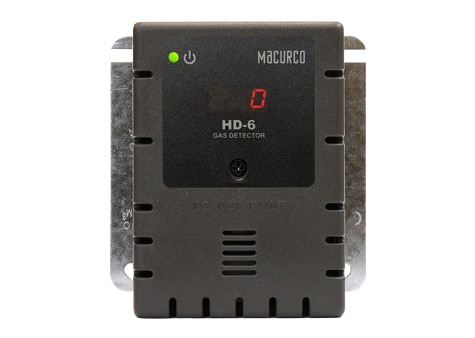
Hydrogen is a colorless, odorless, and highly combustible gas. Under certain operating or failure conditions, some battery technologies can release hydrogen into the surrounding environment. Because the gas cannot be reliably detected by personnel without instrumentation, rising hydrogen concentrations may go unnoticed and create a potential fire or explosion hazard.
Battery Energy Storage Systems (BESS) therefore require multiple layers of protection to help manage potential hazards, including the accumulation of combustible gases. The HD-6 Hydrogen Gas Detector supports this safety strategy by continuously monitoring hydrogen concentrations and providing local alarms, configurable control outputs, and integration with ventilation and building management systems.
What are Battery Energy Storage Systems?
Battery Energy Storage Systems capture electrical energy, store it in rechargeable batteries, and discharge it when that energy is needed. By separating when electricity is generated from when it is consumed, a BESS can both improve power availability and reduce energy costs, while supporting greater use of renewable resources.
These systems are used across commercial, industrial, utility, and residential applications. Depending on the system design and operating strategy, a BESS can support several important functions:

- Backup Power: Keeping critical systems operating during unexpected grid outages in factories, offices, data centers, and other facilities
- Demand Charge Reduction: Supplying stored energy during periods of high electrical demand, reducing the amount of power drawn from the grid when demand charges are highest
- Solar Self-Consumption: Stores excess electricity generated by rooftop solar panels for use at night, during high-tariff periods, or when solar generation decreases
- Microgrid Operation: Helps supply isolated or off-grid facilities and communities while reducing their reliance on diesel generators
- Grid Support: Stores energy when generation exceeds demand and returns that energy when demand increases, helping balance electrical supply and consumption
Why Hydrogen Monitoring Matters in Battery Energy Storage System Applications
In a Battery Energy Storage System, hydrogen monitoring provides early warning when gas concentrations begin to rise. This allows alarms, ventilation systems, and other protective measures to respond before hydrogen accumulation creates a more hazardous condition.
Hydrogen can be associated with different battery technologies and failure conditions. Lead-acid batteries, for example, can generate hydrogen during charging, particularly during overcharging or when ventilation is inadequate. As hydrogen accumulates, it can form a combustible mixture in the surrounding air, increasing the risk of fire or explosion if an ignition source is present.
Series HD-6 Hydrogen BESS Gas Detector
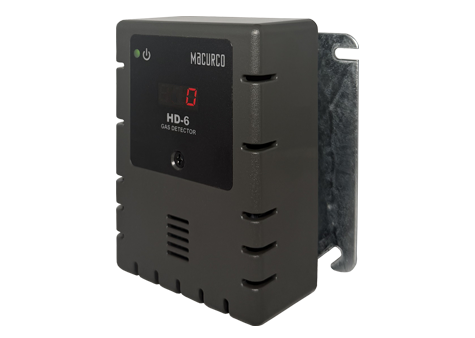
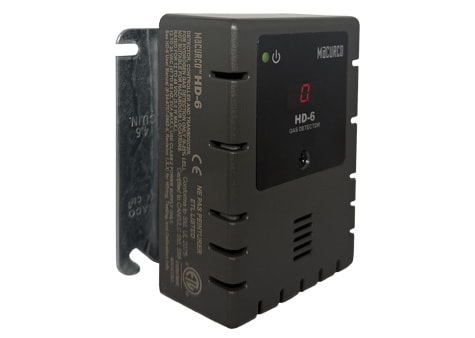
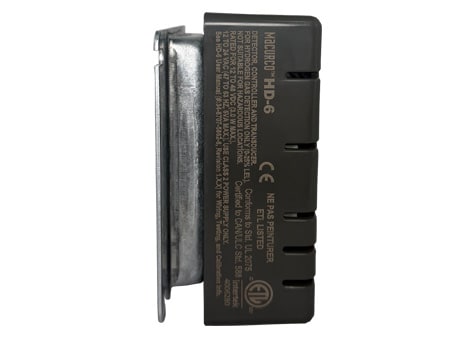
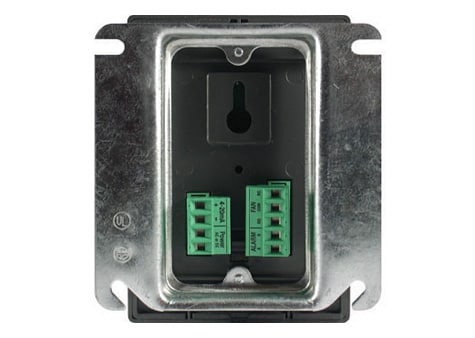
The HD-6 Hydrogen Gas Detector is designed to provide continuous hydrogen monitoring in Battery Energy Storage System applications. Its long sensor life, configurable alarm functions, local indication, and control-system outputs make it suitable for facilities that require ongoing hydrogen detection with minimal routine maintenance.
When hydrogen concentrations rise, the HD-6 can provide an early warning that allows the facility’s established safety response to begin. The detector supports two configurable alarm levels, enabling different actions to be initiated as conditions develop. One alarm level could be used to activate or increase mechanical ventilation, while a higher alarm level could initiate additional warnings or other responses defined by the facility’s safety plan.
Local audible and visual indicators alert personnel near the detector. At the same time, relay and analog outputs allow the HD-6 to communicate with ventilation equipment, building management systems, control panels, and other facility controls.
Continuous Measurement and Local Indication
The HD-6 measures hydrogen over a range of 0–50% of the lower explosive limit (LEL). Its LED display provides a local indication of the detected concentration, allowing personnel to evaluate conditions at the monitoring location.
Two Configurable Alarm Levels
The HD-6 includes two configurable alarm levels that can initiate different actions as hydrogen concentrations rise. For example, the first level could provide an early warning and activate ventilation. If the concentration continues to increase, the second level could initiate a higher-priority alarm or signal additional safety systems.
A 5 A SPDT fan relay and a 0.5 A alarm relay allow the detector to interact with external equipment according to the facility’s control strategy.
Ventilation and Building Management System Integration
A 4–20 mA output provides a proportional signal representing the detected hydrogen concentration. This signal can be connected to a building management system for centralized monitoring, trending, alarm generation, and integration with broader facility controls.
When properly integrated, the analog output can also support ventilation strategies using a variable frequency drive to adjust fan operation as conditions change.
Compatibility with digital control panels provides another option for centralized monitoring. Multiple detectors can be incorporated when an application requires coverage across several battery rooms, enclosures, or monitoring locations.
Long Sensor Life and Reduced Maintenance
The HD-6 sensor has a service life of up to 10 years, reducing the frequency of sensor replacement and the maintenance burden associated with long-term gas monitoring.
Resistance to silicone poisoning helps protect the sensor from a common cause of performance degradation. An end-of-life notification alerts personnel when the sensing element has reached the end of its expected service period and requires replacement.
Flexible Installation and Power Options
The HD-6 mounts to a standard 4×4 electrical box and operates from either 12–24 VAC or 12–32 VDC power. These options simplify integration into new and existing electrical and control-system architectures.
Its standard mounting, flexible power options, relay outputs, and 4–20 mA signal support both standalone alarming and integrated monitoring strategies.
Key Features and Benefits of the HD-6
- Continuous hydrogen monitoring for BESS and battery-room applications
- Measurement range of 0–50% LEL
- Two configurable alarm levels
- Local audible and visual alarms
- LED concentration display
- 5 A SPDT fan relay
- 0.5 A alarm relay
- 4–20 mA output for BMS and ventilation-control integration
- Compatibility with digital control panels
- Sensor life of up to 10 years
- Resistance to silicone poisoning
- End-of-life notification
- Standard 4 × 4 electrical-box mounting
- 12–24 VAC or 12–32 VDC power
- UL 2075 and CAN/ULC-S588 listed
What Is A Stepper Motor & Controllers? – Omega Engineering Introduction to Stepper Motors
