Need assistance? Call us: 1-800-663-4209



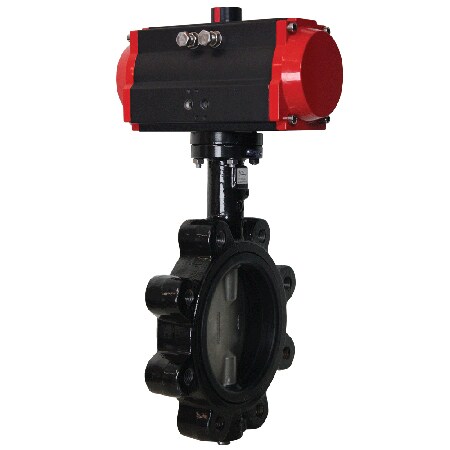
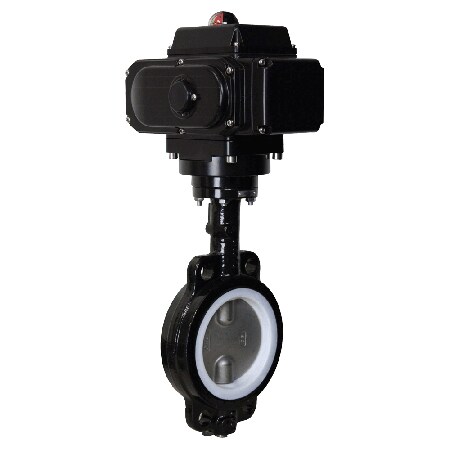
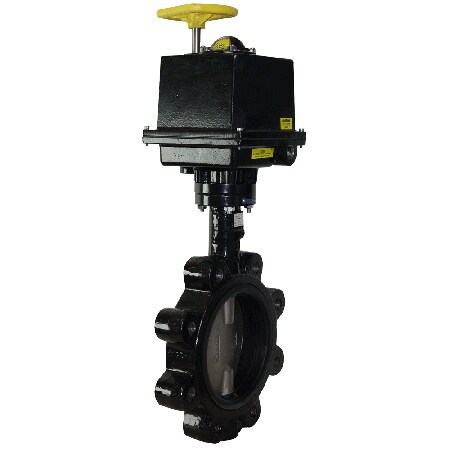
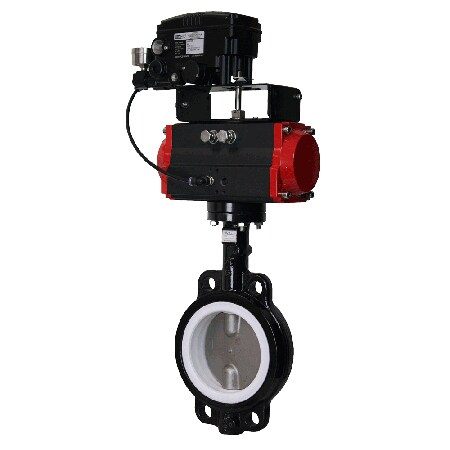
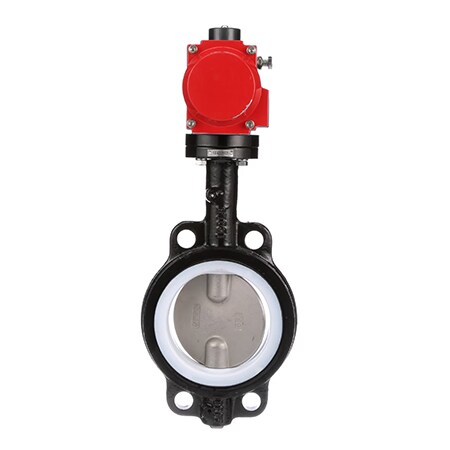
Series-WE20Configuration
Butterfly Valves with Cartridge Seat for Low Torque Seal, Gas/Liquid Control
- Cartridge-style seat design ensures low torque operation and easier service vs traditional dovetail seats
- Available in wafer or lug body styles (2″-12″) with EPDM or PTFE liners for broad fluid compatibility
- Suitable for manual, electric or pneumatic actuation configurations-highly configurable for your control needs
- Dual flange patterns (ANSI Class 125 & 150) with extended neck for insulation-designed for both shut-off and throttling applications


Product Overview
- Series ID Series-WE20
Supported Applications
The Dwyer Series WE20 Butterfly Valve is designed for liquid, gas, and steam control. The series utilizes a cartridge seat design to maintain consistent low torque operation independent of flange support, enabling full rated dead end service. Documented applications include petroleum, petrochemical, hydroelectric power plants, waste treatment, and pneumatic conveying systems.
Operating Conditions & Performance
The valve body is constructed from ductile iron with a 316 SS disc and Nylatron bearings. Wetted materials include EPDM or PTFE seats and an EPDM O-ring; the stem is 410 SS. The series supports line sizes from 2" to 12" with lug or wafer end connections designed for flanges that are ANSI Class 125 (B16.1) and ANSI Class 150 (B16.5). Pressure limits are rated at 225 psi (15.5 bar).
Process temperature ranges depend on the seat material: EPDM seats support -50 to 250°F (-46 to 121°C), while PTFE seats support 0 to 300°F (-18 to 149°C). Ambient operating temperatures vary by actuator type. Electric actuators operate from -22 to 140°F (-30 to 60°C); pneumatic actuators operate from -40 to 176°F (-40 to 80°C).
Configuration Options
The Series WE20 is configurable with manual, electric, or pneumatic actuation. Actuators are directly mounted for compact assembly.
- Manual Operation: Sizes 2" to 6" use a 10-position locking hand lever; sizes 8" to 12" utilize a manual gear operator.
- Pneumatic Actuators: Available as double acting (DA series) or spring return (SR series). Double acting models require air supply for both opening and closing. Spring return models use air to open with internally loaded springs returning the valve closed; normal operation is fail-closed, though racks can be rotated 180° for reverse operation. Normal supply pressure ranges are DA: 40 to 115 psi (2.7 to 7.9 bar) and SR: 70 to 115 psi (4.8 to 7.9 bar), with a maximum of 120 psi (8.6 bar). Air connections for models DA03 through DA11 and SR03 through SR11 are 1/4" FNPT.
- Electric Actuators: Offered in two-position or modulating control. Modulating actuators accept a 4-20 mA input. Power requirements include 110 VAC, 220 VAC, 24 VAC, and 24 VDC (MD models not available in 24 VDC). Enclosure ratings are NEMA 4X (IP67) for TD/MD series and NEMA 7 for TH/MH series. The NEMA 7 rating is designed to meet hazardous locations: Class I, Group C & D; Class II, Group E, F & G; Division I & II.
- Accessories: Limit switches can be mounted directly to the valve for remote position indication (standard on TD and TH/MH models). The SV3 solenoid valve is available to electrically switch air supply pressure. Additional accessories include AFR4 air filter regulators, R2-2120 regulators, and VB-01 volume boosters.
Key Product Differences
The series distinguishes between body styles (lug or wafer) and seat materials (EPDM or PTFE). Electric actuator families differ by enclosure rating: TD/MD models provide NEMA 4X weatherproof protection, while TH/MH models offer explosion-proof ratings for hazardous locations. Pneumatic actuators are categorized as double acting (DA) requiring dual air supply ports, or spring return (SR) utilizing internal springs to fail closed upon loss of pressure.
Accessories
accessories
Show Ratings & Reviews

