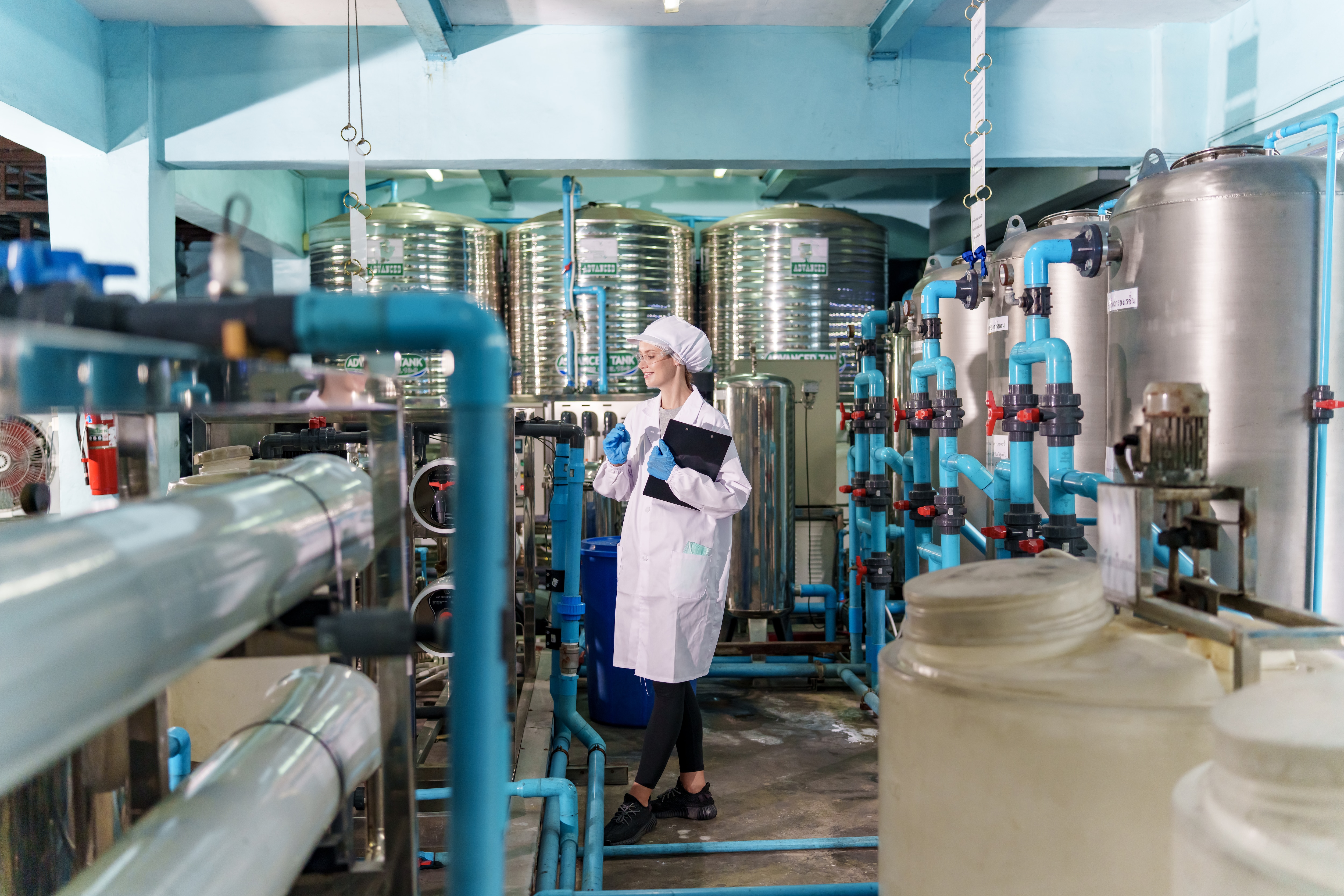
According to the Environmental Protection Agency (EPA), more than 280 million people get their drinking water from a community water system. Drinking water supplies in the United States are among the safest in the world, but even these water sources can become contaminated.
Before fresh water can be considered potable, it must be treated to make it safe for drinking. Water treatment systems are designed to maintain water quality before treated water is distributed through water pipes to homes and businesses.
The 6-Step Water Treatment Process
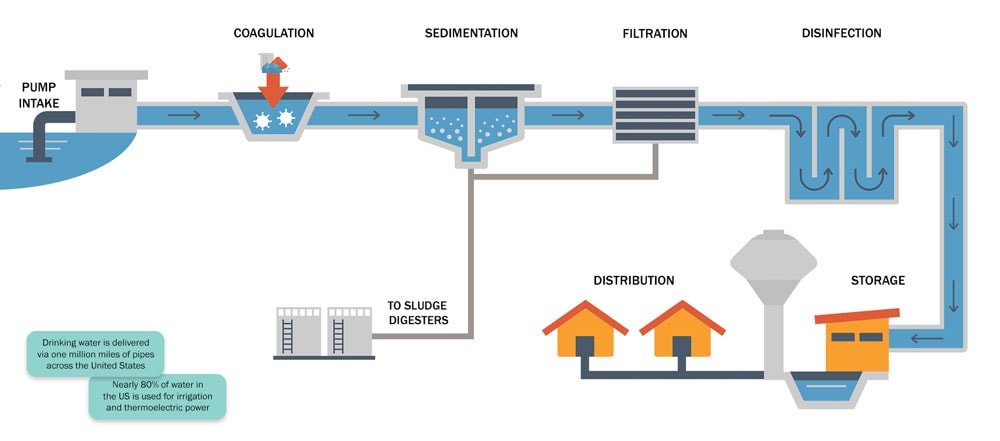
1. Intake
Water is pumped from a water source, such as a lake, river, or groundwater source, into a water treatment plant through a pump station. As the water enters the pump station, it passes through a screen that helps prevent large debris, such as wood, fish, and plants, from entering the system and clogging equipment.
2. Coagulation
Once the water enters the treatment plant, the purification process begins. Coagulant chemicals are added to the water and mixed at a high rate. Coagulation causes fine particles suspended in the water to stick together, forming larger clumps of particles known as floc.
3. Sedimentation
Following coagulation, the water and floc particles are sent into a sedimentation basin. Here, the floc is given time to settle to the bottom of the tank, where it can be removed. The cleaner water at the top of the tank is then sent to the next stage of treatment.
4. Filtration
During filtration, the water passes through natural filter media of varying sizes and compositions, such as sand, gravel, and charcoal. These materials help remove remaining particles from the water. Solid matter collected during the sedimentation and filtration processes can then be sent for use as fertilizer.
5. Disinfection
To protect against bacteria, viruses, and other microbes, the water must be disinfected. In most cases, disinfection is performed using chemicals such as chlorine or through treatment with ultraviolet light.
6. Storage & Distribution
After the water purification process is complete, the treated water is pumped into water storage tanks. Clean, safe drinking water can then be distributed to homes and businesses as needed.
Water purification is a specialized and involved process focused on protecting public health. From intake and particle removal to disinfection and distribution, each stage plays a role in maintaining water quality and helping provide communities with continuous access to safe drinking water.
Innovative Solutions from DwyerOmega
| Instrumentation | Role in Water Treatment | Featured Product |
|---|---|---|
| Pressure Switches | Activate or deactivate pumps based on set pressure points, helping ensure safe and efficient pump operation. |
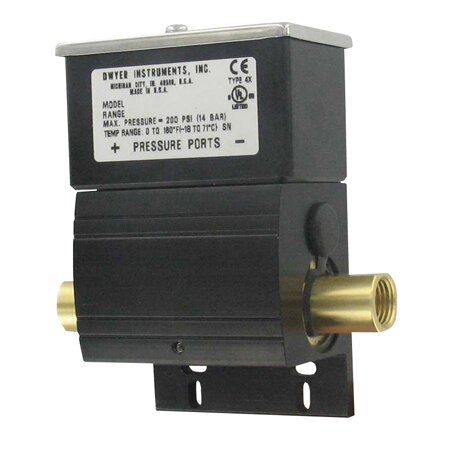
|
| Flow Switches & Transmitters | Measure fluid flow rate to help monitor and maintain proper flow through the water treatment system. |

|
| Level Transmitters | Measure water levels and can support pump control to help prevent overflows or dry running. |
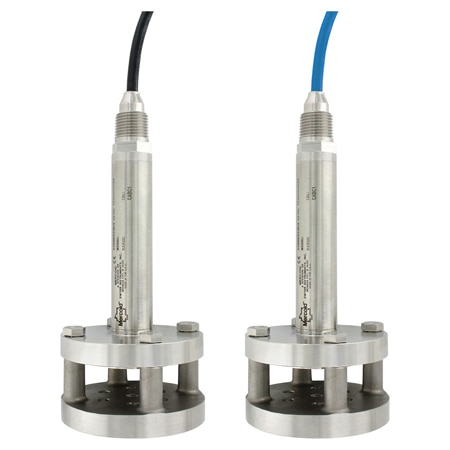
|
| Pump Controllers | Automate pump operation based on water levels, helping maintain efficient and continuous flow through the system. |

|