Need assistance? Call us: 1-800-663-4209



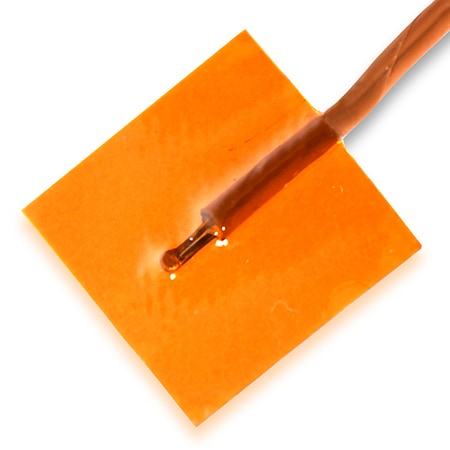
TFPS-TC-Series
Thin Film Point Sensitive Thermocouple Sensor
Models In Stock
- Thin, flexible, non-invasive thermocouples
- Fast, accurate response
- Polyimide, silicone rubber, Mylar™ insulation
- Waterproof constructions
- Surface or pressure-sensitive mounts
- RoHS compliant
- Meets the Standard Limits of Error
TFPS-TC-Series
From
C$
162.19
Models In Stock


Product Overview
- Accuracy ± 2.2 °C (± 4 °F)
- Accuracy Detail ± 2.2°C or 0.75% of reading, whichever is greater
- Adhesive Backing PSA
- Alloy Material (-) Alumel
- Alloy Material (+) Chromel
- Electrical Connection Stripped Leads
- Insulation PFA
- Number of Wires 2
- Process Temperature, Max 220 °C
- Process Temperature, Min -200 °C
- Ribbon Thickness 0.01 in
- Sensor Height 0.065 in
- Sensor Length 0.75 in
- Sensor Width 0.75 in
- Series ID TFPS-TC-Series
- Temperature Sensor Type Thermocouple Type K
- Time Constant 0.6 Sec
- Wire Gauge 24 AWG
Supported Applications
The Omega TFPS Series Thin Film Point Sensitive Thermocouple Sensor is designed for accurate point temperature sensing and fast response in non-invasive applications. The series supports installation on surfaces where flexible thermal ribbons are required, including aerospace, medical, and industrial devices.
- Aerospace
- Medical devices
- Industrial equipment surface monitoring
Operating Conditions & Performance
The TFPS-TC-Series utilizes thin-film technology to achieve rapid thermal response. The documented operating temperature range for the thermocouple variant (TFPS-TC-P4) is -200 to 220°C (-328 to 392°F). Time constants vary by model configuration, with TFPS-TC-P4 models listed at 0.6 sec.
- Temperature Range: -200 to 220°C (-328 to 392°F)
- Response Time (Time Constant): 0.6 sec for TFPS-TC-P4
Configuration Options
The series offers configurable options across sensor elements, insulation materials, lead wire specifications, and mounting methods.
Sensor Elements & Accuracy
While the broader Thermal Ribbon family includes RTD and Thermistor options, the TFPS-TC-Series specifically supports Type J, K, and T thermocouples with the following accuracy:
- Type “J” thermocouple: ±2.2°C or 0.75% of reading, whichever is greater
- Type “K” thermocouple: ±2.2°C or 0.75% of reading, whichever is greater
- Type “T” thermocouple: ±1.0°C or 0.75% of reading, whichever is greater
Insulation & Construction
Sensors feature polyimide insulation and are available with waterproof constructions suitable for continuous immersion.
- Insulation Material: Polyimide (TFPS-TC-P4)
- Lead Wire Insulation Options: PFA or polyimide insulated, AWG 24
Mounting & Configuration
The series supports surface mounting via pressure-sensitive adhesive (PSA) or without adhesive. Lead lengths are configurable in specific increments.
- Adhesive Backing: With (-P suffix) or Without (No suffix)
- Lead Lengths Available: 12, 36, 40, 120, 144, 240 inches
- Wire Configuration: Always “2-wire” for thermocouple models; no code needed in model number.
Key Product Differences
The TFPS-TC-Series is distinguished from other Thermal Ribbon families by its use of thin-film thermocouple elements (J, K, T) rather than RTD or Thermistor sensors. The physical dimensions for the TFPS-TC-P4 model are 0.75 x 0.75 x 0.065" (19.1 x 19.1 x 1.7 mm). Model numbers follow the format: TFPS-[Model]-[Sensor Type]-[Element]-[Number of Wires]-[Cable Insulation]-[Lead Length]-[Adhesive Backing].
PDFs & Manuals

Show Ratings & Reviews
Rated 4 out of
5
by
QC User from
Not quite what I needed
I acquired this thermocouple for use in a weekly QC procedure that requires temperature verification of four different surfaces. The insulation of the lead wire is thicker than I expected and the self-adhesive substantially lost its effectiveness after the first application/removal iteration -- I estimate that ~25% of the adhesive remained on the surface after the probe was removed the first time, and I stopped using this probe thereafter. I suspect that this probe is suitable for a variety of applications, but based on my brief experience, I would not recommend it for anything that requires removal of the probe after initial application.
Date published: 2021-04-23
Are the film thermocouples reusable?
Thanks for your question! The thermocouple itself is reusable although the adhesive will lose it's properties if it placed and removed repeatably.
Date published: 2020-07-23