In many industrial processes, pH plays a key role in maintaining safe, efficient operation. However, measuring pH becomes more challenging as temperatures rise and process conditions become harsher.
This challenge appears across a wide range of applications, including boiler management, chemical processing, overseeing cooling towers, food and beverage production, fume scrubbers, and broader industrial and manufacturing operations. It is equally relevant in mining, pulp and paper, and waste management, where elevated temperatures and harsh media are common and pH directly impacts corrosion control, reaction efficiency, and product quality.
As a result, obtaining timely, dependable pH measurements in high-temperature applications remains a persistent practical challenge.
The Challenge with Manual Testing
Traditionally, manufacturers and operators have relied on manual pH strips to monitor water conditions and added soda ash to raise pH when needed. While simple, this method has several inherent limitations:
- Labor-intensive workflow: Requires frequent sampling and manual interpretation
- Inconsistent accuracy: Strip readings depend on operator judgement
- Unsuitable for elevated temperatures: Most pH strips are designed for basic room temperature conditions
Continuous Monitoring Approach
A more reliable method is to automate pH monitoring using a dedicated sensor and transmitter. This approach enables continuous measurement and improves both responsiveness and accuracy.
Unlike pH strips, which are typically designed for ambient conditions and can produce artificially high readings in elevated temperatures, a dedicated pH sensor incorporates temperature compensation. This allows the system to correct for the effect of temperature on the pH measurement itself, resulting in more accurate readings under process conditions. By removing this source of error, operators can have greater confidence in the data and reduce the risk of overcorrecting with chemical additions.
How the System Works
Sensor Installation
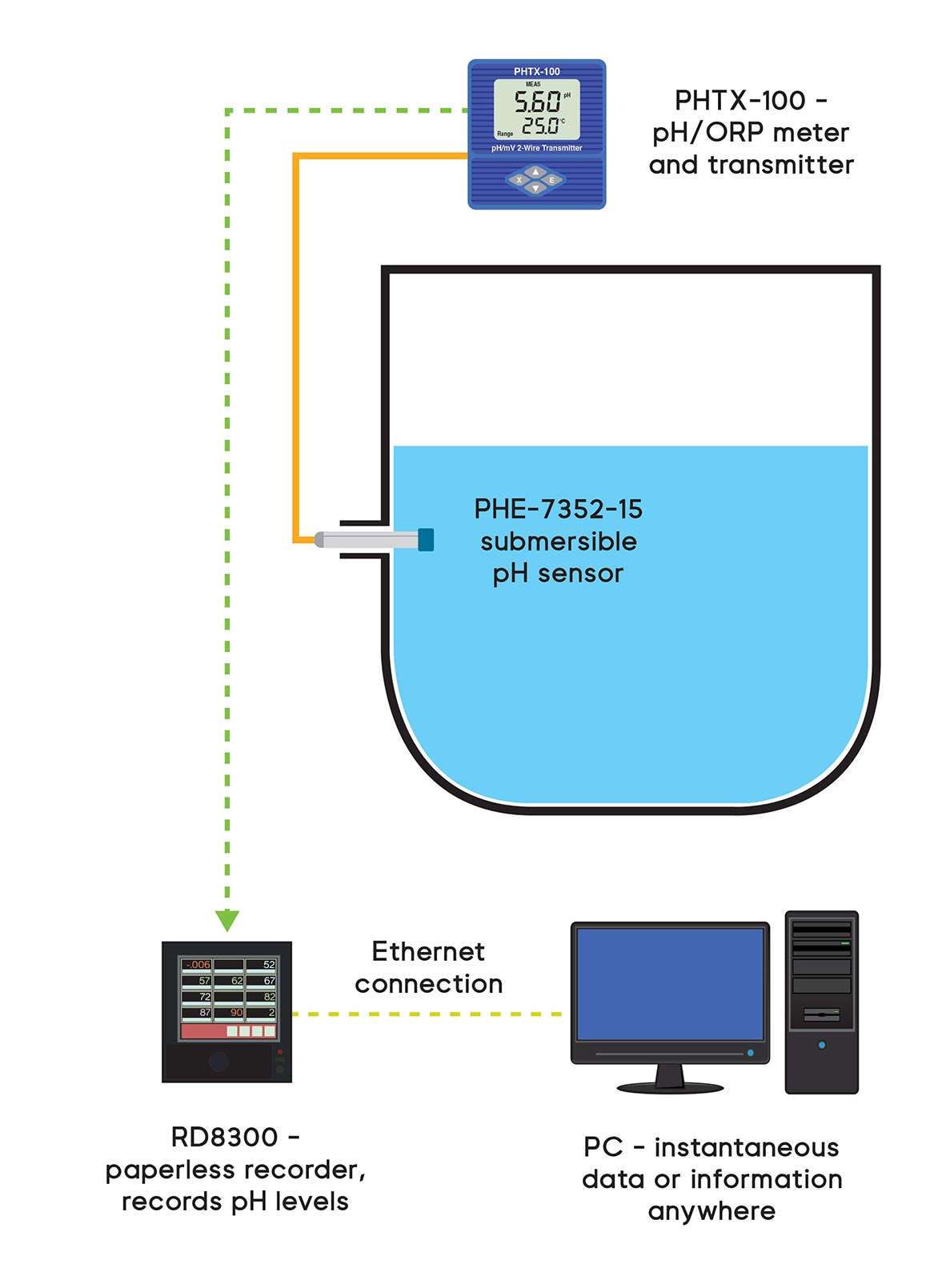
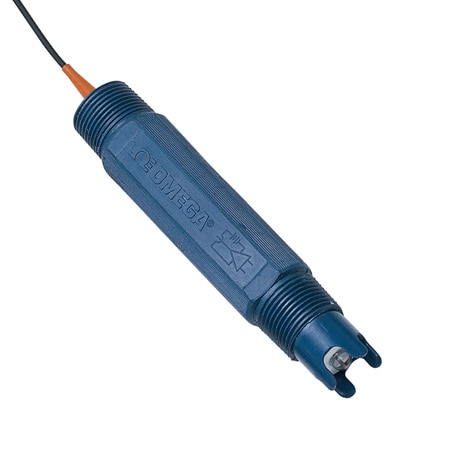
A high-temperature pH probe, like the PHE-7352-15 Heavy-Duty Combination pH Sensor For Submersible Applications, is mounted below the water line on the side of the tank. This placement ensures the sensing element remains hydrated, which is necessary for stable measurements. The sensor measures pH continuously, with built-in temperature compensation to maintain accuracy under elevated temperatures.
Signal Transmission
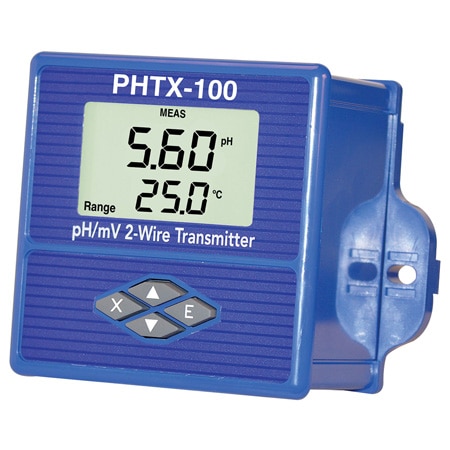
The probe is wired to a transmitter, like the PHTX-100 pH/mV Loop Powered Indicating pH/ORP Meter & Transmitter, forming a continuous measurement loop. The transmitter converts the signal to a 4 to 20 mA output. This analog signal can be integrated into a data acquisition system or building management system for monitoring and control.
Data Acquisition
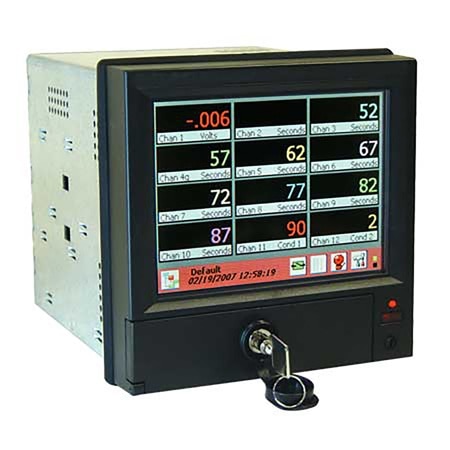
Paperless recorders, like the RD8300 Networkable Paperless Recorder Data Acquisition System, allow for continuous recording of pH levels, which can be accessed at any time while providing long-term historical records.
Innovative Solutions from DwyerOmega
Results and Process Benefits

Implementing continuous pH monitoring delivers improvements to both process control and operational efficiency. By eliminating the need for repeated sampling and manual testing, operators can significantly reduce the time and labor previously required to maintain acceptable pH levels.
Measurement accuracy is also improved. Temperature-compensated sensors provide more reliable readings than ambient-rated pH strips, particularly in elevated temperature environments where manual methods are prone to error.
As a result, maintaining a stable, near-neutral pH becomes more consistent. This leads to more predictable chemical conditions within the tank and supports more effective control of odor generation.