Need assistance? Call us: 1-800-663-4209



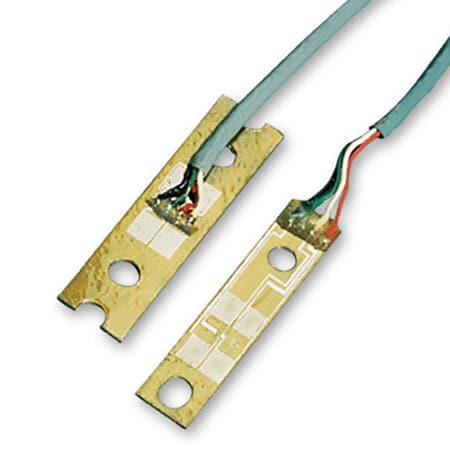
LCL
Full Bridge, Thin Beam Load Cell for Low Capacities
Models In Stock
- Measures Force, or Displacement
- Thermally Matched, Fully Active, Full Bridge Gage for Optimum Temperature Tracking
LCL
From
C$
249.47
Models In Stock


Product Overview
- Cable Length 9 in
- Electrical Connection Cable
- Hysteresis ± 0.50%
- Input Resistance 1200 ± 300 Ω
- Insulation Resistance 1000 Ω @ 50 Vdc
- Load Cell Type Bending Beam
- Operating Temperature, Max 93 °C
- Operating Temperature, Min -54 °C
- Output Resistance 1200 ± 300 Ω
- Process Temperature, Max 49 °C
- Process Temperature, Min -7 °C
- Repeatability ± 0.50%
- Safe Overload 150% FS
- Series ID LCL
- Supply Power Note 5 Vdc, 12V max
- Supply Voltage 5 Vdc
- Thermal Span Effect 0.02%/°F
- Thermal Zero Effect 0.02% FS/°F
- Wire Gauge 30 AWG
- Wiring/Connector Table Red: (+) Excitation; Black: (-) Excitation; Green: (+) Signal; White: (-) Signal
- Zero/Balance Error ± 0.75 mv/V
Supported Applications
The Omega LCL Series consists of full-bridge, thin-beam load cells designed to measure force or displacement. The series is engineered for use in medical instrumentation, home appliances, process control, robotics, and automotive applications.
Operating Conditions & Performance
The LCL Series operates within an ambient temperature range of -54 to 93°C (-65 to 200°F), with a compensated temperature range of -7 to 49°C (20 to 120°F). Temperature effects are specified as zero balance 0.02% FS/°F and output 0.02%/°F. The series features a combined error of 0.5% FS, with a rated output of 2mV/V nominal and an input/output resistance of 1200 ±300 Ω.
Electrical specifications include an excitation voltage of 5 Vdc (maximum 12V) and insulation resistance of 1000 MΩ @ 50 Vdc. The sensors are urethane coated, with a safe overload rating of 150% FS and full-scale deflection ranging from 0.25 to 1.27 mm (0.010 to 0.050").
Measurement Ranges & Materials
The series covers capacities from 0-113 g up to 0-18.14 kgf, with specific model numbers corresponding to each range:
- LCL-113G: 113 gf (Material: Beryllium copper)
- LCL-227G: 227 gf (Material: Beryllium copper)
- LCL-454G: 454 gf (Material: Beryllium copper)
- LCL-816G: 816 gf (Material: Beryllium copper)
- LCL-005: 2.27 kgf (Material: ≥301 SS for capacities ≥816 gf/2 lb; however, LCL-005 is listed as 2.27 kgf which exceeds the threshold, confirming 301 SS)
- LCL-010: 4.54 kgf (Material: 301 SS)
- LCL-020: 9.07 kgf (Material: 301 SS)
- LCL-040: 18.14 kgf (Material: 301 SS)
Note on material selection per source: Capacities ≥816 gf (2 lb) utilize 301 Stainless Steel, while capacities <816 gf (2 lb) use Beryllium copper.
Configuration Options
The LCL Series is offered with a standard electrical connection of 9" shielded PVC 4-conductor 30 AWG lead wire. The series supports two distinct mounting configurations based on capacity:
- Type 1 Mounting (LCL-113G through LCL-816G): Compatible with the LCL-CL1 mounting kit, which includes mounting blocks A, B, and C.
- Type 2 Mounting (LCL-005 through LCL-040): Compatible with the LCM-CL1 mounting kit, including four mounting blocks (two each of blocks A and B).
The series is RoHS compliant and Made in USA. Physical dimensions vary by model; low-range models feature a width of 20.3 mm (0.80 in) and length of 30.5 mm (1.20 in), while high-range models have a width of 9.525 mm (0.375 in) and length of 31.75 mm (1.25 in). Thickness varies by model.
Key Product Differences
The LCL Series distinguishes between low-capacity models (LCL-113G to LCL-816G) and higher-capacity models (LCL-005 to LCL-040). The primary variations include:
- Material Composition: Models below 816 gf use Beryllium copper, while models at or above this threshold utilize 301 Stainless Steel.
- Mechanical Dimensions: Beam width and thickness differ between the low-range (wider beam) and high-range (thinner/narrower profile relative to capacity scaling) configurations as detailed in the specifications table.
- Mounting Hardware Compatibility: The LCL-113G through LCL-816G models are not recommended for in-line loading (Type 2), whereas the higher-capacity series utilizes Type 2 mounting hardware. Specific model numbers dictate which mounting kit is required.


Show Ratings & Reviews
Rated 5 out of
5
by
Anonymous from
Good
the items ordered are a good quality. Customer service was able to help with my needs.
Date published: 2025-06-02
Does the strain gauge come with the mounting kit or do I have to buy it seperately?
The mounting kit sold separately. See links below.
https://www.dwyeromega.com/en-us/mounting-kit-for-load-cell/p/LCM-CL1
https://www.dwyeromega.com/en-us/mtg-kit-for-lcl-113g-816g/p/LCL-CL1
Date published: 2025-11-05
What is the stifness of the load cell the 113g type
Load cell stiffness is typically defined as the ratio of the load applied to the deflection of the load cell. For the LCL-113G, you will have to divide the load applied by the Full Scale Deflection to get your stiffness. The Full Scale Deflection will be listed under "product specs" when you search LCL-113G on website.
Date published: 2026-05-27
Can I connect this to an Arduino?
Thank you for your inquiry. The LCL load cell is a full strain gage bridge. If the nominal 5VDC excitation is applied to the load cell it will produce a 0 to 10mVDC over it's calibrated load range. You will need to verify if the Arduino will accept this low level signal.
Date published: 2020-11-10
What's the gage factor?
There is no gage factor associated with this load cell. We only supply the mV/V sensitivity (2 mV/V). FYI, The LCL-113G is current not available.
Date published: 2023-03-12
What is the wiring configuration for your LCL series?
WIRING CODE
RED = +EXC.
GREEN = +SIGNAL
BLACK = -EXC
WHITE = -SIGNAL
It is mentioned on attached datasheet as well.
Date published: 2024-08-22
Hi, is LCL load cell compatible with a HX711 signal conditioner?
Hello, we are not familiar with the HX711, please review their white paper here: https://learn.sparkfun.com/tutorials/load-cell-amplifier-hx711-breakout-hookup-guide/all
Date published: 2025-01-24