


Reliable measurement begins with signal integrity. However, accurate data acquisition depends not only on the quality of the sensors, but also on how their signals are prepared for measurement. In industrial environments, raw sensor outputs are often low-level, noisy, or mismatched to the input requirements of data acquisition systems. Signal conditioning addresses these challenges by modifying sensor outputs so they can be measured reliably and interpreted correctly.
Signal conditioning is the set of operations applied to a sensor’s output to prepare it for the next stage of processing. It modifies, scales, or converts raw signals into forms that are compatible with data acquisition hardware. This function is performed by a signal conditioner—an instrument or circuit that converts one type of signal into another suitable for monitoring, recording, or control.
Innovative Solutions from DwyerOmega
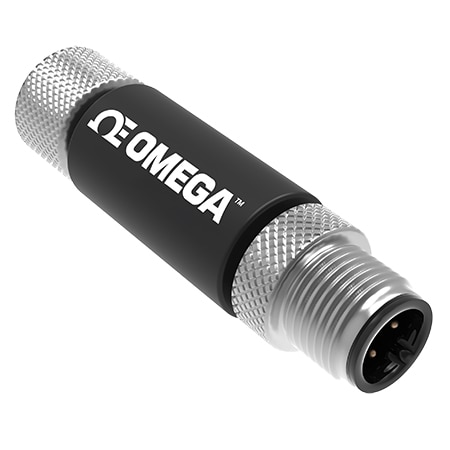
Why Signal Conditioning Matters
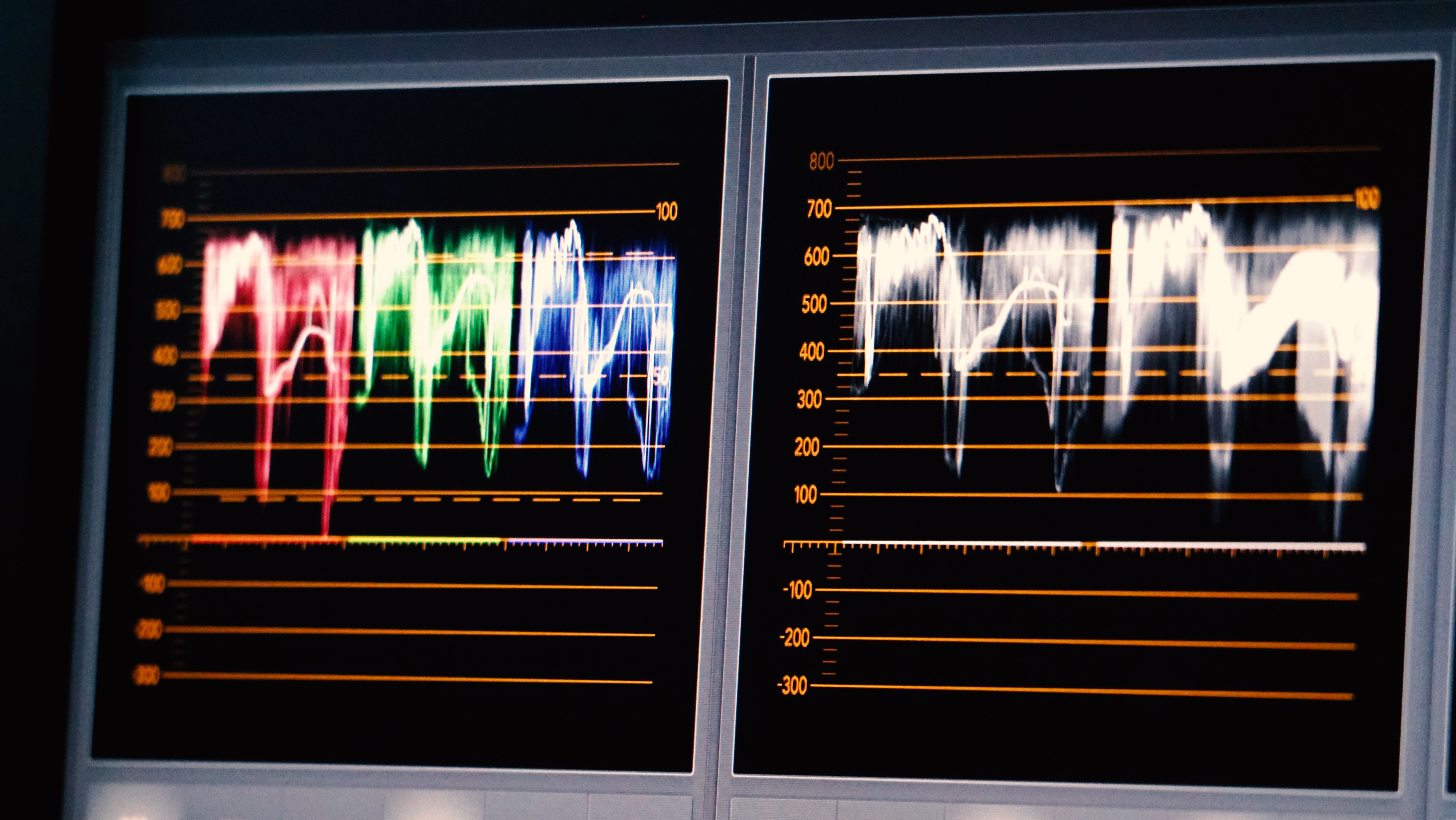
In practical applications, sensors and transducers are frequently exposed to electrically noisy or physically demanding environments. Many sensors and transducers also produce low-level outputs (such as small voltages, currents, or resistance changes) that are not well suited for direct input into a data acquisition (DAQ) system. Without conditioning, these signals are more susceptible to noise, distortion, and loss of accuracy.
Signal conditioners provide the interface between the sensor and the DAQ system. They prepare signals by applying functions such as amplification, filtering, isolation, and excitation to preserve signal integrity and ensure compatibility with downstream electronics.
How a Signal Conditioner Works
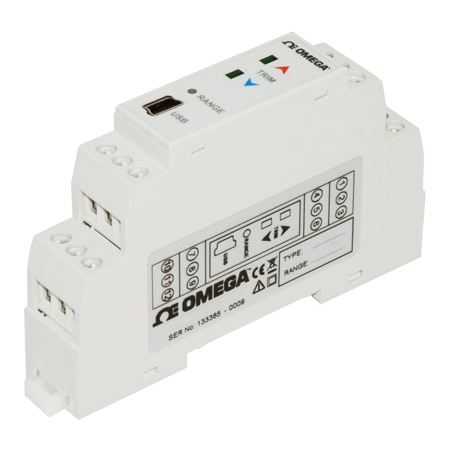
A signal conditioner is typically implemented as an electronic circuit with an input and output stage. The input receives a signal from a sensor measuring a physical variable. The circuit then applies one or more conditioning functions before passing a modified signal to the output for further processing.
Common signal conditioning functions include:
Amplification
Amplification increases the magnitude of a signal to improve resolution and signal-to-noise ratio. This is particularly important for low-level outputs from sensors such as thermocouples and strain gauges. For example, a 0–10 mV signal may be amplified to 0–10 V to better match the input range of a DAQ system.
Isolation
Isolation removes the direct electrical (galvanic) path between input and output. This helps protect sensitive equipment from overvoltage conditions and reduces the effects of ground loops and electrical noise. Signal transfer across the isolation barrier is typically achieved using optical, magnetic, or capacitive coupling.
Linearization
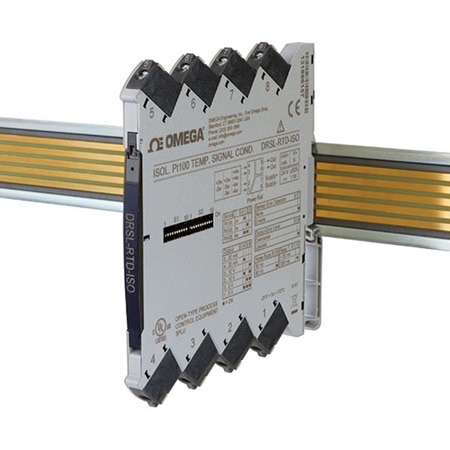
Some sensors produce outputs that are not linearly proportional to the measured variable. Linearization corrects this nonlinearity so that the output more accurately represents the physical measurement. Thermocouples are a common example requiring linearization.
Filtering
Filtering removes unwanted frequency components from a signal. Industrial environments often introduce noise at known frequencies, such as 50 Hz or 60 Hz from AC power systems. Appropriate filtering improves signal stability and measurement accuracy.
Excitation
Many sensors, including RTDs, strain gauges, and some pressure sensors, require a stable excitation source (voltage or current) to operate. The accuracy and stability of the excitation signal directly influence measurement precision.
Cold Junction Compensation (CJC)
Thermocouple measurements depend on temperature differences, making them sensitive to variations at the reference junction. Cold junction compensation corrects for ambient temperature changes at this junction, improving overall measurement accuracy.
Signal Conditioners
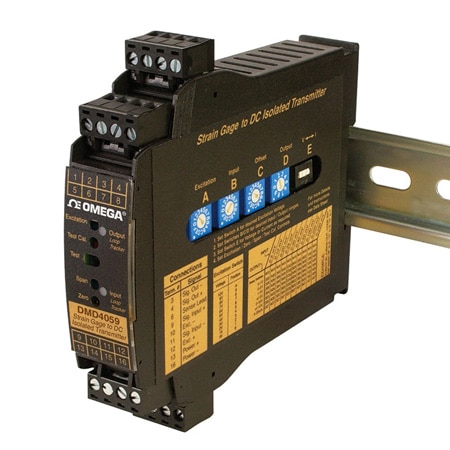
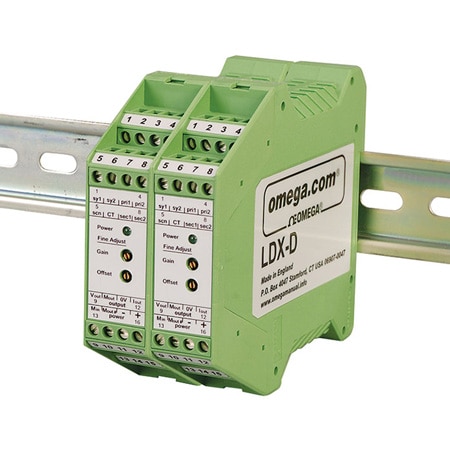
DIN Rail Signal Conditioners
DIN rail signal conditioners provide a compact, modular approach to signal conditioning within control panels. They convert inputs from sensors such as thermocouples and RTDs into standardized output signals suitable for data acquisition and control systems. Their form factor simplifies installation, expansion, and maintenance.
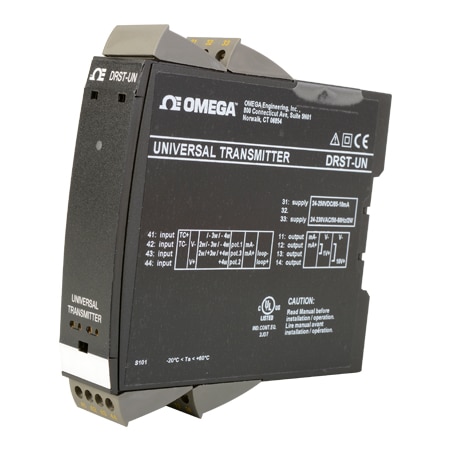
Universal Programmable Transmitters
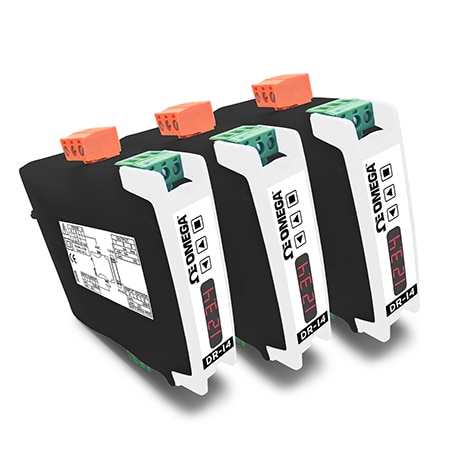
Universal Programmable Transmitters (UPTs) are used to monitor and control process variables across industrial, commercial, and laboratory environments. They support multiple input types and provide isolated I/O, configurable scaling, and local user interfaces for setup and calibration. Certifications such as UL and c-UL support use in regulated installations.
Specialty Conditioners
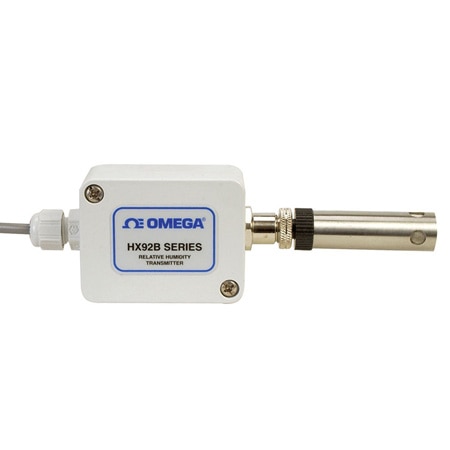
Specialty signal conditioners are designed for applications that require targeted measurement or control functions, such as temperature, strain, or vibration.
Head Mount Signal Conditioners
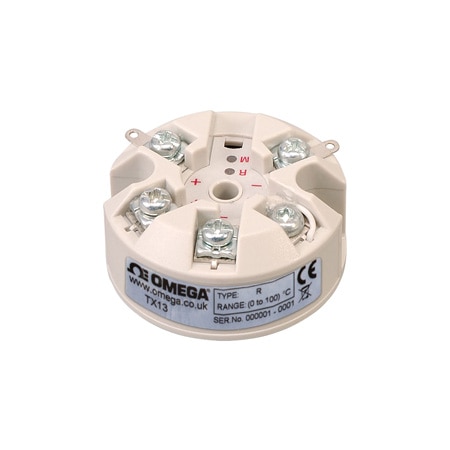
Head mount signal conditioners are installed directly at the sensor, minimizing noise pickup and signal degradation over long runs. They convert and condition signals from devices such as thermocouples, RTDs, and millivolt sources into standardized outputs. Many models offer configurable ranges and simple pushbutton or software-based setup.
Chart Recorders Introduction to Chart Recorders