Need assistance? Call us: 1-800-663-4209



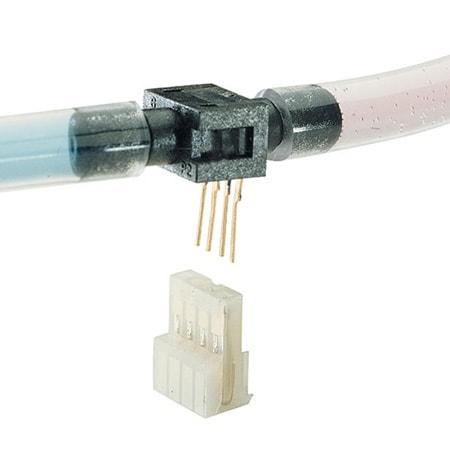
PX26
Wet/Wet Differential Board Mounted Pressure Sensors
Models In Stock
- Wet/Wet Differential Pressure
Water and Many Other Liquids May be Applied to Both Sides - Gage and Differential Models Available
- Miniature PC Board Mountable Design
- SIP 4-Pin Package
PX26
From
C$
122.17
Models In Stock


Product Overview
- Accuracy ± 1 %
- Accuracy Class > 0.25%
- Compensated Temperature, Max 50 °C
- Compensated Temperature, Min 0 °C
- Electrical Connection Pins
- Electrical Output Note 1 psi = 16.7 mV; 5 psi = 50 mV; >5 psi = 100 mV; 250 psi = 150 mV
- Gauge Type Silicon Piezoresistive sensor
- Hysteresis 0.2% FS
- Input Resistance 7.5 kΩ
- Operating Temperature, Max 85 °C
- Operating Temperature, Min -40 °C
- Output Resistance 2500 Ω
- Output Signal Millivolt
- Process Connection Size 5 mm
- Process Connection Type Stem
- Repeatability Error 0.2% FS
- Response Time 1 ms
- Series ID PX26
- Span Setting Adjustable Range ± 3.0 mV
- Stability 0.005
- Stability Note 1-Year Stability: 0.5% FS
- Supply Voltage 10 Vdc
- Thermal Effect on Zero error, Max 1 mV, 1% rdg
- Weight 2 g
Supported Applications
The Omega PX26 Series consists of wet/wet differential and gage pressure sensors designed for board-mounted installations. These four-active piezoresistive bridge devices produce an output voltage proportional to applied pressure, featuring a unique conductive seal between the silicon diaphragm and plastic housing that allows both sides of the sensor to handle liquids.
Documented compatible media include oils, lacquer thinner, hydraulic fluid, most petroleum products, water, salt water, and many other liquids. The series is not recommended for use with freons. Input media must be limited to those which will not attack polyethimide (polyester), silicon, or fluorosilicone.
Operating Conditions & Performance
The PX26 Series operates within an ambient temperature range of -40 to 185°F (-40° to 85°C) and a compensated temperature range of 32° to 122°F (0° to 50°C). Storage temperatures are rated from -67° to 212°F (-55° to 100°C).
Performance specifications include:
- Accuracy/Linearity: ±0.25% FS BFSL typical (±1% maximum) for P2 > P1.
- Hysteresis and Repeatability: 0.2% FS.
- Response Time: 1 ms.
- Stability: 0.5% FS over one year.
The series is qualified to withstand shock up to 150 G and vibration at 2kHz @ 20 G sine. Proof pressure ratings vary by range: 20 PSI for ≤5 PSI ranges, 45 PSI for the 15 PSI range, 60 PSI for the 30 PSI range, and 200 PSI for the 100 PSI range.
Configuration Options
The PX26 Series is available in Gage (reference to atmospheric pressure) and Differential (two independent pressure sources) configurations. Measurement ranges span from low-pressure applications up to high differential pressures:
- Gage Ranges: 0-1 PSIG, 0-5 PSIG, 0-15 PSIG, 0-30 PSIG, 0-100 PSIG, and 0-250 PSIG.
- Differential Ranges: ±1 PSID, ±5 PSID, ±15 PSID, ±30 PSID, ±100 PSID, and ±250 PSID.
Electrical specifications include an excitation voltage of 10 Vdc (max 16 Vdc @ 2 mA). Output signals vary by range: 16.7 mV for the 1 PSI range, 50 mV for the 5 PSI range, and 100 mV for ranges greater than 5 PSI.
Physical dimensions are compact at 21.8 mm (0.86 in) length, with a diameter of 6.4 mm (0.25 in). The pressure port features a 0.2" dia. and 0.25" collar dia. Wetted parts consist of polyethimide, silicon, and fluorosilicone.
Accessories
- CX136-4: 4-pin mating connector (sold separately).
- TX4-100: 4-conductor copper wire, 30.5 m (100').
- TY316-100: Flexible plastic tubing, 30.5 m (100').
Key Product Differences
The series distinguishes between Gage and Differential models via the model number suffix: "GV" denotes a gage sensor referenced to atmospheric pressure, while "DV" indicates a differential sensor capable of measuring two independent pressure sources. The PX26 construction utilizes silicon sensors with a larger diaphragm than traditional gold wire silicon sensors, intended for increased long-term stability.
Model numbers follow the format PX26--. For example, PX26-030DV represents a bi-directional range of ±30 psid. The electrical connection utilizes a 4-pin mating connector (CX136-4) with Pin 1 as +EXC (notched), Pin 2 as +OUT, Pin 3 as -EXC, and Pin 4 as -OUT.
Users are advised to install pressure snubbers or surge chambers to avoid damage from fluid hammer and surges, which can occur when liquid flow is suddenly stopped or begun. Symptoms of such damage include large zero offsets, constant output regardless of pressure, or no output at all.

Show Ratings & Reviews
Rated 3 out of
5
by
Jack2019 from
Sometimes OK but sometime not
We bought this a month ago for our water pressure loop test, initally it was good and be sensitive to pressure drop changes and read correctly.
However, after switching and squeeze air out of in and outlet lines, found the connection was easy to break and get wet so readings were really out of range.
Date published: 2019-01-23
Rated 5 out of
5
by
Cray from
Pressure measurements inside small ID thin tubing
We use these pressure gauges in combination with the PLATINUM™ Series Digital Panel Meters (DP8PT-006) to determine the pressure inside thin flexible tubing as water is flowing inside. WE use three of these pressure gauges along the tubing and can determine the pressure changes with the experimental conditions. They work well and are responsive.
Date published: 2024-02-14
Rated 5 out of
5
by
WJB ENTERPRISE from
Filter Supplies
This order and every one I have placed with Omega has been handled very efficiently.
Date published: 2023-03-15
What voltage regulator should be used for this transducer? Is there one commercially available?
Nominal excitation for the PX26 Series sensor is a regulated 10VDC. With 10VDC applied the output signal from the PX26 would be 0 to 16.7 mVDC for the 1 psi unit, 0 to 50 mVDC for the 5 psi unit and 0 to 100 mVDC for the 15, 30, 100, and 250 psi units. Current draw from the power supply would be 2 mA per unit. We offer a regulated power supply part# FAR-1 that would supply regulated 10VDC.
Date published: 2020-06-09
The PX26-001DV shows an output of 10mv/V, according to your selector menu on this web page, but all data sheets indicate 1 psi models as having 0-16.7 mV output when connected to a 10V DC power supply. Which is it?
The error is in the part number builder in the product page. The 1 PSI range units in both the Differential and Gage models have a 1.67 mV/V sensitivity. Having the error corrected
Date published: 2023-02-14
We are using the +- 1 psi differential pressure sensor. When we connect the pressure sensors as shown in the data sheet (with 10V input), we are measuring the ouput voltage to 2.6V. Do you know why, is it an off-set voltage?
Are you wiring the sensor differentially (power connections separate from signal connections). If the negative signal connection and the negative excitation are connected to a common point you will get a high voltage signal output. If the connects are not commoned together you most likely have damaged sensor sensor
Date published: 2021-04-22
I plan to use this transducer with electrically conductive liquids. Is this device electrically insulated from the fluid to prevent any short circuit between the fluid and the sensing circuit? Also, is it suitable for use under a magnetic field? Thanks!
It should be isolated from the media. As long the conductive liquid will not attack it. Input media are limited to those media which will not attack polyester, flurosilicone, or silicon, such as oils, lacquer thinner, hydraulic fluid, most petroleum products, water and salt water. Not recommended for freons. This can't be used under magnetic field.
Date published: 2025-10-24
I'm using a PX26-005DV to measure the pressure drop . At high flow rates, the sensor works but at low flow rates where pressure drop is 0.01 psi, the sensor gives negative value. Is it because of range of the sensor? would PX26-001DV solve the problem?
Hoomichi, you are trying to measure a pressure drop that is too low to be captured by this sensor. This is a low cost unit that can measure at quarter percent accuracy. Please see the PX409 differential series models for better measurement. For more questions please email pressure@omega.com
Date published: 2020-12-30
Do you have recommended NI DAQ to log pressure measured by PX26?
We would not have any information on what NI DAQ would work with the PX26 transducer.
Date published: 2023-07-06
We are using an omega sensor that looks to be from the PX26 family for differential pressure. The sensor is etched with the code 6BF60 and 201033N. We want to have a spare. Can anyone equate the sensor we have with a current model we can purchase?
Code 6BF6D is the equivalent to our PX26-005DV
Date published: 2021-05-19
This sensor says that it is for wet applications.... Is it possible to use this with air, or would that not work well/correctly?
Any of our sensors that we state are for wet application will also work fine use with gases. Air would be just fine.
Date published: 2021-04-08