Need assistance? Call us: 1-800-663-4209



Particulate-Matter
PM2.5, 0-500u g/m3, 4-20 mA and 0-10 VDC, Modbus RS-485
- Monitoring Air Quality
- Air Purifiers
- WELL Building Standard


Product Overview
- Accuracy ± 10 μg/m3
- Accuracy Detail +/- 10% reading @ 100 ~ 500/600 μg/m3 @ 25°C/50%RH
- Approvals CE, RoHS2
- Data Interface Modbus RTU, RS485
- Electrical Connection Screw Terminal
- Electrical Output 4 to 20 mA, 0 to 10 Vdc
- Enclosure Material ABS Plastic
- Enclosure Ratings UL94 V-0
- Input Type Fan
- Loop Resistance, Max 4-20 mA: 500 Ohms maximum (Default)
- Material Construction Option none
- Operating Humidity 0 to 95% RH, non-condensing
- Operating Temperature, Max 122 °F
- Operating Temperature, Min 32 °F
- Protection IP30 (Room)
- Relay Output 3 A @ 30 Vdc, 3A @ 250 Vac
- Resolution 1 µg/m3
- Response Time In continuous service mode, sample time <1s, response time <10s
- Sensor Type Laser particulate matter sensor
- Series ID Particulate-Matter
- Service Life MTBF more than 3 years in continuous service mode, service life up to 8-10 years in auto (intermittent) service mode
- Storage Temperature, Max 70 °F
- Storage Temperature, Min -30 °F
- Supply Current 50 mA
- Supply Voltage 16 to 28 Vac, 16 to 35 Vdc
- Tightening Torque 0.45 lb-in (0.5 Nm) nominal
- Trip Point Note Relay Trip Point: 100 (Factory set), user adjustable
- Warm Up Time 15 minutes
- Weight 270 g
- Wire Gauge 22 to 16 AWG
Supported Applications
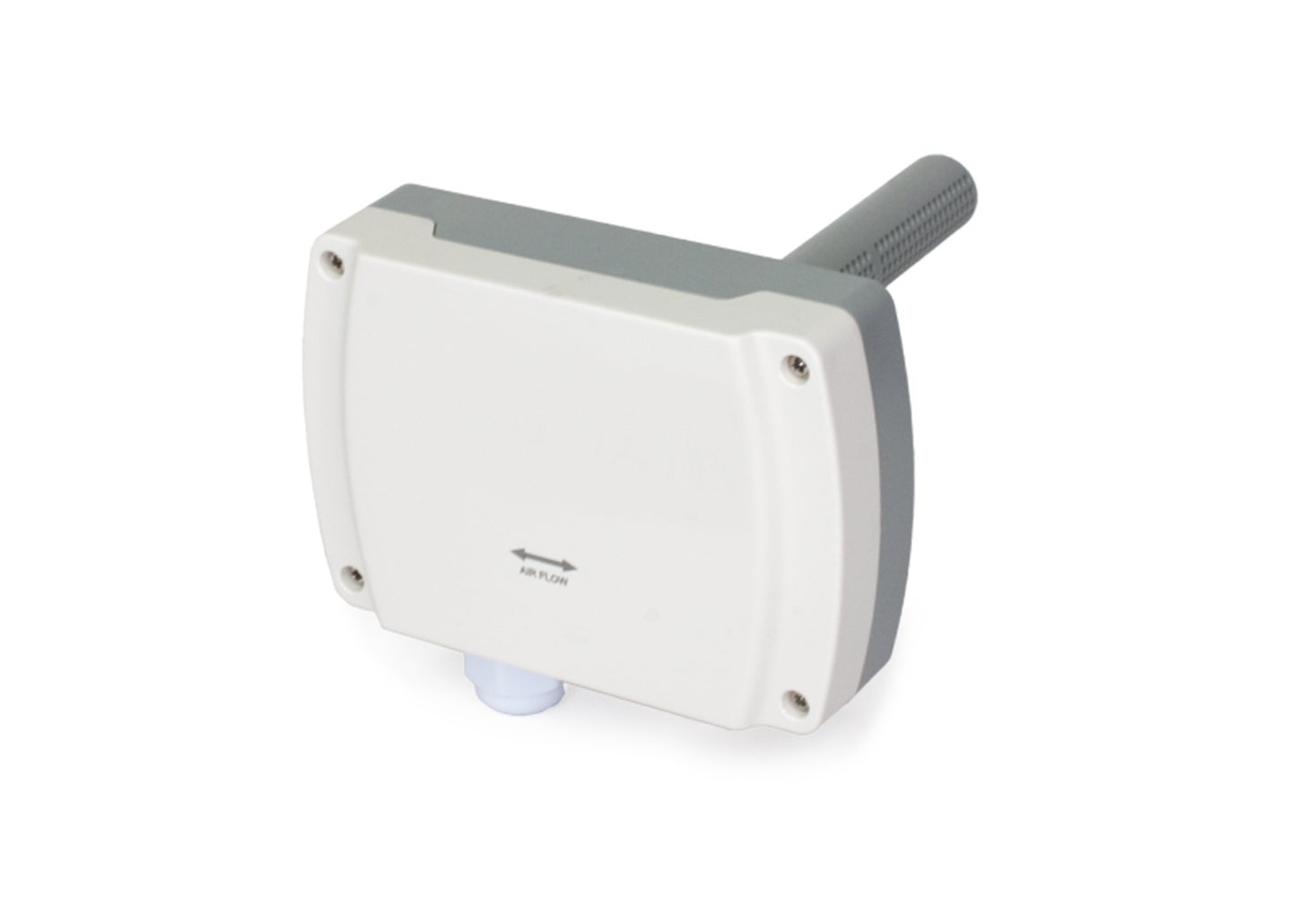
The ACI PM series transmitters are designed to measure particulate matter (PM) concentration in the air. The product overview identifies specific measured substances including smoke, smog, bacteria, fine dust, and liquid droplets. These units utilize a laser particulate matter sensor operating on a laser scattering principle with fan sampling.
Operating Conditions & Performance
The series supports two measurement ranges: particles less than 2.5 µm in diameter (PM2.5) and particles less than 10 µm in diameter (PM10). The sensor operates via a laser scattering principle with fan sampling.
Power requirements are specified as 24 VDC or 24 VAC. Output signals include 0-10 VDC, 4-20 mA, and RS485 Modbus RTU communication. Electrical connections utilize terminal blocks for 1 or 2 wires per position to allow daisy chaining.
Installation warnings note that performance may decrease in extreme environments such as high humidity, high temperature, excessive dust, or oil mist. The sensor is sensitive to strong light entering the housing and vibration. To maintain accuracy, installation should avoid air registers, diffusers, vents, windows, confined areas (shelves, closed cabinets), heat sources (lamps, radiators, direct sunlight), and wall cavities with unsealed penetrations.
Configuration Options
The series offers configurable output signals and communication protocols. Available outputs include 0-10 VDC on Terminal 3, 4-20 mA on Terminal 4, and RS485 (Modbus RTU). The sensor features two jumper-selectable modes: Normal for continuous monitoring and Auto to reduce measuring time and extend service life; the default mode is AUTO.
Communication parameters are configurable via Modbus registers or menu adjustments:
- Baud Rate: 9600 (default) or 4800
- Parity: None, Odd, Even
- Slave Address: Configurable from 1 to 255 (1-32 recommended)
- Function Codes: Supports 03H/06H; address 0 is for broadcast and 255 (0xFF) for special mode read data
The series supports relay control with multiple modes defined by parameters including Set Point, Dead Band, Actuate Delay, and Restore Delay. Relay activation can be configured to trigger below a set point, above a set point, between high/low limits, or outside high/low limits.
Key Product Differences
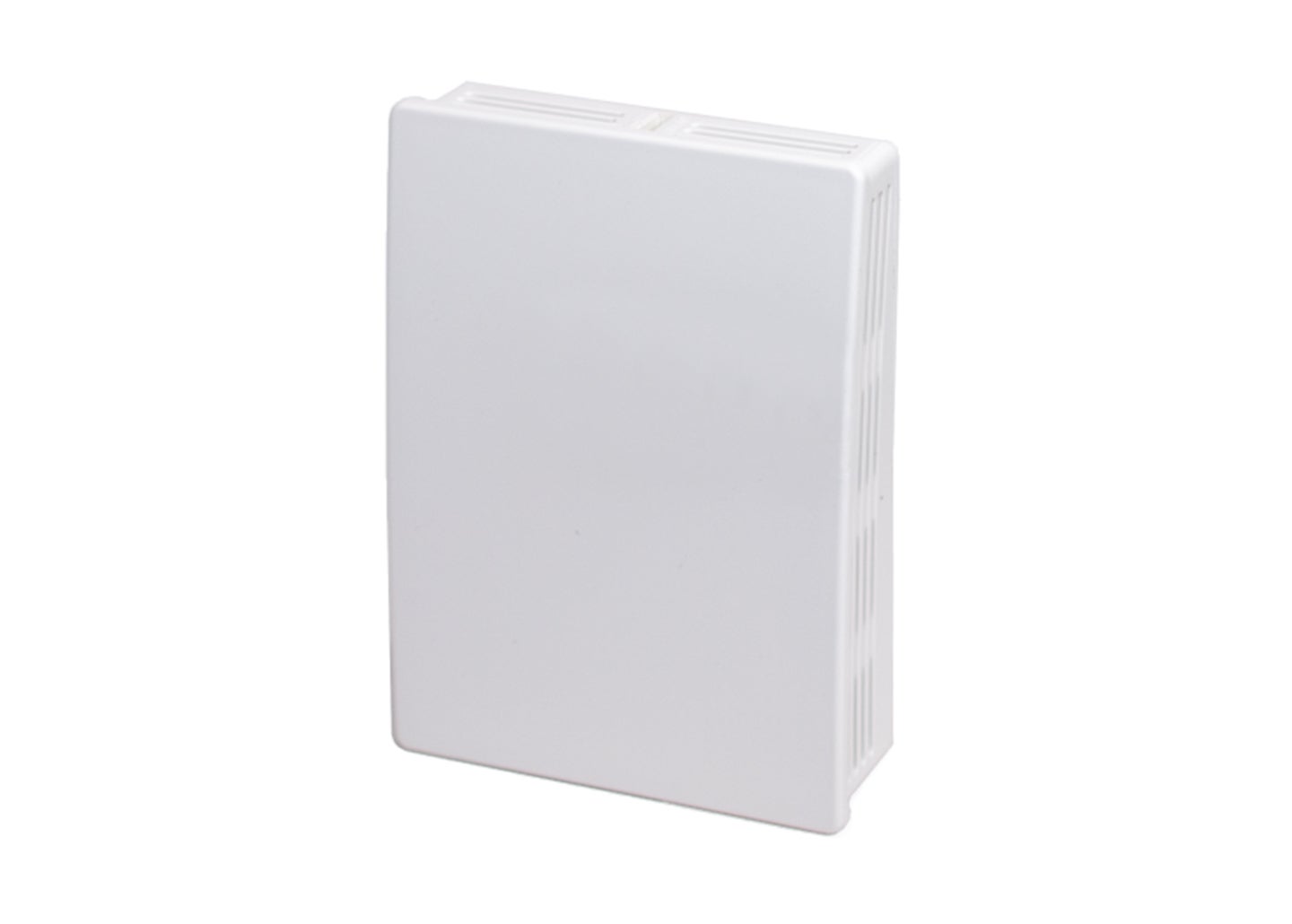
The series includes distinct model configurations identified by part numbers PM-D, PM-R, PM-R-LCD, and PM10-D. The PM-ROOM designation is referenced in the product overview for room-based monitoring applications. Physical dimensions vary between housing styles; one configuration measures 4.79" (121.55 mm) height x 3.268" (82.00 mm) width x 0.984" (25.00 mm) depth, while another measures 3.99" (101.353 mm) height x 4.331" (110.00 mm) width x 4.921" (125.00 mm) depth.
Wiring recommendations specify the use of 16 to 26 AWG twisted pair or shielded cable, with Belden 3105 recommended for Modbus communication wiring due to its 120 ohm input impedance. RS-485 networks require daisy chain topology; 'Star' or 'T' wiring is not supported. A termination resistor (120 Ω) controlled by a jumper on J8 is required at the last device in the chain.
PDFs & Manuals

Show Ratings & Reviews
