Need assistance? Call us: 1-800-663-4209



Balco-Flush-Mount
Balco Flush Mount
- Museums
- Historical Buildings
- Monitoring Space Temperatures
- Office Buildings
- Schools
- Retail
- Remote Sensor


Product Overview
- Accuracy 70ºF (21.1ºC) : +/- 1%
- Alloy Material (-) Copper
- Alloy Material (+) Copper
- Electrical Connection Pigtail Leads
- Insulation Etched Teflon (PTFE) Colored Leads
- Number of Sensing Points 1
- Operating Current 5 mA
- Operating Humidity 10 to 95% RH, non-condensing
- Operating Temperature, Max 115 °C
- Operating Temperature, Min -40 °C
- Output Detail Sensor Output @ 0ºC (32ºF): 1000 Ohms nominal
- Response Time 8 Seconds nominal
- Series ID Balco-Flush-Mount
- Stability +/- 0.05% after 1000 Hours @ 150ºC (302ºF)
- Storage Temperature, Max 85 °C
- Storage Temperature, Min -40 °C
- Temperature Coefficient 4618 ppm/ºC
- Temperature Measurement Range -40 to 115°C
- Wire Gauge 22 AWG
Supported Applications
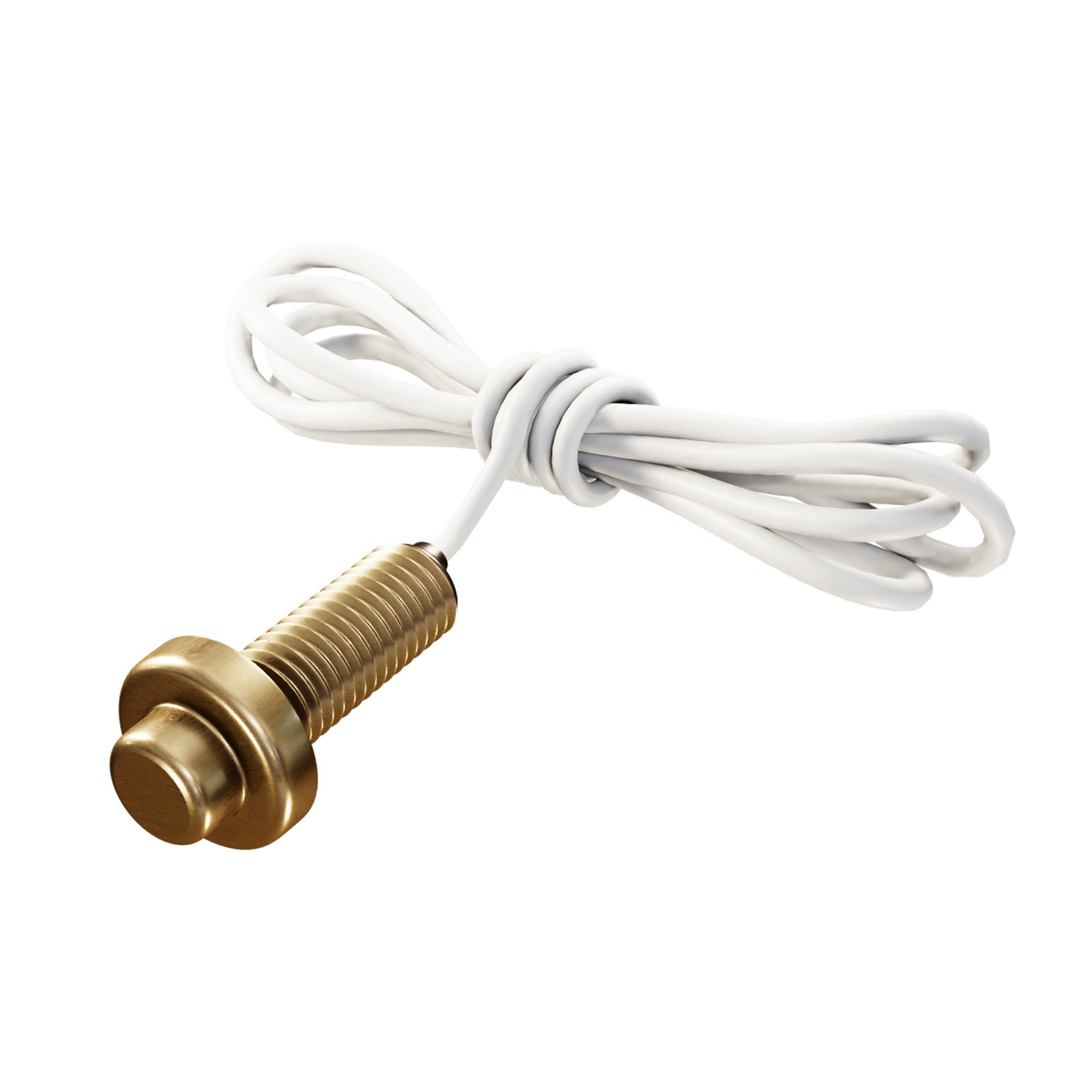
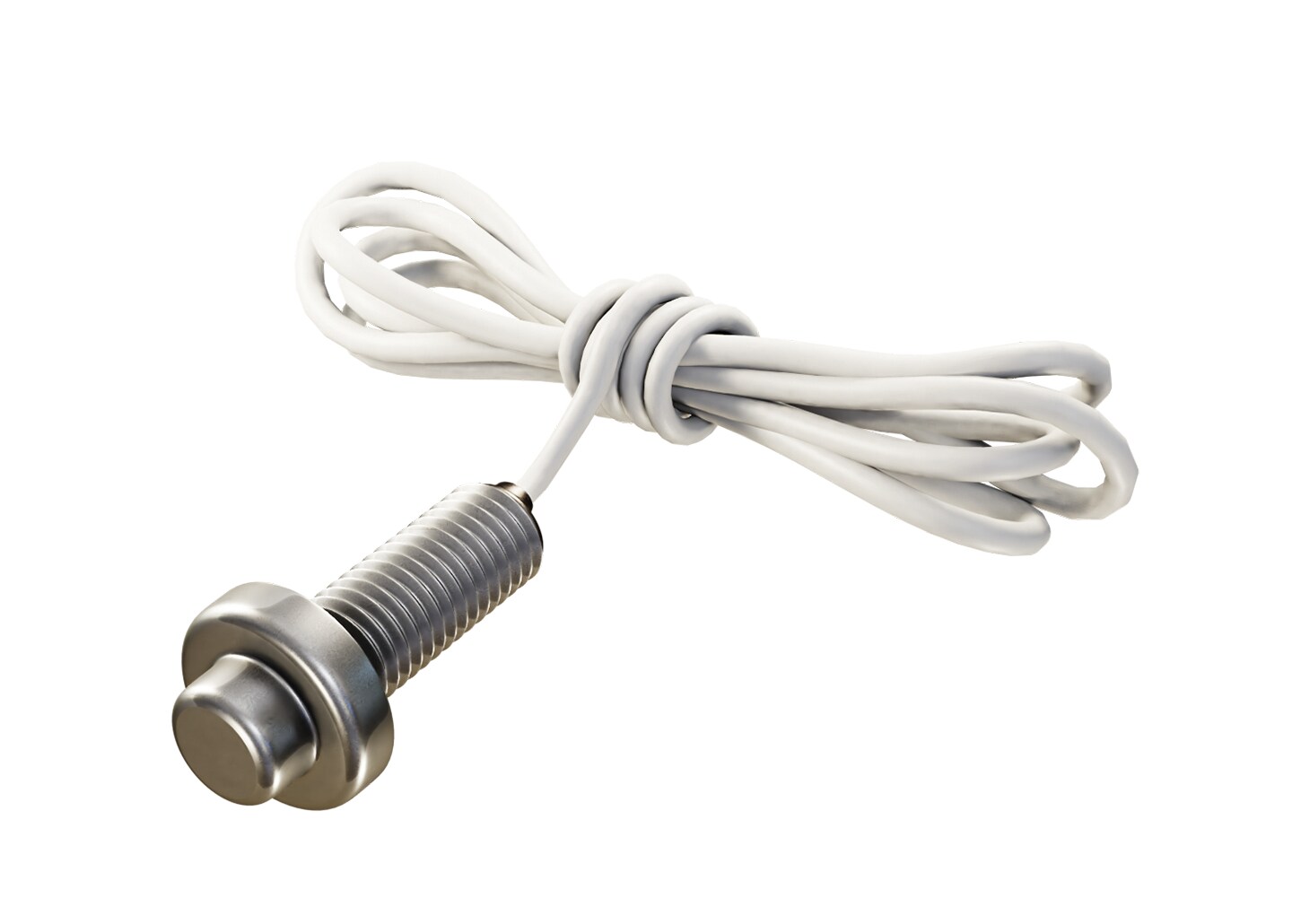
The ACI Balco Flush Mount series consists of low-profile button sensors designed for temperature measurement in applications where aesthetics are a primary concern. These flush-mount units feature an encapsulated design intended to eliminate the effects of moisture and increase thermal response time using thermally conductive epoxy.
Documented installation contexts include locations hidden underneath cabinets or shelving units, within decorative metal plates, trim, drywall, or mounted from a ½" piece of conduit coming down from a ceiling or roof. The series supports optional NIST Certificates as designated in the product ordering grid.
Operating Conditions & Performance
The Balco Flush Mount sensors utilize a PTC (Positive Temperature Coefficient) RTD element with two non-polarity sensitive wires. Key performance parameters include:
- Sensor Output: 1000 Ohms nominal at 70°F (21°C).
- Accuracy: +/- 1% at 70°F (21°C).
- Temperature Coefficient: 4618 ppm/°C over the range of 0-100°C.
- Sensor Stability: +/– 0.05% after 1000 Hours @ 150°C (302°F).
- Response Time: 8 Seconds nominal for a 63% step change.
- Maximum Operating Current: 5 mA.
Operating and storage temperature ranges vary by enclosure material. The A/BALCO-PBS (ABS) series operates from -40 to 70°C (-40 to 158°F), while the A/BALCO-BBS (Brass) and A/BALCO-SBS (304 Stainless Steel) series operate from -40 to 121°C (-40 to 250°F). All variants support a storage temperature range of -40 to 85°C (-40 to 185°F). The operating humidity range is 10 to 95% RH, non-condensing.
Installation and Environmental Notes
If painting the sensor, coat with as little paint as possible to avoid affecting accuracy or responsiveness. When using a shielded cable, connect only one end of the shield to ground at the controller; connecting both ends may cause a ground loop.
Configuration Options
The series is available in three enclosure configurations with distinct dimensions and mounting hardware:
- A/BALCO-PBS (Plastic Button): ABS housing, UL94-HB flammability rating. Dimensions: 1.00" (25.4mm) x 0.750" (19mm). Weight: 0.04 lbs. (18.15g).
- A/BALCO-BBS (Brass Button): Brass housing. Dimensions: 1.20" (30.48mm) x 0.700" (17.78mm). Weight: 0.10 lbs. (45.36g).
- A/BALCO-SBS (Stainless Steel Button): 304 Stainless Steel housing. Dimensions: 1.20" (30.48mm) x 0.700" (17.78mm). Weight: 0.10 lbs. (45.36g).
All models feature two, 24" (61 cm), 22 AWG (0.65mm) etched Teflon (PTFE) colored leads meeting Mil Spec 16878/4 Type E standards with silver-plated copper conductors. Lead wire colors are Orange/Yellow.
Mounting kits vary by material: the Plastic Button Sensor includes an anchor, while Brass and Stainless Steel models include spacers and a brass nut. Agency approvals for the series include CE, RoHS2, and WEEE.
Key Product Differences
The primary distinction between variants is the enclosure material (ABS, Brass, or 304 Stainless Steel), which dictates the maximum operating temperature range and physical dimensions. The ABS variant offers a lower profile diameter but has a reduced upper temperature limit compared to metal housings.
Ordering options allow for the selection of an optional NIST Certificate (3 Points) via the model number suffix, or no certificate with the default configuration. All variants share identical electrical specifications including sensor output, accuracy class at 70°F, and lead wire construction.
PDFs & Manuals