


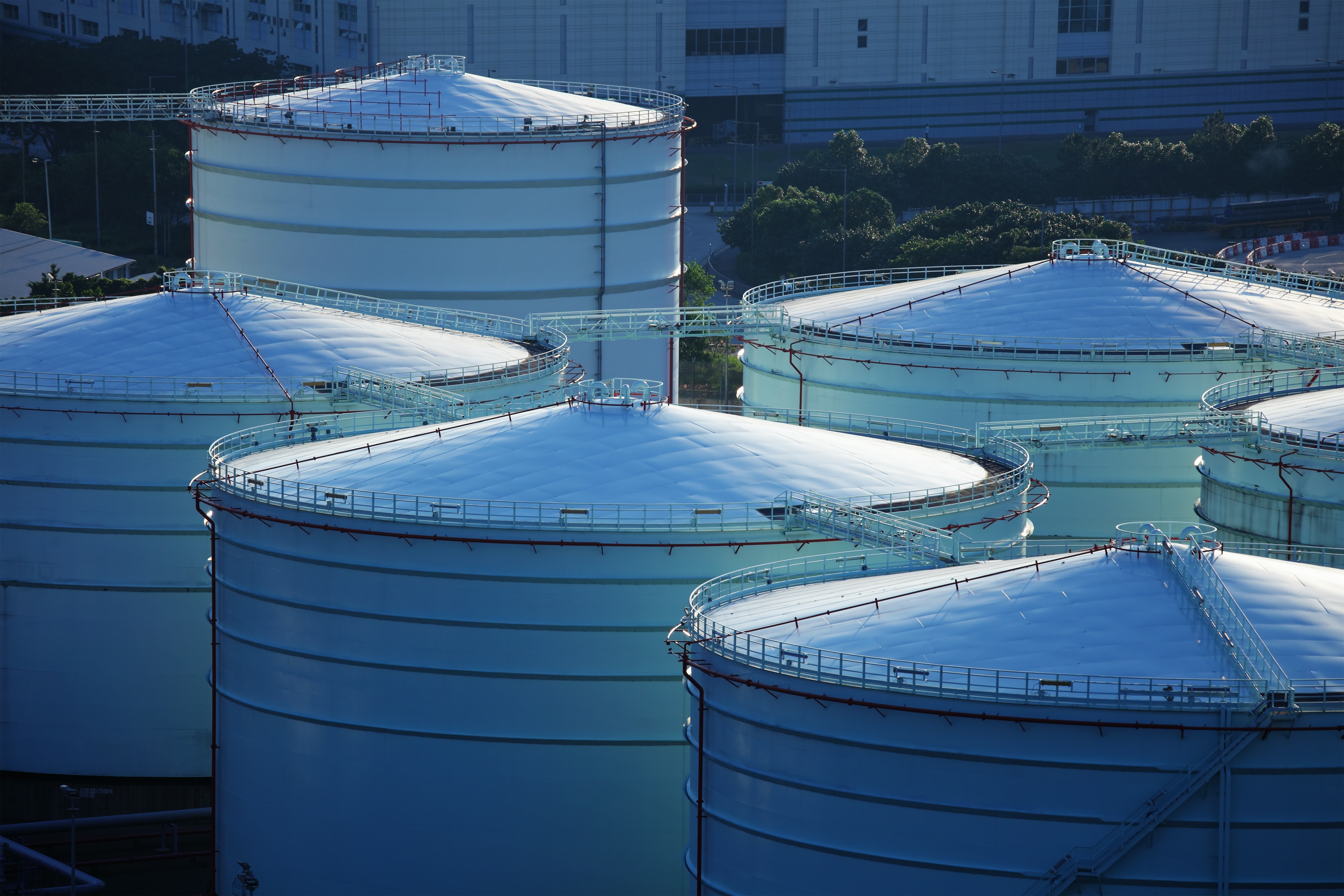
Knowing the level of material inside a tank at a given moment is essential in many applications. Recording how that level changes over time provides additional insight into tank operation, revealing trends and conditions that a single level reading cannot.
A continuous level transmitter can provide a proportional measurement that shows how full a tank is, while a level switch can confirm when a material has reached a specific point. Connect those instruments to a data logger, and those individual readings become a historical record that can be reviewed for trends, fill and drain cycles, alarms, and changes in operating conditions.
However, the two instruments do not connect to a data logger in the same way. A 4-20 mA level transmitter produces an analog signal, while a level switch provides a discrete contact state.
Defining What You Need to Record

Before selecting channels or running wires, decide what the record needs to tell you.
Use a continuous transmitter when you need to know:
- The measured level at each logging interval
- How quickly a tank is filling or draining
- When a process cycle starts and stops
- Whether consumption or transfer rates are changing
- How close the material is to a defined operating limit
Use a level switch when you need to know:
- Whether material has reached a specific point
- When a high- or low-level condition began
- How long the switch remained in that state
- Whether a separate point-level device confirmed a critical condition
Understanding the Two Signal Paths
A 4-20 mA transmitter represents the full measuring span with a changing current signal. After that signal is scaled into engineering units, each sample can show the measured level at a particular time. A series of samples creates a continuous trend that can be used to evaluate fill rates, drain rates, operating cycles, and movement toward an alarm threshold.
Signal Path Comparison What Does Each Input Tell the Data Logger?
“What was the level?”
Records a proportional measurement across the full measuring span.
“Had the material reached this point?”
Records whether a defined level threshold was active or inactive.
A level switch produces a state rather than a proportional measurement. Its contact is either open or closed based on whether material has reached the switch location. The resulting record does not show how full the tank is between events. It shows when the threshold was crossed, when the contact returned to its normal state, and how long the condition remained active.
Using both inputs can add context to the record. The continuous measurement documents movement throughout the tank, while the point-level device creates a distinct event marker at a defined threshold.
Plan Inputs, Power, and System Capacity
Before wiring either instrument, compare its output, power requirements, and electrical limits with the available logger channels.
For a two-wire 4–20 mA transmitter, verify:
- The logger has a compatible current input
- The logger input burden, field wiring, barriers, and other series devices remain within the transmitter's loop-resistance limit
- The selected current range can capture any intended fault or overrange signal
For a dry-contact level switch, verify:
- The logger has a contact-closure or compatible digital input
- The switch has the separate supply required to operate its sensing circuit and relay
- The relay contact is suitable for the digital input's voltage and current, including any applicable minimum wetting-current requirement
- The selected normally open or normally closed state produces the required fail-safe behavior
Channel count also affects system design. A multichannel logger may have many analog inputs but only a small number of digital inputs. A site that needs continuous measurement from several vessels and point-level confirmation from each one can therefore reach the digital-input limit long before using every analog channel.
Innovative Solutions from DwyerOmega
Series OM-240 24-Channel Ethernet Data Logger

The Series OM-240 24-Channel Ethernet Data Logger provides centralized monitoring and recording for industrial, environmental, and structural measurement applications. Its 24 independently configurable differential analog inputs support thermocouples, RTDs, current, voltage, strain, and vibrating-wire sensors, while two digital inputs can record discrete states from devices such as level switches. This combination allows continuous 4-20 mA measurements and point-level events to be captured by the same system. An embedded web server supports browser-based configuration, data viewing, wiring guidance, and diagnostics without requiring a separate software package. Logged data can be viewed graphically with the appropriate license or exported as a CSV file for analysis and reporting.
Key Features:
- 24 independently configurable differential analog input channels
- Two digital inputs and one digital output for monitoring discrete devices
- Supports thermocouples, RTDs, mV, mA, mV/V, NTC, and vibrating-wire sensors
- Embedded web server provides browser-based setup, data viewing, and diagnostics
- CSV data export, channel expansion, and Omega Enterprise Gateway compatibility
Series ULT Explosion-Proof Ultrasonic Level Transmitter

Series ULT Explosion-Proof Ultrasonic Level Transmitters provide continuous, non-contact liquid level measurement in lift stations, chemical feed tanks, oil and gas storage vessels, and industrial day tanks. Ultrasonic technology produces a live proportional reading without a probe contacting the liquid, eliminating moving or wetted sensing components that can coat, corrode, or jam. Available measurement ranges extend to 32.8 ft (10 m), allowing individual readings to be recorded as trends, fill rates, drain rates, and operating cycles. The two-wire, loop-powered design uses a single analog channel without requiring a separate power run, while selectable 4-20 mA or reverse-acting 20-4 mA outputs support integration with data loggers and control systems. The FM-approved explosion-proof housing supports installation in Class I, Division 1 hazardous locations. The series is intended for compatible liquids and is not rated for powders or bulk solids.
Key Features:
- Non-contact continuous liquid level measurement with ±0.2% full-scale accuracy
- Available measurement ranges of 24.6 ft (7.5 m) or 32.8 ft (10 m), with an 8 in (20 cm) blind zone
- Two-wire, loop-powered operation with selectable 4-20 mA or reverse-acting 20-4 mA output
- Selectable lost-echo failsafe output of 4, 20, 21, or 22 mA, or the last recorded signal
- FM-approved for Class I, Division 1 hazardous locations with a NEMA 4X (IP66) housing
Series CLS2 Capacitive Level Switch

Series CLS2 Capacitive Level Switches provide independent point-level detection for liquids, powders, and bulk materials in tanks, silos, and hoppers. Capacitive sensing provides a different measurement principle from ultrasonic technology, allowing the switch to serve as a separate high-level confirmation when foam, poor echoes, or changing surface conditions could affect an ultrasonic reading. Impulse RF admittance measurement and an active guard help prevent material buildup on the probe from causing false switching. The DPDT relay output allows one pole to retain an existing function, such as an interlock, horn, or PLC input, while the second supplies a discrete signal to a data logger without altering the active control circuit. Eight sensitivity settings and an adjustable time delay support use in pulp and paper, chemical processing, food and beverage, plastics, and mining applications.
Key Features:
- Detects compatible liquids, powders, and bulk materials
- DPDT relay output supports simultaneous control and data-logging functions
- Universal 12-240 VAC/DC power supply requires no jumper or range settings
- Active guard technology helps resist false switching caused by material buildup
- Fast 0.2-second response with an adjustable delay from 0 to 60 seconds for filtering splashing and disturbances
What Is A Stepper Motor & Controllers? – Omega Engineering Introduction to Stepper Motors
