Taiwan 0809 090 375 | Intl +65 6415 5353 | Welcome to our new site - found a bug? Please report it here



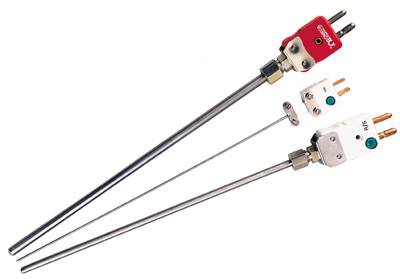
XTA-W5R26
Extreme Temperature Exotic Thermocouple Probes
Models In Stock
- Designed for extreme temperatures up to 2315°C (4200°F)
- Options for Type R, S, B, C, or D thermocouples
- Highly configurable for sheath material, wire gauge, probe length and diameter, and termination styles
- Single or Dual element options available
XTA-W5R26
From
TWD
19,226
Models In Stock


Product Overview
- Alloy Material (-) Platinum - 6% Rhodium
- Alloy Material (+) Platinum - 30% Rhodium
- Color Code Standard ANSI
- Junction Type Ungrounded
- Operating Temperature, Min 0 °C
- Process Connection Size N/A
- Process Temperature, Min 0 °C
- Series ID XTA-W5R26
- Temperature Sensor Type Thermocouple
Supported Applications
The Omega™ XTA exotic thermocouple probes are designed for extreme-temperature measurement up to 2315 °C (4200 °F). They use either Platinum/Rhodium elements (Type R, S, or B) or Tungsten/Rhenium elements (Type C or D) with a range of insulation and sheath materials, making them suitable for high-temperature process work in inert, oxidizing, reducing, or vacuum conditions.
Because refractory metals are extremely sensitive to any trace of oxygen above approximately 260 °C (500 °F), the tungsten/rhenium sheath options must be used in vacuum or in very pure inert gases such as helium or argon.
Operating Conditions & Performance
The probes measure temperatures up to 2315 °C (4200 °F), with the maximum temperature of the final assembly set by the lowest-rated of the element, insulation, and sheath materials. All probes are ungrounded.
- Element / calibration: Platinum/Rhodium (Type R, S, B) or Tungsten/Rhenium (Type C, D), via calibration codes such as W5R26, W3R25, P10R, P13R, and P30R.
- Sheath materials: Tantalum, Molybdenum, Platinum-Rhodium alloy, or Inconel 600.
- Sheath diameters: 0.062 in (1/16 in), 0.125 in (1/8 in), 0.187 in (3/16 in), and 0.250 in (1/4 in).
- Media: vacuum, inert, oxidizing, or reducing atmospheres, per the selected sheath.
Optional compression fittings allow fast mounting and positioning, and dual-element assemblies provide two sensor readings for built-in backup or for sending signals to different instruments.
Configuration Options
Part numbers follow an ordering-guide breakdown of sheath-material code, calibration code, junction, sheath diameter, wire gauge, insulation code, termination style, length, and single/dual element. Configuration axes include:
- Junction: ungrounded (U).
- Termination styles: Q, HX, SX, TJ, RP, MQ, TJ-BX, TJ-SB, and NB1/NB12.
- Length: 1" to 48" in 0.5" increments (to 100" for selected constructions).
- Element count: single or dual element.
Tungsten/rhenium probes can be tungsten-coated when required for additional protection.
Key Product Differences
The series covers the platinum/rhodium and tungsten/rhenium calibrations across the sheath, diameter, termination, and length options. Representative catalog numbers include:
- XMO-W5R26-U-125-30-A-Q-12
- XMO-W5R26-U-125-30-A-SX-8
- XMO-W5R26-U-062-36-H-SX-4
Specify sheath-material code, calibration, junction, sheath diameter, wire gauge, insulation, termination style, length, and single/dual element to define a complete probe.
PDFs & Manuals