


Chart recorders are one of the most established tools in process measurement, offering a simple and intuitive way to visualize data over time. While digital systems and data historians are now widespread, chart recorders continue to serve practical roles where ease of use, reliability, and continuous visual feedback are priorities.
What Is a Chart Recorder?
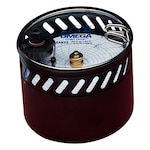
A chart recorder is an instrument used to record process or electrical signals in a time-based format. Traditionally, this involved a mechanical system where paper moves beneath a pen. The pen deflects in proportion to the measured signal, creating a continuous trace.
The result is a direct, visual representation of process behavior, captured as a graph that shows how a variable changes over time.
Chart recorders are available in several configurations:
- Single-channel or multichannel (multiple pens or traces)
- Circular or strip chart formats
- Analog, digital, or hybrid systems
Where Chart Recorders Are Used
Chart recorders are widely used across industrial and laboratory environments where tracking process stability and trends are essential.
Industrial Applications
In manufacturing and process environments, chart recorders are commonly used to monitor:
- Temperature
- Pressure
- Flow
- pH
- Humidity
Laboratory Use
In laboratory settings, chart recorders are used to capture data generated during:
- Testing and diagnostics
- Experimental procedures
- Statistical analysis
- Engineering validation work
When a Chart Recorder Makes Sense in a Digital World
Despite the availability of advanced digital systems, chart recorders remain relevant in specific scenarios. They are particularly well suited when:
- The number of variables is limited
- A full PC-based or networked system is not required
- Operators benefit from a continuous visual display of data
- Simplicity and reliability are priorities
Chart recorders continue to offer value by focusing on core measurement needs: clear visualization, dependable recording, and straightforward operation. While they may not replace digital systems in complex or highly networked environments, they remain a practical choice where simplicity, visibility, and direct access to process data are priorities.
Data Acquisition: DAQ System Introduction to Data Acquisition Systems