



When selecting equipment and devices for use in hazardous locations, it is essential that they are properly rated for the environment in which they will operate. Underwriters Laboratoires (UL), one of the primary certification bodies for hazardous environments, defines a hazardous location as a “location where explosion or fire hazards exist due to the presence of flammable gases, flammable or combustible liquid-produced vapors, combustible dusts, or ignitable fibers or flyings.”
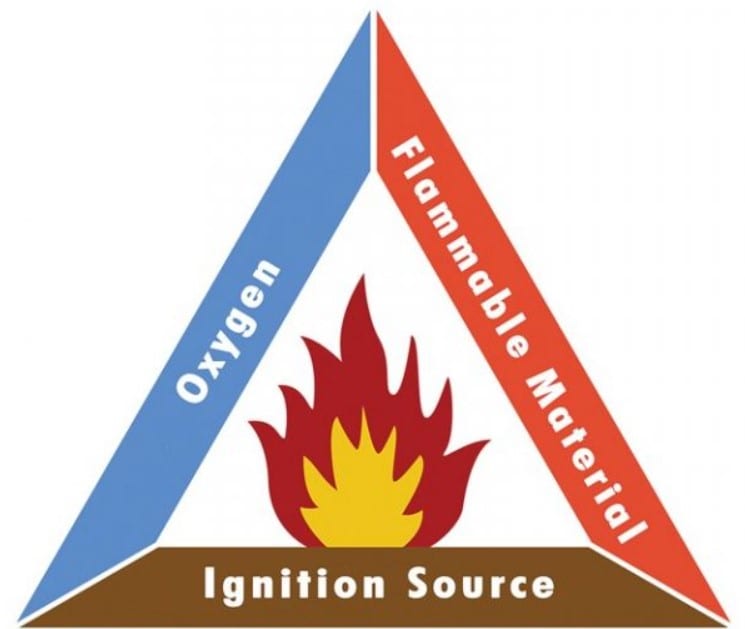
In these environments, the three conditions required for combustion are present simultaneously:
- Oxygen
- Ignition Source
- Flammable Material
This combination creates a high-risk scenario that must be carefully managed through proper product design and installation.
3 Ways to Make Products Safe for Hazardous Environments
There are three primary approaches to making products safe for use in hazardous environments:
- Break the Triangle
- Explosion-Proof Enclosures
- Intrinsic Safety
This involves eliminating one of the three required elements for combustion. While effective, this approach is limited because removing one of these elements means the environment is no longer considered hazardous.
Products can be housed in specially designed enclosures that contain any internal explosion and prevent it from igniting the surrounding environment.
Energy levels can be controlled so that the device is incapable of generating enough energy to cause ignition. This is the foundation of intrinsically safe design.
Innovative Solutions from DwyerOmega
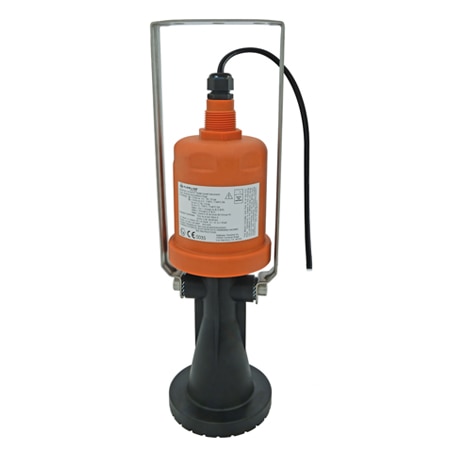
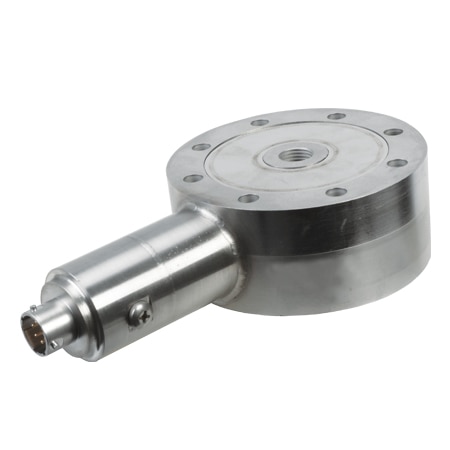
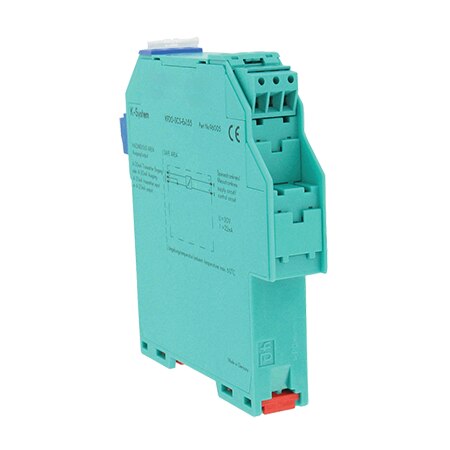
Intrinsically Safe: Defined
For a product to be considered intrinsically safe, it must be installed with a barrier that regulates the electrical energy entering the hazardous area. The purpose of this barrier is to ensure that energy levels remain below the threshold required for ignition.
If the input voltage exceeds what the device requires to operate, the barrier prevents excess energy from entering the hazardous area. This is achieved through components such as diodes, which divert excess voltage safely to ground.
There are two primary types of barriers used with intrinsically safe systems:
- Galvanic Barriers
- Zener Barriers (Shunt-Diode Barriers)
| Feature | Galvanic Barriers | Zener Barriers (Shunt-Diode Barrier) |
|---|---|---|
| Operating Principle | Provides electrical isolation using transformers, opto-isolators, or capacitive coupling | Limits voltage using Zener diodes and diverts excess energy to ground |
| Grounding Requirement | No dedicated ground required | Requires high-integrity grounding to function properly |
| Installation Flexibility | More flexible, especially in complex systems | Less flexible due to strict grounding requirements |
| Surge / Transient Handling | Better tolerance to repeated surges and electrical disturbances | More sensitive to surges; protection depends on proper grounding |
| Reliability | Higher long-term reliability in demanding environments | Reliable when properly grounded and maintained |
| Complexity | More complex design | Simpler design |
| Typical Use Case | Long-term, critical, or complex installations | Simple applications with reliable grounding infrastructure |
- Galvanic Barriers
- Zener Barriers (Shunt-Diode Barrier)
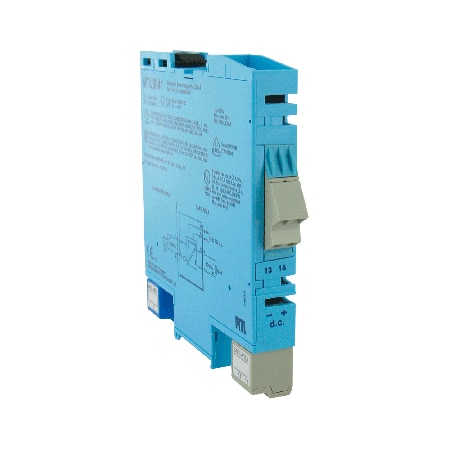
Galvanic barriers, also referred to as galvanic isolators, provide intrinsic safety through electrical isolation between the hazardous area and the safe area. This isolation is typically achieved using transformers, opto-isolators, or capacitive coupling, which prevent direct electrical continuity between the two sides of the circuit.
Because there is no direct ground path required, galvanic barriers eliminate many of the grounding concerns associated with other protection methods. This makes them particularly well-suited for complex installations or facilities where maintaining a high-integrity ground is difficult.
In addition to limiting voltage and current to safe levels, galvanic barriers are capable of withstanding repeated electrical disturbances such as surges and transients. This contributes to improved long-term reliability and makes them a preferred choice for critical or permanently installed systems.
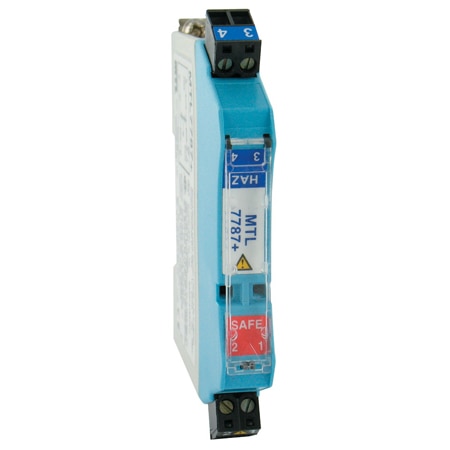
Zener barriers, also commonly referred to as shunt-diode barriers, provide intrinsic safety by limiting excess voltage and current through shunt regulation. The term Zener barrier comes from the use of Zener diodes as the primary voltage-limiting component, while shunt-diode barrier describes how the device operates, shunting excess energy away from the hazardous area.
These barriers use Zener diodes, resistors, and fuses to clamp voltage to a safe level and divert excess energy to ground.
Unlike galvanic barriers, Zener barriers rely on a dedicated, high-integrity grounding system to safely dissipate excess energy. This grounding requirement is critical. If the ground connection is compromised, the barrier may not function as intended, potentially allowing unsafe energy levels into the hazardous area.
Zener barriers are typically simpler in design and more cost-effective, making them suitable for straightforward applications where proper grounding can be ensured and maintained. However, they are less flexible in installation and more sensitive to electrical disturbances compared to galvanic barriers.

DwyerOmega | Blog | What is a Pressure Gauge?
Written by: Dan Schultz
Updated on: October 30, 2025
DwyerOmega | Blog | What is an Accelerometer?
Written by: Dan Schultz
Published on: March 13, 2026