


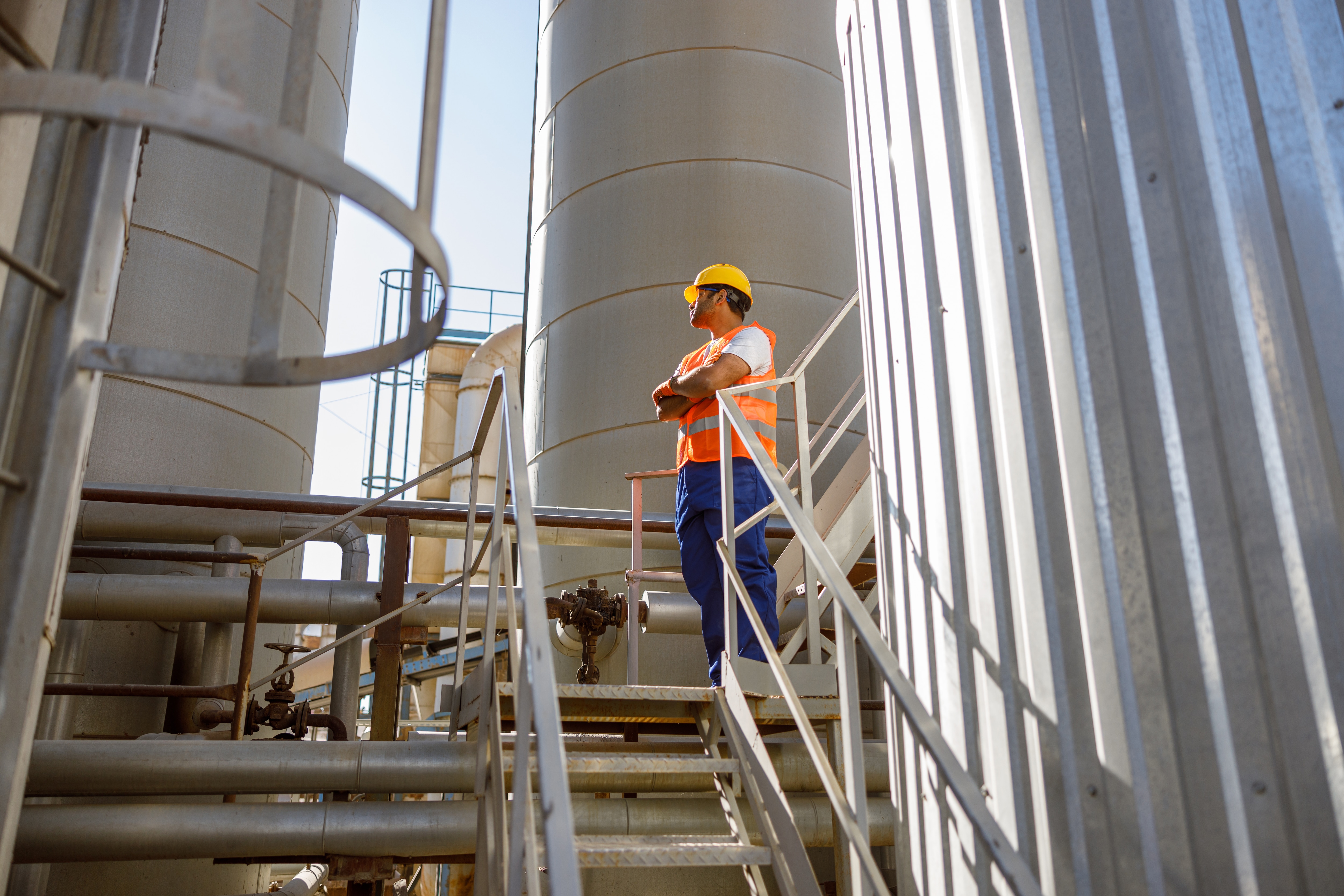
Accurately measuring and monitoring fluid levels is a critical requirement across a wide range of industrial processes. Level measurement plays a vital role in ensuring safe operation, process efficiency, and system reliability.
Selecting the right level measurement technology requires careful consideration of both the process media and the vessel conditions. Factors such as pressure, temperature, conductivity, and buildup all play critical roles.
No single solution fits every application. Some technologies, like float and point level switches, provide simple and reliable on/off control, while others, such as submersible, ultrasonic, capacitance, differential pressure, and radar-based systems, deliver continuous level measurement in increasingly complex environments. Understanding how each technology works, and where it performs best, is essential for ensuring accurate readings, efficient system operation, and long-term reliability.
What is a Level Sensor?
A level sensor is a device used to detect or measure the level of a liquid, powder, or bulk solid within a container, tank, or process system. Level sensors can provide either point level detection or continuous level measurement, depending on the technology used.
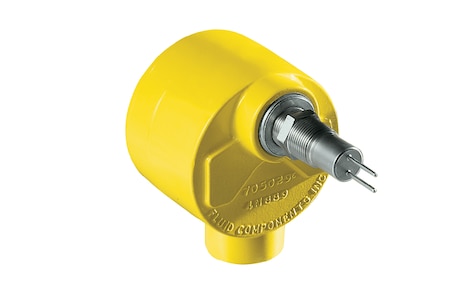
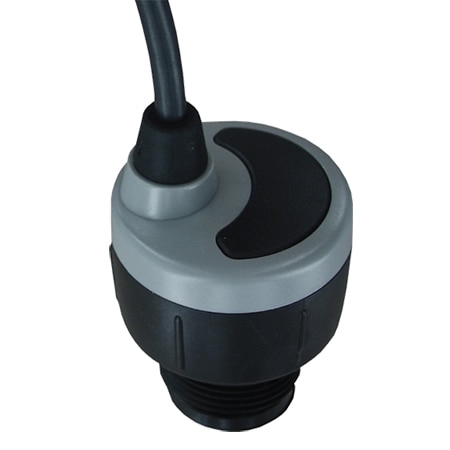
Innovative Solutions from DwyerOmega

What is a Level Sensor Used For?
Level sensors are used to monitor and control material levels in industrial systems. Common applications include:
- Tank level monitoring
- Pump control and automation
- Overflow and dry-run protection
6 Methods for Measuring or Monitoring Fluid Levels
1. Float & Point Level Switches
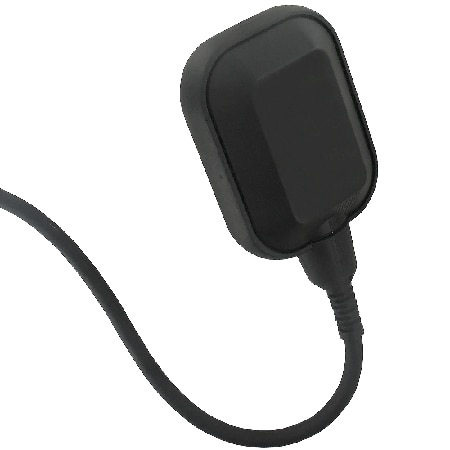
Float and point level switches are commonly used to detect when a liquid reaches a specific level inside a tank, reservoir, sump, or process vessel. Rather than measuring liquid level continuously, these devices act as point level detectors, triggering an electrical signal when a predetermined level is reached.
Most float switches operate using buoyancy and mechanical movement. As the liquid level rises or falls, a float moves with the surface and activates an internal switch. This change in switch state can be used to start or stop pumps, trigger alarms, or initiate other automated control actions. Designs may include cable-suspended floats that tilt as liquid levels change, or vertically mounted float switches that actuate when the float rises or falls to a specific point.
Because of their simple construction, reliability, and ease of installation, float and point level switches are widely used in water & wastewater, oil & gas, and chemical processing applications.
Application Highlight: Data Centers
In modern data centers, reliable cooling systems are critical for maintaining safe operating temperatures for servers and networking equipment. Many cooling systems rely on chilled water loops, cooling towers, and condensate collection systems, all of which require dependable liquid level monitoring.
Float and point level switches are often used in these systems to monitor tank and sump levels that support cooling operations. For example, they can be installed in condensate collection tanks to detect rising water levels and automatically activate pumps that remove excess liquid. Similarly, they can provide high- or low-level alarms in cooling system reservoirs to ensure proper water levels are maintained.
By providing simple and reliable level detection, float and point level switches help support the continuous operation and reliability of data center cooling infrastructure, reducing the risk of overheating and helping maintain stable environmental conditions for critical equipment.
2. Submersible Level Transmitters

Submersible level transmitters are designed to provide continuous liquid level measurement in tanks, wells, reservoirs, and other storage systems. These devices are typically installed directly within the liquid being measured and determine level by sensing the hydrostatic pressure created by the liquid column above the sensor.
Most submersible level transmitters use a piezoresistive pressure sensing element housed within a durable stainless steel body. As the liquid level increases, the pressure on the sensing element rises proportionally. The transmitter converts this pressure into a continuous electrical signal that represents the liquid level. Many designs include vented cables that automatically compensate for atmospheric pressure changes, helping maintain accurate level measurements over time.
Submersible level transmitters are commonly constructed with corrosion resistant materials such as stainless steel and chemically compatible cable jackets, allowing them to operate reliably in water, wastewater, slurry, and chemical storage applications. With their compact design and ability to withstand harsh environments, they are widely used for level monitoring in wells, tanks, environmental systems, and industrial processes.
Application Highlight: Water & Wastewater Systems
Submersible level transmitters are widely used in water and wastewater treatment infrastructure to monitor liquid levels in tanks, wells, lift stations, and reservoirs. Maintaining accurate level measurement is essential for controlling pumps, managing storage capacity, and ensuring proper process operation.
In a wastewater system, submersible transmitters can be installed in wet wells or lift stations to continuously monitor rising liquid levels. When levels reach a predefined threshold, control systems can automatically activate pumps to move wastewater through the treatment process. Similarly, in water distribution systems, these transmitters help monitor storage tank levels and ensure adequate supply throughout the network.
By providing reliable, real-time level data, submersible level transmitters support efficient system operation, automated control, and improved process visibility across municipal and industrial water management applications.
3. Differential Pressure Transmitters
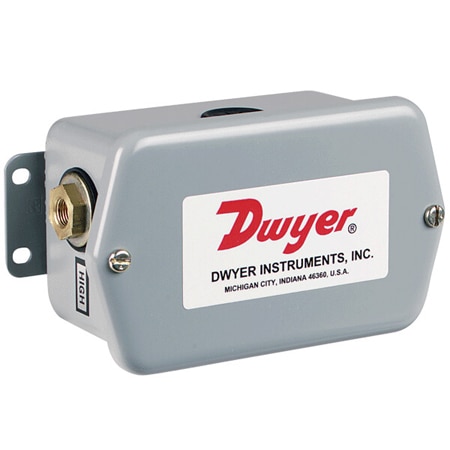
Differential pressure transmitters measure the difference in pressure between two points within a system. This pressure difference is converted into an electrical signal that can be used to monitor or control a wide range of process variables.
In level measurement applications, differential pressure transmitters determine liquid level by measuring the difference in hydrostatic pressure between a high pressure port and a low pressure reference. As the height of liquid in a tank increases, the pressure at the lower measurement point increases proportionally. The transmitter calculates the difference between the two pressure inputs and converts it into a signal that corresponds to the fluid level.
These transmitters are commonly built with rugged sensing elements and corrosion resistant materials, allowing them to operate reliably in demanding environments. Because differential pressure measurement can be applied to both liquid and gas systems, these instruments are widely used in industrial processes for monitoring level, flow, filtration performance, and pressure drop across equipment.
Application Highlight: Tank Level Monitoring
Differential pressure transmitters are frequently used to monitor liquid levels in closed or pressurized tanks where traditional float-based sensors may not be practical.
In these installations, the high pressure port is connected near the bottom of the tank where hydrostatic pressure from the liquid column is greatest. The low pressure port is connected near the top of the tank or referenced to atmospheric pressure. As the liquid level rises or falls, the pressure difference between these two points changes proportionally.
The transmitter converts this differential pressure into a continuous output signal that represents the liquid level. This information can be used by control systems to track tank levels, trigger alarms, or automate pumps and valves. Because of their accuracy and durability, differential pressure transmitters are widely used in industrial process tanks, water and wastewater systems, and other applications where reliable level monitoring is required.
4. Ultrasonic Level Sensors
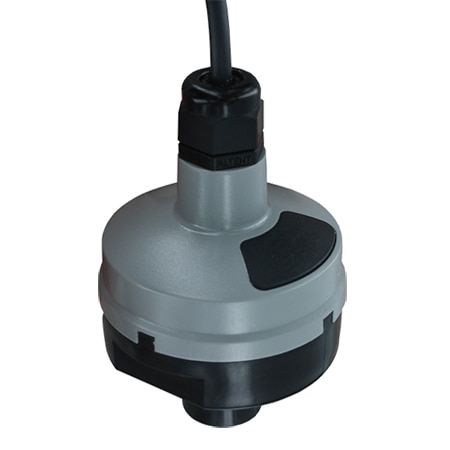
Ultrasonic level sensors provide non-contact, continuous level measurement by using sound waves to determine the distance between the sensor and the surface of a liquid. The sensor emits ultrasonic pulses toward the liquid surface and measures the time it takes for the echo to return. This time-of-flight measurement is then converted into a level reading.
Because they do not come into direct contact with the process media, ultrasonic level sensors are ideal for applications where liquids may be corrosive, contaminated, or difficult to handle. Many designs incorporate automatic temperature compensation to maintain accuracy in changing environmental conditions, along with configurable outputs and relay controls for integration into automated systems.
With their rugged construction and flexible configuration, ultrasonic level sensors are widely used in a variety of industries for reliable, low-maintenance level monitoring in tanks, sumps, and process vessels.
Application Highlight: Pulp & Paper Processing
In pulp and paper processing, accurate level monitoring is essential for maintaining consistent production and process efficiency. Tanks and vessels throughout the process handle a range of liquids, including water, chemicals, and pulp mixtures, often in challenging conditions with varying temperatures and potential buildup.
Ultrasonic level sensors are well suited for these environments because they provide non-contact measurement, reducing the risk of fouling or damage caused by direct exposure to process media. Installed above tanks or sumps, they continuously monitor liquid levels without being affected by the material itself.
By delivering reliable, real-time level data, ultrasonic sensors help operators maintain proper tank levels, support process control, and reduce maintenance requirements in demanding pulp and paper applications.
5. Capacitance Level
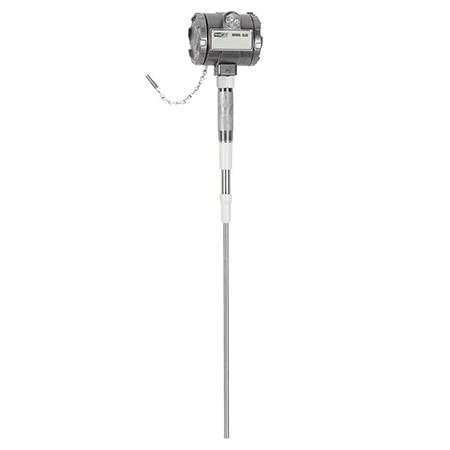
Capacitance level sensors are used to detect the presence or level of liquids, powders, and bulk solids by measuring changes in capacitance between a probe and a reference point, such as a tank wall. As material comes into contact with or surrounds the probe, the dielectric properties of the medium change, resulting in a measurable shift in capacitance.
These sensors can function as either point level switches or continuous level transmitters, depending on the application. Point level devices detect the presence or absence of material at a specific location, while continuous versions provide a proportional output signal based on material level.
Capacitance level sensors are highly versatile and can be used in conductive and non-conductive media, including liquids, slurries, powders, and bulk solids. Many designs include features to minimize the effects of coating, buildup, or external electrical interference, helping maintain accuracy in challenging process conditions. With flexible probe configurations and material options, they can be adapted to a wide range of industrial environments.
Application Highlight: Food & Beverage Processing
In food and beverage processing, maintaining accurate level detection is critical for process consistency, product quality, and system hygiene. Tanks and vessels are used to store and process a wide variety of materials, including liquids, powders, and viscous products.
Capacitance level sensors are well suited for these applications because they can reliably detect different types of media, even in cases where materials may coat or build up on the probe. This makes them effective for monitoring ingredients such as syrups, dairy products, or dry bulk materials used in production.
By providing dependable level detection and continuous monitoring, capacitance sensors help ensure proper ingredient handling, support automated filling and batching processes, and contribute to efficient, repeatable operations in food and beverage manufacturing.
6. Radar Level Transmitters
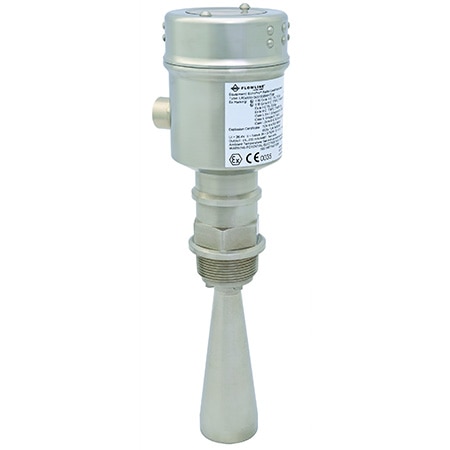
Radar level transmitters provide non-contact, continuous level measurement by using high-frequency electromagnetic waves to determine the distance between the sensor and the surface of a liquid. The transmitter emits a radar signal toward the media and measures the time it takes for the signal to reflect back, converting this into an accurate level reading.
Operating typically at frequencies such as 26 GHz, radar level transmitters are well suited for challenging process conditions. Because the measurement is based on electromagnetic waves rather than sound or mechanical movement, radar is largely unaffected by temperature, pressure, vapor, condensation, or surface agitation. This makes it a reliable solution for applications where other technologies may struggle.
Radar level transmitters are commonly used in above- and below-ground tanks constructed from a variety of materials, and can be configured with standard analog outputs as well as digital communication protocols for integration into control systems. With non-contact measurement and robust construction, they are widely applied in industries requiring accurate and dependable level monitoring in demanding environments.
Application Highlight: Oil & Gas
In the oil and gas industry, accurate level measurement is critical for storage, processing, and transfer of liquids such as crude oil, refined fuels, and chemical additives. These applications often involve harsh conditions including vapor, pressure, temperature fluctuations, and potentially corrosive media.
Radar level transmitters are well suited for these environments because they provide reliable, non-contact measurement that is not affected by vapor layers, condensation, or surface turbulence. Installed on storage tanks, separators, or process vessels, they continuously monitor liquid levels to support inventory management, process control, and safety systems.
Their ability to perform consistently in demanding conditions makes radar level transmitters a trusted solution for maintaining accurate level data, helping operators optimize operations and ensure safe handling of critical fluids in oil and gas applications.
DwyerOmega | Blog | What are Anemometers?
Written by: Dan Schultz
Published on: April 17, 2026