Passer à la recherche Passer au contenu principal Passer à la navigation

1-800-663-4209 | Bienvenue sur notre nouveau site Web, vous avez rencontré un problème ou un bug? Veuillez le signaler ici

Nous avons remarqué que vous êtes dans , veuillez visiter votre site local en cliquant sur le lien ci-dessous pour des offres et un support régionaux.

LC307

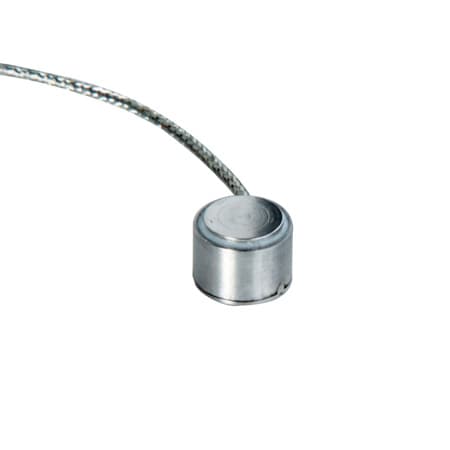
Cellule de charge miniature à compression de style chapeau haut

  • Construction entièrement en acier inoxydable
  • Bouton de charge intégré pour une installation facile
  • Conception robuste et résistante
  • Étalonnage en 5 points avec données d'étalonnage du shunt 90 kOhm
LC307
À partir de C$ 1,033.26
Cellule de charge miniature à compression de style chapeau haut LC307 LC307
loading all models
Aperçu du produit
  • Étalonnage en 5 points 0%; 50%; 100%; 50%; 0%
  • Précision ± 0.75 %
  • Résistance du pont 350 Ω
  • Longueur du câble 5 ft
  • Option d'étalonnage 5 POINTS NIST
  • Connexion électrique Câble
  • Puissance électrique 1,75 mV/V
  • Caractéristiques nominales du boîtier IP54
  • Type de force Compression
  • Déviation à pleine échelle 0.003 in
  • Hystérésis 0,0075
  • Linéarité ± 0,75 %
  • Type de cellule de charge Chapeau haut-de-forme
  • Matériaux Acier inoxydable
  • Température de fonctionnement, max 121 °C
  • Température de fonctionnement, min -54 °C
  • Surcharge, max 300 % FS
  • Température maximale du processus 71 °C
  • Température minimale du processus 16 °C
  • Répétabilité 0,0075
  • Surcharge sécurisée 150 % FS
  • ID de série LC307
  • Tension d'alimentation 5 Vcc
  • Effet de la plage thermique ± 0,018 % FSO/°C
  • Effet thermique zéro ± 0,018 % lecture/°C
  • Tableau de câblage/connecteurs Vert : (-) Sortie ; Blanc : (+) Sortie ; Noir : (-) Entrée ; Rouge : (+) Entrée
  • Erreur de zéro/équilibre ± 2 %
Petite par la taille mais pas par les performances, la cellule de charge " Top Hat " de la série LC307 est conçue pour les applications avec un espace minimal et des charges élevées pouvant atteindre 100 000 lb. Sa construction robuste entièrement en acier inoxydable et ses jauges de contrainte haute performance garantissent une linéarité et une stabilité supérieures. La compensation de température est assurée par une carte de circuit imprimé miniature intégrée au câble du capteur de force. Cet appareil est conçu pour être monté sur une surface lisse et plane.

Le LC307 est également disponible en configurations métriques, avec des plages de 0-1 à 0-500 kN. Veuillez consulter la page LCM307 pour plus de détails, ou contacter notre service Pression pour plus d'informations.
  • bvseo_sdk, java_sdk, bvseo-4.0.0
  • CLOUD, getReviews, 2ms
  • REVIEWS, PRODUCT
  • bvseo-msg: The resource to the URL or file is currently unavailable.;

Regarding "top-hat" load cell item LC307-500 lbf.; Please advise if you can provide the following information - A) What is the Maximum Power (Watt) Rating for this device B) What is the Thermal Resistance of the Device (degrees Celsius per Watt)

Asked by: GRT365
Power ratings for this .cell are a follows. Nominal Excitation Voltage is 5 VDC. Maximum current from power supply 15 mA. There is no for Thermal Resistance on this sensor.
Answered by: Applicatrions Engineer JK
Date published: 2021-05-19

Does the LC307 load cell transducer meet the requirements of a non-incendive apparatus and thus is it suitable for application use in a Division 2 hazardous location ?

Asked by: GRT365
The LC307 is not rated for hazardous location usage, please see the LCHD-IS load cells for use in a Division 2 hazardous location.
Answered by: rkent
Date published: 2021-05-27

Which surface of the LC-307 load cell would be best held against a stationary surface and which surface is best to apply the load against ?

Asked by: GRT365
The SPHERICAL RADIUS shown on the dimensional drawing on the Datasheet is the loading surface that you would apply the load.
Answered by: rkent
Date published: 2021-06-14

Is there any data about natural frequency of the sensor? I would like to use it for applications requiring high-frequency

Asked by: sowong
These load cells are strain gage based (piezo-resistive) devices designed for static or slow changes in load. For high frequency applications a piezo-electric based device should be used. Omega does not offer piezo-electric based force sensors
Answered by: Applicatrions Engineer JK
Date published: 2023-05-31

This is a follow-up question for Application Engineer JK, regarding Thermal Resistance question. When you said "no" in your original answer, do you mean negligible Thermal Resistance? or did you mean no information is available?

Asked by: GRT365
There is no data available forThermal Resistance for our load cells
Answered by: Applicatrions Engineer JK
Date published: 2021-05-20

What is the minimum load (in lbf or other equivalent unit) that this sensor starts reading? Does it vary depending on the specific dash number? What would be this number for LC307-3K?

Asked by: ControlsEngineer
The sensor does actually start reading at very low loads but you should never rely on the accuracy of the reading in the lower 10% of it's load range. In the case of a 0 to 3000 lbf range load cell this be readings below the 300 lbf range
Answered by: Applicatrions Engineer JK
Date published: 2021-06-02
  • y_2026, m_5, d_1, h_10CST
  • bvseo_bulk, prod_bvqa, vn_bulk_3.0.43
  • cp_1, bvpage1
  • co_hasquestionsanswers, tq_6
  • loc_en_CA, sid_LC307-100K, prod, sort_[SortEntry(order=NUM_ANSWERS, direction=DESCENDING)]
  • clientName_omega
  • bvseo_sdk, java_sdk, bvseo-4.0.0
  • CLOUD, getContent, 7ms
  • QUESTIONS, PRODUCT
fr-CA
fr
Enregistrer la configuration