


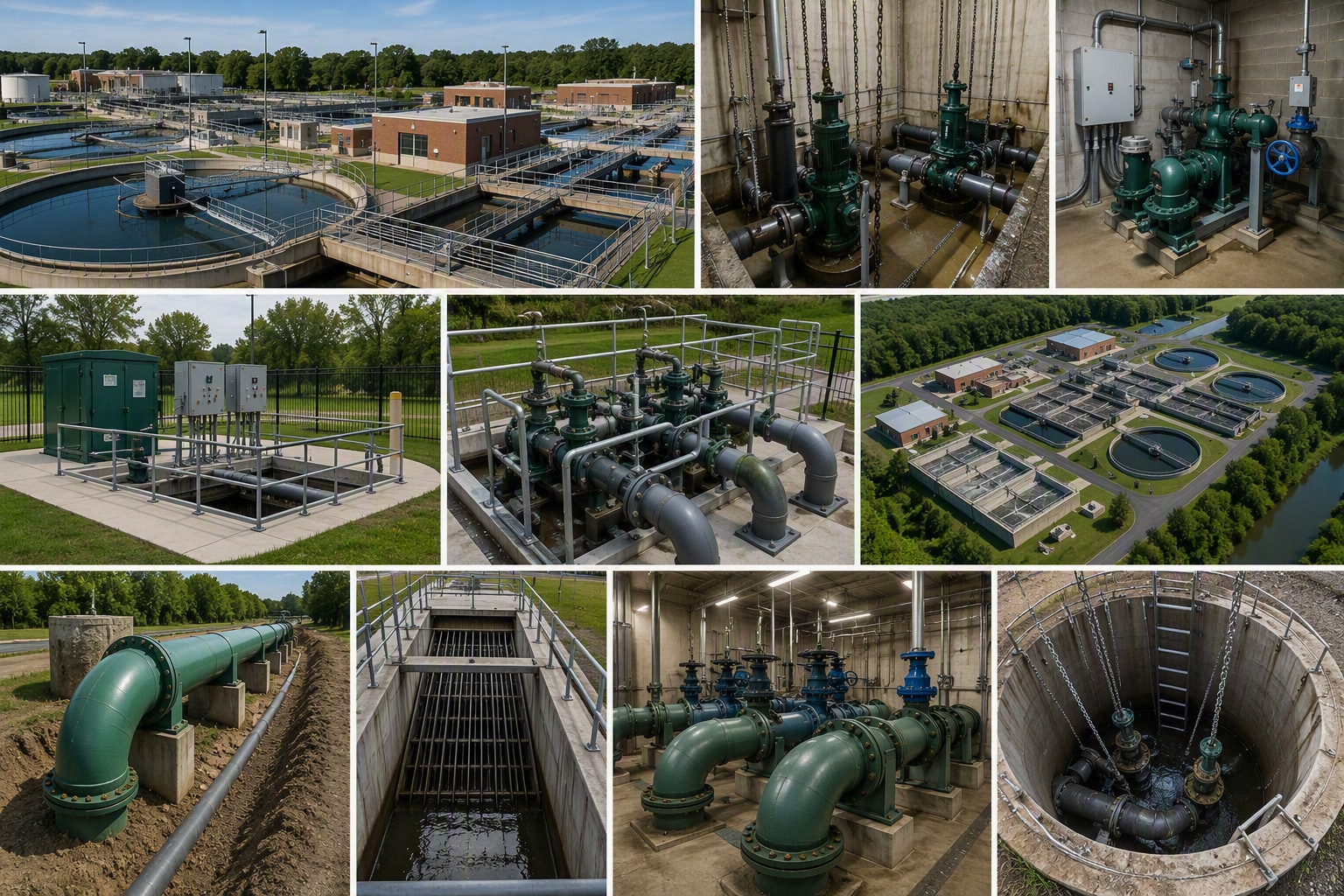
Municipal and industrial wastewater collection systems rely on gravity to transport wastewater through underground pipelines. However, changes in terrain and elevation often prevent wastewater from flowing continuously to a treatment facility. When gravity alone is insufficient, wastewater lift stations raise wastewater to a higher elevation so it can continue flowing through the collection system.
Because wastewater flow rates fluctuate throughout the day, lift stations must automatically respond to changing liquid levels to help prevent overflows, reduce unnecessary pump cycling, and protect pumping equipment. To accomplish this, modern lift stations use level transmitters and pump controllers to automate pump operation. By continuously monitoring the wastewater level and starting or stopping pumps at predetermined setpoints, these control systems help improve reliability, reduce maintenance requirements, and support efficient wastewater transport.
How Wastewater Lift Stations Work
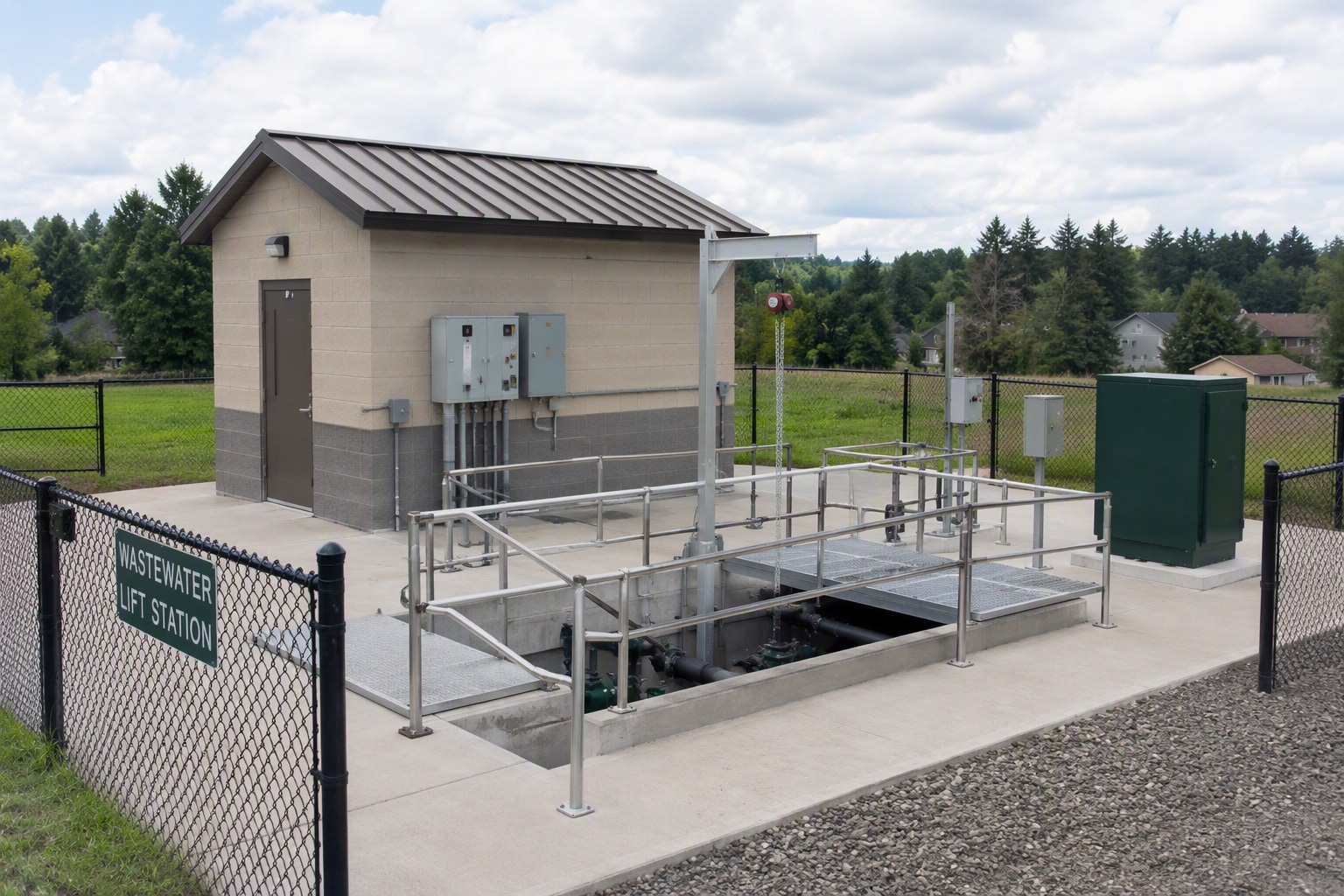
Wastewater begins its journey in homes, commercial buildings, and industrial facilities, where it enters the sanitary sewer system through drains, sinks, and toilets. It then flows through a network of underground pipelines that rely primarily on gravity to move wastewater toward a treatment facility.
As wastewater travels through the collection system, it eventually reaches locations where gravity alone can no longer sustain the flow. At these low points, wastewater lift stations are installed to pump the wastewater to a higher elevation, allowing it to continue its journey through the collection system.

Inside the lift station, incoming wastewater collects in an underground reservoir known as the wet well. As the wet well fills, a level measurement device continuously monitors the wastewater level. When the level reaches a predetermined setpoint, one or more pumps transfer the wastewater through a pressurized pipeline, commonly referred to as a force main, until it reaches an elevation where gravity flow can resume.
Most wastewater lift stations use submersible pumps installed directly inside the wet well. Larger pumping stations may instead use dry-pit pumps located in a separate equipment room, providing easier access for maintenance while reducing personnel exposure to the hazardous wet well environment. Additional equipment—including pump controllers, electrical panels, and communications hardware—is typically housed in an above-ground enclosure to simplify maintenance and improve accessibility.
After leaving the lift station, the wastewater continues through the collection system until it reaches a wastewater treatment facility, where it is treated before being safely discharged or reused.
How Pump Controllers and Level Transmitters Work Together
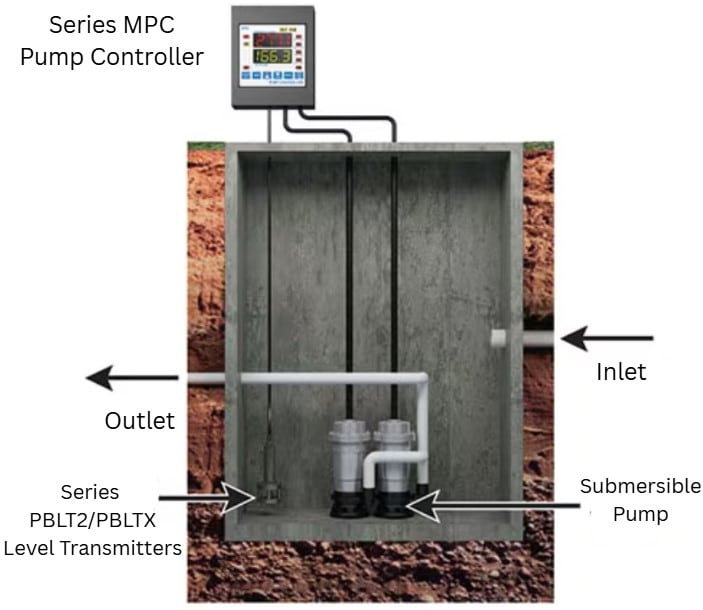
The primary function of a wastewater lift station is to maintain the wastewater level within the wet well by automatically controlling pump operation. This is accomplished using a level transmitter to continuously measure the wastewater level and a pump controller to determine when each pump should start and stop.
A level transmitter installed in the wet well continuously measures the liquid level and sends a signal to the pump controller. Using this real-time information, the controller compares the measured level to user-defined setpoints and automatically starts or stops the pumps as needed. As the wastewater level rises, the controller energizes the lead pump to reduce the level. Once the wastewater falls to the designated stop level, the controller shuts the pump off.
Innovative Solutions from DwyerOmega
Series MPC Flexible Pump Controller for Level Control
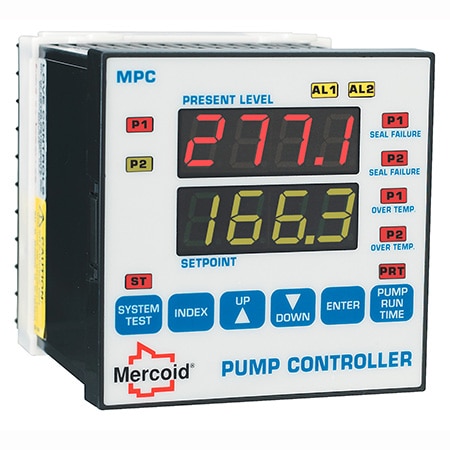
The Series MPC Pump Controller provides reliable level-based pump control for water, wastewater, and industrial storage applications. Designed for use with a wide range of level transmitters, the controller continuously displays the current level and setpoint while automating the operation of one or two pumps, valves, or other control devices. Its programmable control functions help maintain desired liquid levels, reduce manual intervention, and improve overall system reliability.
Key Features:
- Compatible with most level transmitters for flexible integration into new or existing systems
- Programmable level differential enables accurate on/off control to reduce excessive pump cycling
- Controls one or two pumps, valves, or other devices through two SPDT relay outputs
- Simultaneously displays process level and setpoint on an easy-to-read front panel
- Standard 1/4 DIN panel-mount design simplifies installation in control panels
- Configurable alarm functions can indicate pump seal failure or pump over-temperature conditions for improved equipment protection
- Suitable for a wide range of level control applications requiring dependable automatic operation
Series PBLT2 and PBLTX Submersible Level Transmitters
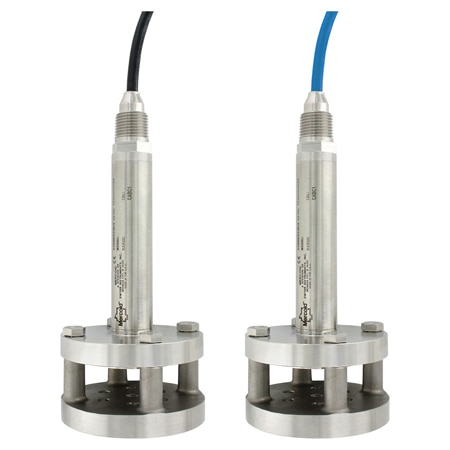
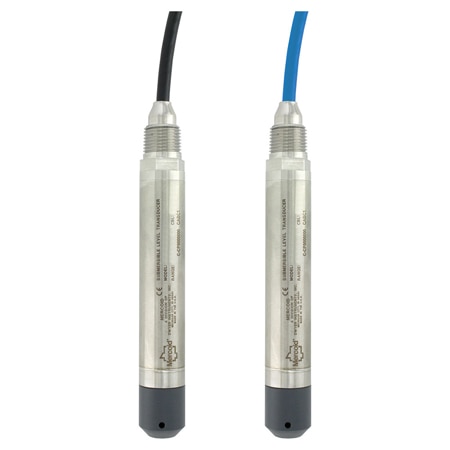
The Series PBLT2 Submersible Level Transmitter and Series PBLTX Submersible Level Transmitter provide reliable continuous level measurement in demanding wastewater, slurry, and industrial storage applications. Built with a rugged 316 stainless steel housing and a large-diameter diaphragm seal, these transmitters are designed to resist clogging, abrasion, and damage from suspended solids. The Series PBLT2 includes integrated surge protection for enhanced reliability in outdoor installations, while the Series PBLTX is UL-certified as intrinsically safe for use in hazardous locations when installed with an appropriate safety barrier.
Key Features:
- Rugged 316 stainless steel housing and large-diameter diaphragm seal designed for harsh wastewater and slurry applications
- Non-clogging diaphragm and protective cage help prevent damage from floating solids and debris
- Piezoresistive sensing element provides accurate, continuous liquid level measurement
- Maintenance-free vent filter prevents moisture and particulates from entering the pressure compensation tube, helping maintain long-term measurement stability
- Durable 270 lb tensile-strength, shielded, vented cable offers excellent mechanical strength and chemical resistance
- Series PBLT2 incorporates dual-arrestor surge protection to help guard against power surges and lightning-induced transients
- Series PBLTX is UL-certified intrinsically safe for hazardous locations when used with the appropriate intrinsic safety barrier
- Atmospheric pressure compensation through the vented cable improves measurement accuracy in open and vented tanks
Level Measurement Introduction à la mesure de niveau
Anémomètres Introduction aux anémomètres