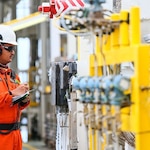
A terminal unit is a piece of HVAC equipment located near the occupied space that controls and conditions the air delivered to a specific room, zone, or group of zones. They are typically the final control point between the central HVAC system and the space.
A central air-handling unit may condition air for an entire building or large portion of a building. Terminal units then adjust that air for the needs of individual spaces. Depending on the design, a terminal unit may regulate airflow, control temperature, provide heating or cooling, mix air streams, deliver ventilation, or help maintain zone pressure.
Terminal Units as Part of a Larger System
A terminal unit does not operate in isolation: its operation depends on a network of sensors, actuators, controls, ductwork, and safety devices that monitor conditions throughout the air-distribution system.
Some devices are mounted directly in or on the terminal unit. Others are installed in the connected ductwork, near heating and cooling coils, at the air-handling equipment, or within the occupied space. Together, these devices provide the information needed to operate the system safely and efficiently.
A typical terminal-style system may monitor:
- Airflow and air velocity
- Supply-air and mixed-air temperature
- Heating- and cooling-coil temperature
- Duct static pressure
- Space temperature and humidity
- Carbon dioxide levels
- Fan operation and motor status
- Discharge-air temperature and humidity
Sensors allow the terminal unit and its controls to respond to changing conditions.
Terminal Unit Measuring Points
Select a measuring point on the diagram or from the list below to explore common monitoring and control requirements for terminal-unit applications.
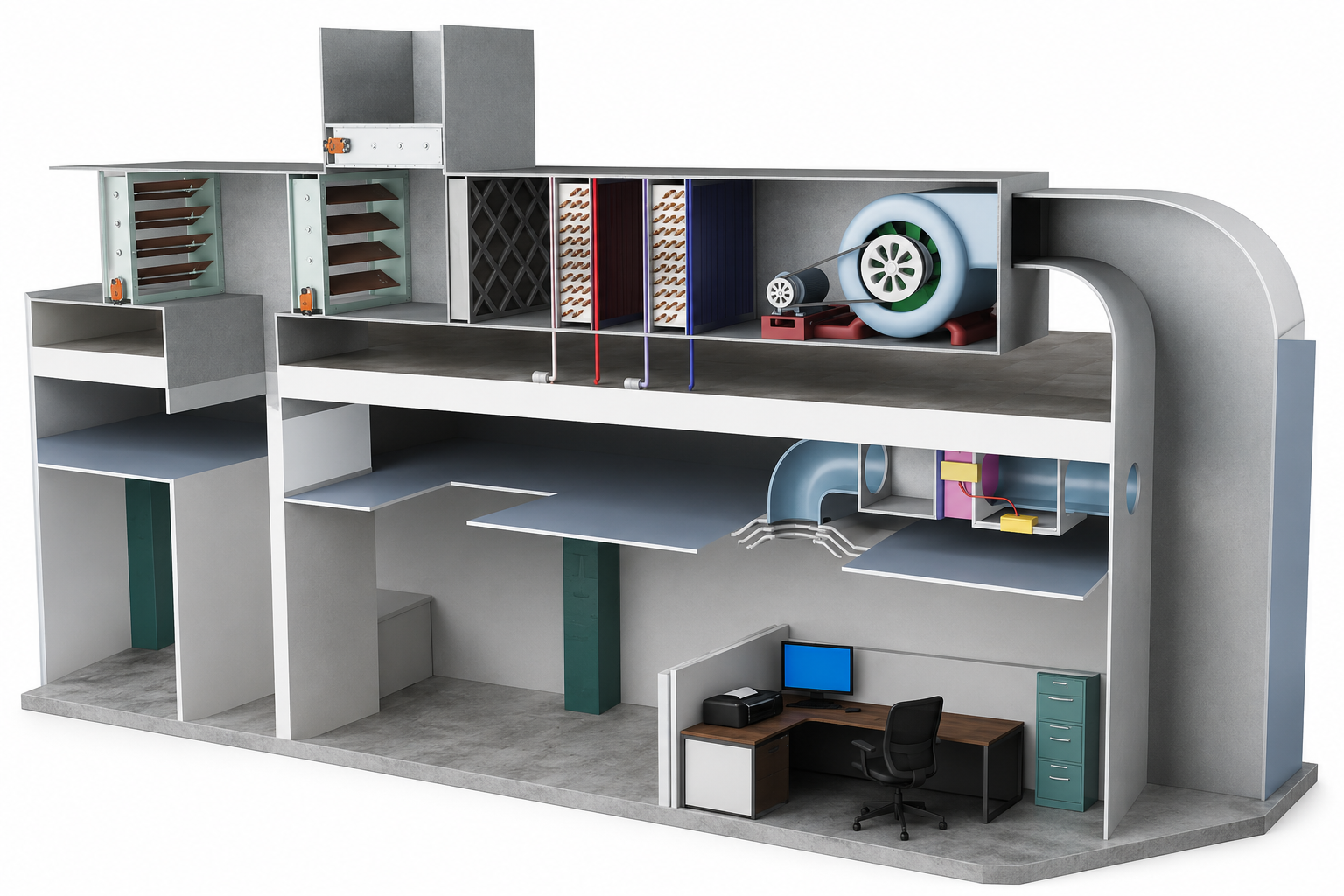
Conceptual application view. Not for installation design.
Select a Measuring Point
Related Products
Duct Smoke Detectors
Duct smoke detectors monitor for smoke in air ducts, providing early warning and supporting occupant safety and protective HVAC actions.
Information is provided for general reference only and does not replace official product documentation, professional advice, or applicable codes and standards.
Understanding Terminal Unit Measuring Points
The measuring points shown above represent several types of devices that support the safe, efficient operation of terminal units and the larger HVAC systems connected to them. Each device monitors a different condition or helps verify that equipment is operating as intended.
Duct Smoke Detectors
Duct smoke detectors monitor air moving through ductwork for the presence of smoke. When smoke is detected, the device can send a signal to the building automation, fire, or HVAC control system. Depending on the system design, that signal may initiate an alarm, shut down fans, close dampers, or trigger other protective actions.
Although a duct smoke detector may be installed near or within ductwork rather than directly inside the terminal unit, it is an important part of the overall air-distribution and life-safety system. Its operation can help prevent smoke from being distributed to other areas of a building.
Humidity & Temperature Transmitters
Humidity and temperature transmitters measure environmental conditions in spaces, ducts, or other areas of the HVAC system. These devices convert measured conditions into signals that can be used by controllers and building automation systems.
Temperature measurements help terminal units maintain comfort and respond to heating or cooling demands. Humidity measurements can support indoor-air quality, ventilation, dehumidification, and moisture-control strategies. Depending on the application, transmitters may be installed in the occupied space, in return or supply ductwork, or near the terminal unit.
Current Sensors & Switches
Current sensors and switches help determine whether electrical equipment, such as fans and motors, is operating. By monitoring electrical current, these devices can provide a status signal to a control system without requiring a direct mechanical connection to the rotating equipment.
This information can be used to verify fan operation, identify equipment that has stopped or failed to start, and support alarms or maintenance notifications. Current-sensing devices can also help confirm that a commanded HVAC action has actually occurred.
Differential Pressure Transmitters & Averaging Flow Sensors
Differential pressure transmitters measure the difference in pressure between two points. In terminal-unit and duct applications, this information can be used to monitor duct pressure, filter loading, airflow conditions, or other system performance indicators.
Averaging flow sensors measure airflow across a duct by sensing conditions at multiple points. When used with a transmitter, gauge, or control system, they can provide an averaged representation of airflow velocity across the duct rather than relying on a single measurement location.
Together, differential pressure transmitters and averaging flow sensors help support airflow verification, system balancing, filter monitoring, and other HVAC control functions. The appropriate device depends on the duct configuration, measurement range, accuracy requirements, and control strategy.
Préhenseurs Introduction aux préhenseurs