Besoin d'aide? Appelez-nous: 1-800-663-4209



Nickel-Flush-Mount
Montage affleurant en nickel
- Musées
- Bâtiments historiques
- Surveillance des températures ambiantes
- Immeubles de bureaux
- Écoles
- Commerce de détail
- Capteur à distance
Nickel-Flush-Mount
À partir de


Aperçu du produit
- Précision 21,1 °C (70 °F) : +/- 0,17 °C (+/- 0,34 °F)
- Matériau de l'alliage (-) Cuivre
- Matériau en alliage (+) Cuivre
- Homologations Din 43760
- Connexion électrique Câbles pigtail
- Isolation Téflon gravé (PTFE) Fils colorés
- Couleur de l'isolation Rouge
- Nombre de points de détection 1
- Courant de fonctionnement 5 mA
- Humidité de fonctionnement 10 à 95 % HR ; sans condensation
- Température de fonctionnement, max 121 °C
- Température de fonctionnement, min -40 °C
- Détails de la sortie 1000 Ohms nominal
- Temps de réponse 8 secondes nominales
- Effet d'auto-échauffement 0,3 °C / mW
- ID de série Nickel-Flush-Mount
- Stabilité +/- 0,05 % après 1000 heures à 150ºC (302ºF)
- Température de stockage, max 85 °C
- Température de stockage, min -40 °C
- Coefficient de température Din 43760
- Plage de mesure de la température -40 à 121 °C
- Calibre du fil 22 AWG
Supported Applications
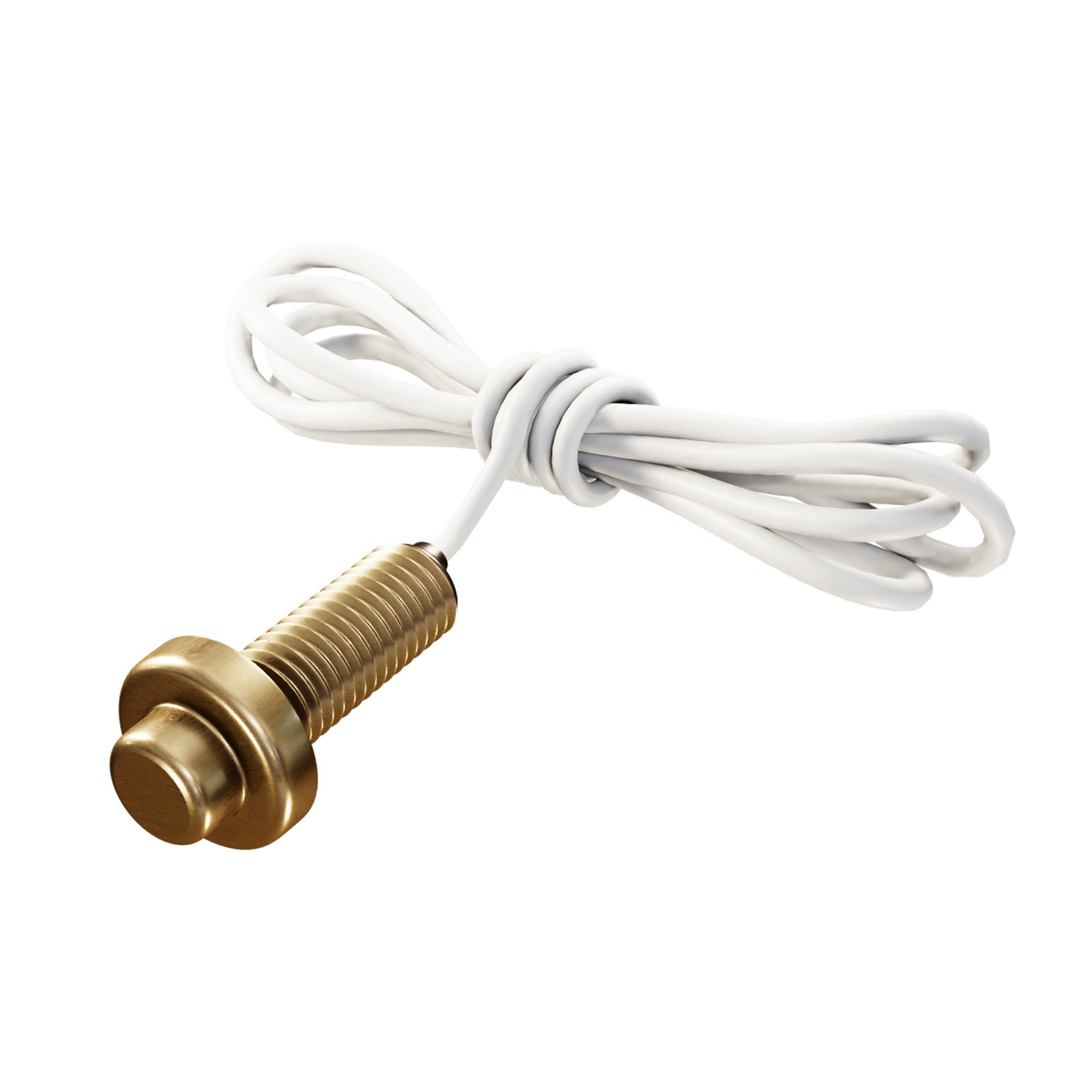
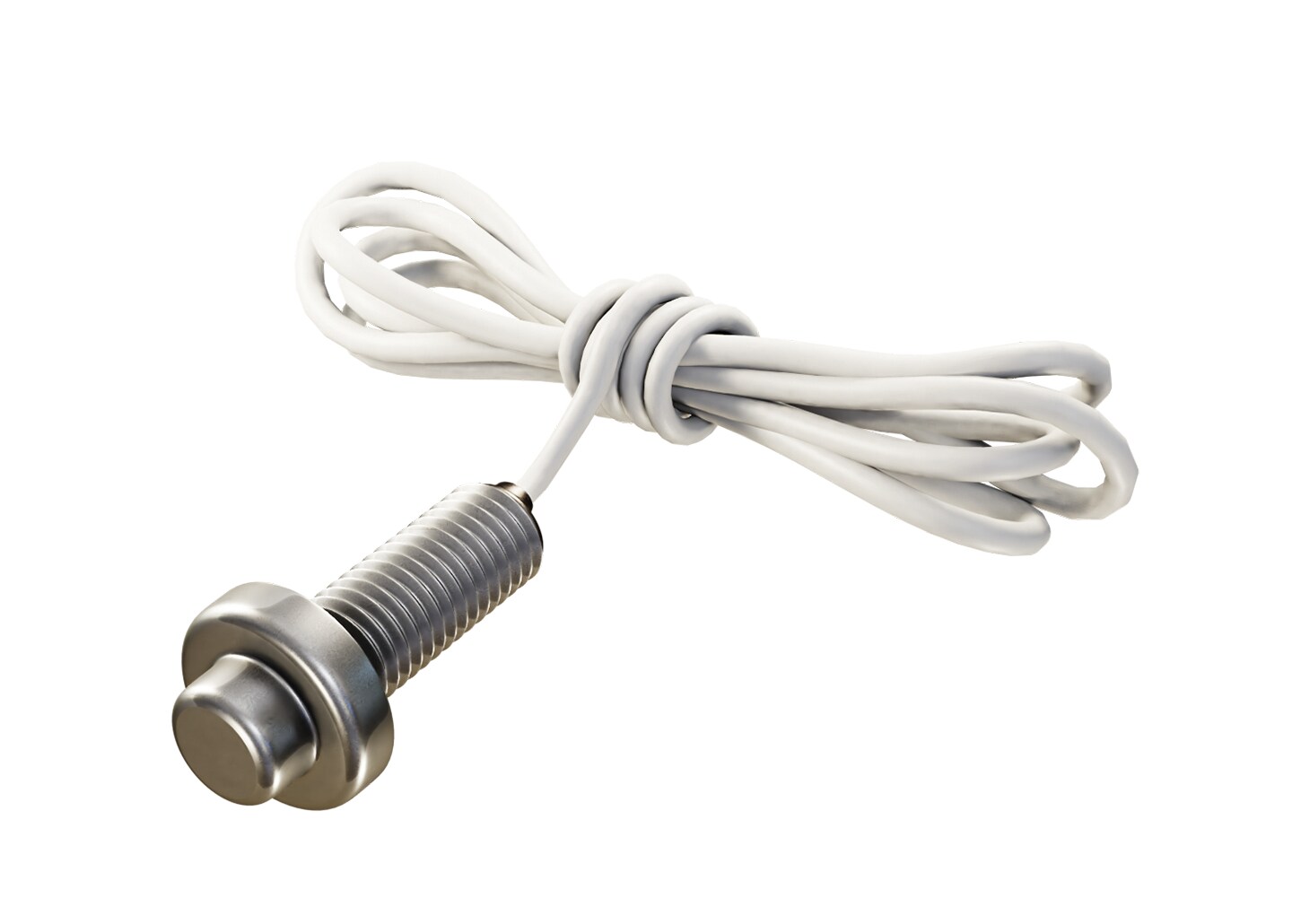
The ACI Nickel Flush Mount series consists of low-profile button sensors designed for temperature measurement in applications where aesthetics are a primary concern. The small form factor allows installation hidden underneath cabinets or shelving units, within decorative metal plates and trim, inside drywall, or from a ½" piece of conduit coming down from the ceiling or roof.
Operating Conditions & Performance
The series utilizes Nickel RTD sensors with a Positive Temperature Coefficient (PTC) curve conforming to Din 43760 standards and a temperature coefficient of 6370 ppm/°C. The sensor output is 1000 Ohms nominal at 21.1°C (70°F). Accuracy varies by temperature point: ±1.52°C (+/- 2.73°F) at -40°C (-40°F); ±0.4°C (+/- 0.72°F) at 0°C (32°F); ±0.17°C (+/- 0.34°F) at 21.1°C (70°F); ±0.56°C (1.00°F) at 54.4°C (130°F); and ±1.25°C (+/- 2.25°F) at 121°C (250°F). Sensor stability is rated at +/- 0.05% after 1000 Hours @ 150°C (302°F).
Operating temperature ranges differ by enclosure material: the A/1K-NI-PBS Plastic Button supports -40 to 70°C (-40 to 158°F) for operation and -40 to 85°C (-40 to 185°F) for storage. The A/1K-NI-BBS Brass and A/1K-NI-SBS Stainless Steel buttons support an operating range of -40 to 121°C (-40 to 250°F) with a storage limit of -40 to 85°C (-40 to 185°F). The series operates in humidity from 10 to 95% RH, non-condensing. Response time is 8 Seconds nominal (63% Step Change), and self-heating is 0.3°C/mW in still air with a maximum operating current of 5 mA.
Configuration Options
The series offers three standard configurations distinguished by enclosure material, each supplied with specific mounting hardware:
- A/1K-NI-PBS (Plastic Button): ABS housing with UL94-HB flammability rating. Dimensions are 1.00" (25.4mm) length x 0.750" (19mm) diameter; weight is 0.04 lbs. (18.15g). Includes an anchor.
- A/1K-NI-BBS (Brass Button): Brass housing. Dimensions are 1.20" (30.48mm) length x 0.700" (17.78mm) diameter; weight is 0.10 lbs. (45.36g). Includes spacers and a brass nut.
- A/1K-NI-SBS (Stainless Steel Button): 304 Stainless Steel housing. Dimensions are 1.20" (30.48mm) length x 0.700" (17.78mm) diameter; weight is 0.10 lbs. (45.36g). Includes spacers and a brass nut.
Electrical connections consist of two, 24 inch 22 AWG Etched Teflon colored lead wires with Silver Plated Copper conductors meeting Mil Spec 16878/4 Type E. Lead wire colors are Red/Red for the Nickel sensor type (Non-Polarity Sensitive). The series is available with an optional NIST Certificate.
Key Product Differences
Variants within this specific Nickel Flush Mount series differ primarily by enclosure material and resulting temperature limits. The Plastic Button model (A/1K-NI-PBS) has a lower maximum operating temperature of 70°C compared to the Brass (A/1K-NI-BBS) and Stainless Steel (A/1K-NI-SBS) models, which operate up to 121°C. Physical dimensions also vary: the Plastic model is shorter in length but wider in diameter than the metal variants.
PDF & Manuels

Afficher les évaluations et les avis
