



For applications that require confirmation of whether a specific temperature has been reached, heat-sensitive materials such as temperature labels and lacquers offer a simple and effective solution. These tools can provide reliable, cost-effective, and sufficiently accurate temperature indication for a broad range of industrial processes.
Innovative Solutions from DwyerOmega
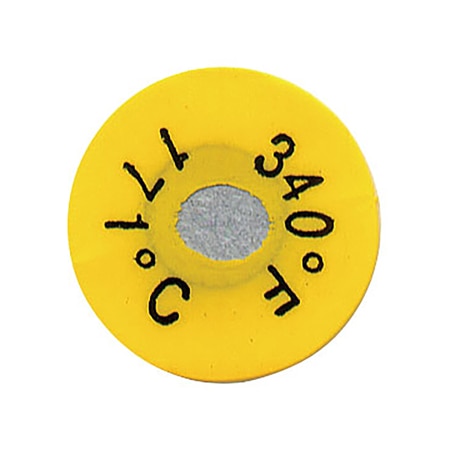
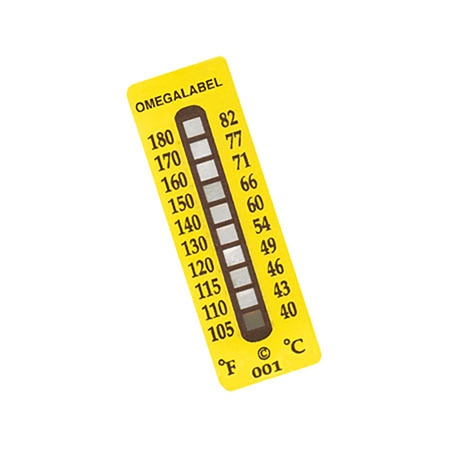
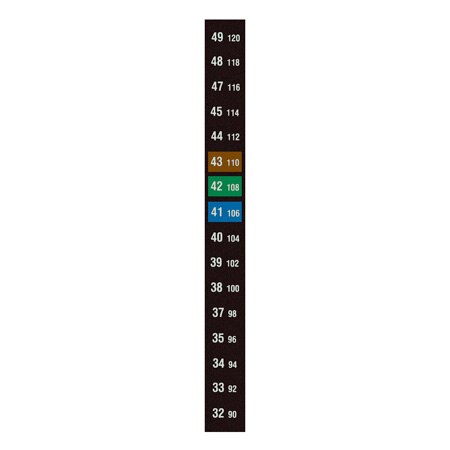
What is the Difference Between Non-Reversible and Reversible Temperature Labels?
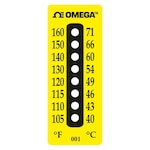
Temperature labels are generally categorized into two types: non-reversible and reversible. Each serves a distinct purpose depending on the monitoring requirements.
The primary difference lies in how the temperature indication behaves over time:
- Reversible temperature labels can change back and forth to indicate the present temperature and can be reused multiple times
- Non-reversible temperature labels provide a one-time indication that a specified temperature has been reached
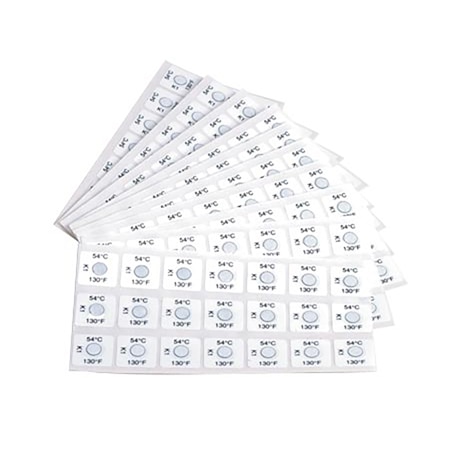
Non-Reversible Temperature Labels
Non-reversible temperature labels are a low-cost, peel-and-stick option designed
to provide local indications that a specific temperature has been reached, ensuring the integrity and safety of your products and equipment.
Once activated, the change is permanent, making them ideal for applications such as preventive maintenance, process validation, packaging/transportation, audit documentation, and warranty claims for internal components.

Reversible Temperature Labels
Reversible temperature labels provide quick, visible temperature monitoring through instant color changes. They respond to current temperature conditions and can change back and forth as needed.
Because of this, reversible labels can be used repeatedly and are ideal for applications requiring continuous or ongoing temperature monitoring. Their clear visual response allows for efficient temperature tracking at a glance in both industrial and laboratory environments.

Advantages Over Electronic Temperature Measurement Devices
This family of temperature indicators has several advantages over other methods of determining surface temperature:
- Low Cost and Easy Peel & Stick Application
- Local Indication of Surface Temperature
- Fast Response
What is a Calibrator and why is it an important device? Introduction to Instrument Calibration
DwyerOmega | Blog | Proper Temperature Sensor Calibration Calibrator Simulators vs. Physical Calibration Devices