

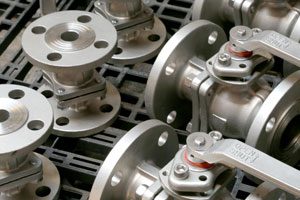
Valves play a critical role in controlling the flow of liquids and gases across a wide range of industrial, commercial, and process applications. With so many varieties available, selecting the correct type of valve requires careful evaluation of the application requirements.
Considering the following five factors can help ensure reliable performance and safety.
#1: Media Type
The characteristics of the liquid or gas being controlled are a primary factor in valve selection, as they directly influence material compatibility. When handling harsh or corrosive media, materials such as polytetrafluoroethylene (PTFE) and perfluoroalkoxy alkanes (PFA) are commonly used due to their chemical resistance and durability in aggressive environments.
For pressurized gas applications, metal valves are typically recommended, as they provide higher strength and improved safety compared to plastic alternatives.
#2: Application Considerations
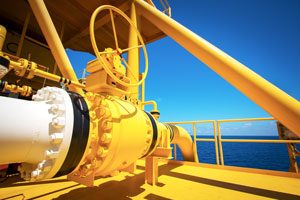
It is essential to understand the operating temperature, pressure, and flow rate of the application in which the valve will be operating in. These variables inform the selection of the correct valve sizing, which is one of the most important steps in selecting the right valve. An improperly sized valve can lead to operational issues within the valve itself or elsewhere in the system, such as excessive pressure drop or unstable flow control.
In most cases, metal valves are capable of withstanding higher temperatures and pressures than plastic valves, making them better suited for demanding process conditions.
#3: Valve Function
The intended function of the valve should be clearly defined before beginning the selecting process. Two-way valves are commonly used for simple on-and-off flow control, while three-way valves offer additional flexibility for diverting or mixing media.
It is also important to consider the valve’s normal operating position. If a valve is expected to remain open or closed most of the time, selecting a valve that is normally in that position and only changes state when energized can help ensure performance and extend its service life.
#4: Actuation Method
 Discover More
 Discover More
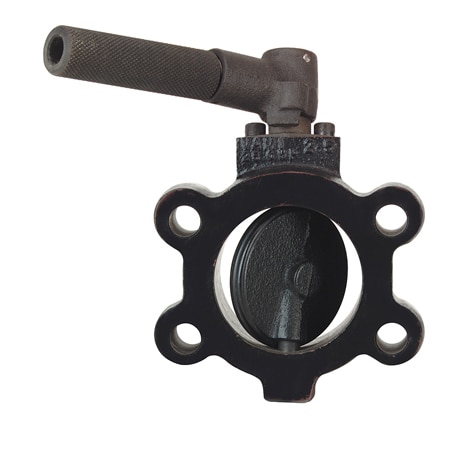
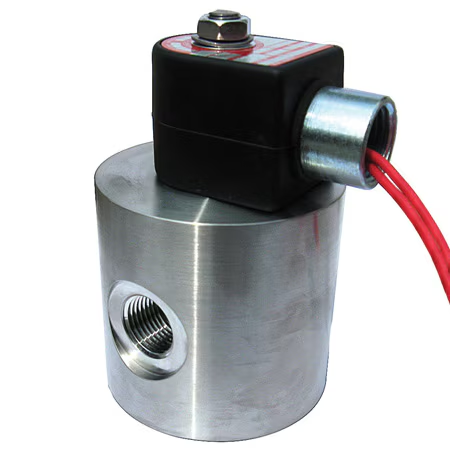
Another key consideration is how the valve will be expected to operate. Some applications require manual, hand-operated valves, while others require automated operation.
If automatic actuation is needed, the type of actuator must be selected based on system requirements. Common options include electric, pneumatic, and hydraulic actuators, each offering different advantages depending on available utilities, response time, and control requirements.
#5: Maintenance Requirements
Maintenance needs should also factor into valve selection, particularly in systems where routine cleaning or servicing is required. Ball valves are often a good choice in these situations, as they resist clogging and are among the simplest valve types to service.
Ball valves are also available in three-piece configurations, consisting of two end caps and a central body section. This design allows the valve body to be removed for cleaning or maintenance without disconnecting the end caps from the piping, reducing downtime and helping keep the process line in operation.
Innovative Solutions from

Series SMV2 Mini Stainless Steel Ball Valve

The Series SMV2 Mini Stainless Steel Ball Valve is designed for reliable shutoff in tight installations where space is limited and performance still matters. Its compact form factor makes it an ideal choice for panels, skids, and small-diameter piping systems where full-size valves are impractical.
Constructed with 316 stainless steel and PTFE wetted materials, the SMV2 offers excellent resistance to corrosion and abrasion while supporting high working pressures. PTFE ball seats ensure broad media compatibility and deliver dependable, bubble-tight shutoff for both gas and liquid service. A rigid nylon handle adds durability and allows for smooth, repeatable operation over the life of the valve.
Installation is straightforward thanks to multiple connection options, including female-by-female and male-by-female configurations. Combining durability, chemical compatibility, and cost-effective performance, the Series SMV2 provides a practical solution for precise flow control in compact systems.
Common Applications
- Gas flow control in confined spaces
- Liquid flow control in compact piping systems
- Instrumentation lines
- Small process assemblies
Series ZV2 Zone Valves
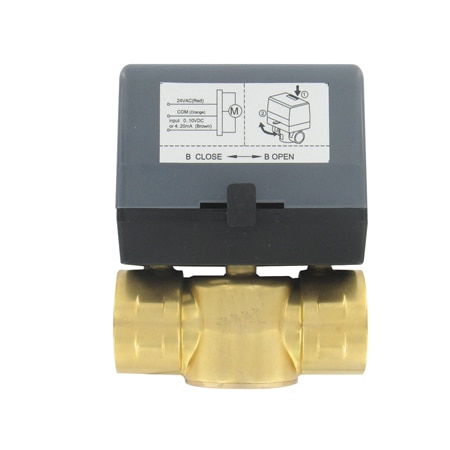
Series ZV2 Zone Valves are designed for dependable flow control in hot and cold water HVAC systems, where precise zoning is essential for maintaining occupant comfort and system efficiency. Commonly paired with thermostats, these electrically actuated valves regulate water flow to individual zones, allowing accurate temperature control across multiple spaces.
The ZV2 valve is driven by a bidirectional electric motor that opens or closes the valve on demand. Available in sizes from 1/2 inch through 1-1/4 inch, the series supports both 24 VAC and 120 VAC power supplies, making it suitable for a wide range of commercial and residential HVAC installations. Designed as direct replacements for many competitive models, ZV2 valves simplify retrofits and reduce installation time.
Installation and serviceability are further improved through a detachable actuator design. The actuator can be removed with a simple turn key, allowing the valve body to be installed or serviced independently. An externally accessible manual override lever provides added flexibility during commissioning or power interruptions. The actuator housing is constructed from fire-resistant plastic to enhance safety in mechanical spaces.
ZV2 models are offered with either floating or modulating control inputs. Floating models operate directly from a thermostat, while modulating versions accept industry-standard 4 to 20 mA or 0 to 10 VDC signals for integration with building automation systems. Modulating units also feature a motor time-out function that automatically shuts off power once the valve has completed its full stroke, helping extend motor life and reduce unnecessary wear.

DwyerOmega | Blog | What are Anemometers?
Written by: Dan Schultz
Published on: April 17, 2026