


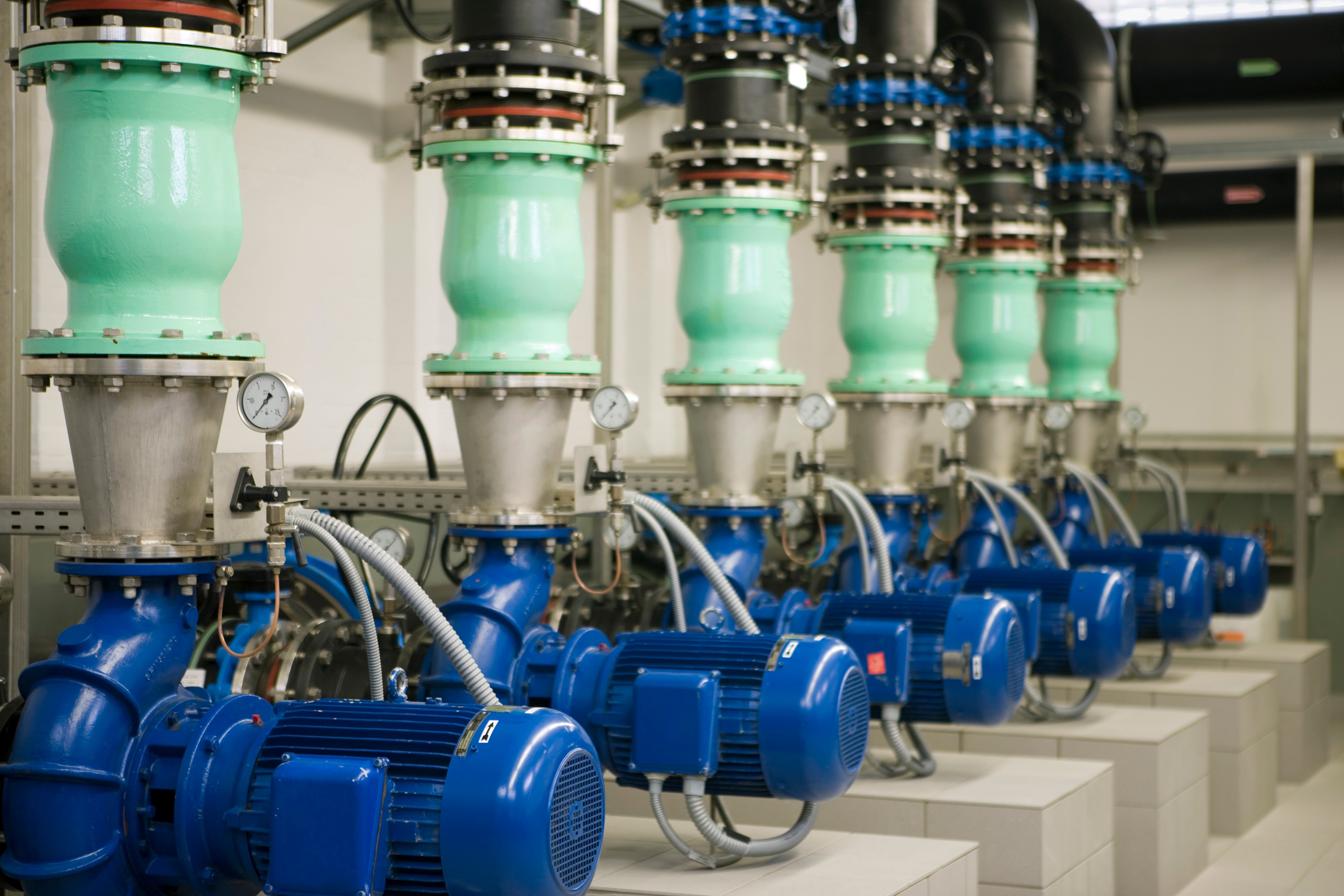
Pumps are critical components in systems ranging from air compressors and irrigation networks to heat exchangers and chilled water loops. And no matter the application, monitoring pump inlet and outlet pressure is essential for maintaining efficiency, protecting equipment, and ensuring safe operation.
If pressure rises too high or falls too low, there can be negative consequences: mechanical damage, system downtime, excessive energy consumption, and even safety hazards for personnel.
Most engineers select pumps to operate between 80 and 110 percent of their Best Efficiency Point (BEP), the point on the pump curve where efficiency, reliability, and longevity are maximized. Operating outside this range reduces performance and accelerates wear. Monitoring pressure is a key indicator of whether a pump is operating as intended.
Why Pump Inlet and Outlet Pressure Must Be Monitored
Pump pressure data provides early warning of developing issues long before visible failure occurs. Without pressure monitoring, problems such as overpressure, starvation, cavitation, or dead heading may go unnoticed until it's too late and catastrophic damage has already occurred.

Monitoring both inlet and discharge pressure allows engineers to:
- Confirm the pump is operating near its BEP
- Detect abnormal operating conditions early
- Protect piping, seals, shafts, and motors
- Reduce maintenance costs and unplanned downtime
- Improve overall safety and efficiency
The risks and failure modes vary depending on pump type, but pressure measurement is critical for all of them.
Positive Displacement Pumps
Positive displacement pumps trap a fixed volume of fluid and mechanically force it into the discharge piping. Because the pump continues to move fluid regardless of downstream conditions, overpressure is a major concern.
In dead head situations, where flow is blocked downstream, the pump does not shut off. Pressure continues to rise until something fails. Potential consequences include:
- Burst piping
- Pump lockup
- Broken pump shafts
- Overheated motors
- Serious safety risks to nearby personnel
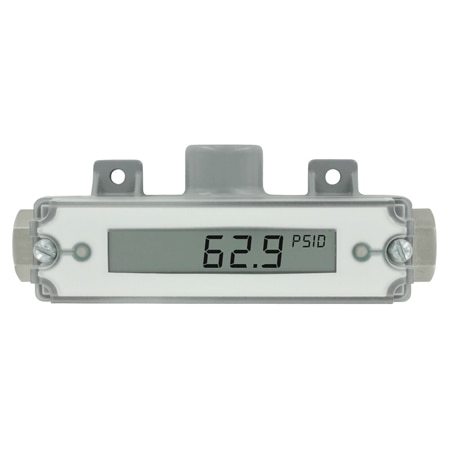
Because positive displacement pumps can generate extreme pressures very quickly, continuous pressure monitoring and proper overpressure protection are essential.
Centrifugal Pumps
Centrifugal pumps operate differently. A rotating impeller inside a volute accelerates fluid outward using centrifugal force. This motion converts rotational energy into pressure, pushing fluid through the discharge.
When centrifugal pumps operate outside their BEP, the impeller experiences asymmetrical hydraulic forces, leading to unstable mechanical conditions such as:
- High vibration levels
- Excessive hydraulic thrust
- Increased operating temperature
- Accelerated erosion and wear
At the dead head point of a centrifugal pump, flow stops. While this does not typically result in pipe rupture, the lack of flow means there is no heat removal. The pump consumes significant power, generates heat, and wastes energy, potentially causing long-term damage and efficiency losses.
Pressure monitoring helps identify these inefficient and damaging operating conditions before failure occurs.
Positive Displacement Pumps vs. Centrifugal Pumps
| Feature | Positive Displacement Pump | Centrifugal Pump |
|---|---|---|
| How it moves fluid | Traps a fixed volume and mechanically forces it downstream | Adds velocity with an impeller, then converts velocity to pressure |
| Flow behavior | Nearly constant flow (primarily set by speed) | Flow varies with system resistance (system curve) |
| Pressure capability | High to very high | Low to moderate (higher with multistage designs) |
| Viscous fluids | Excellent (often preferred) | Poor to moderate (performance drops as viscosity rises) |
| Overpressure risk | High (requires relief/bypass protection) | Low (pressure rise is limited by pump curve) |
| Deadheading (discharge closed) | Dangerous (pressure can climb rapidly) | Usually safe short-term, but heat can build up in the casing |
| Priming | Often self-priming | Typically not self-priming |
| Typical applications | Metering/dosing, hydraulics, oils, chemicals, high-pressure transfer | Water transfer, HVAC circulation, irrigation, cooling systems |
| Common pump types | Gear, piston/plunger, diaphragm, screw, lobe | End-suction, inline, multistage, vertical turbine |
Common Pressure-Related Problems Across All Pump Types
Some issues affect both positive displacement and centrifugal pumps and can be identified through pressure readings alone.
Pump Starvation
If a valve fails or a blockage occurs on the inlet side, the pump may become starved of fluid. Without sufficient flow:
- Fluid temperature rises
- Pump seals may fail
- Internal components can be damaged
A starving pump is typically indicated by low pressure on both the inlet and outlet sides.
Improper Priming
If a pump system is not properly primed during startup, there may be little or no flow. Without flow, heat cannot be dissipated, and operating pressure remains extremely low on both the inlet and discharge.
This condition can cause rapid pump failure and is easily detected through pressure monitoring.
Mechanical Failure
In cases such as a broken pump shaft or failed motor, inlet and outlet pressures will equal the static system pressure. Identifying this condition quickly prevents unnecessary troubleshooting and extended downtime.
Cavitation in Variable Flow Pump Systems
Modern systems using variable speed pumps or modulating valves are particularly susceptible to cavitation, the formation and collapse of vapor bubbles within the fluid.
Cavitation generates:
- Intense vibration
- Localized heat
- Surface erosion
Over time, these effects can destroy impellers and other internal components.
Fortunately, cavitation can often be prevented. The minimum inlet pressure required to avoid cavitation is typically known before pump selection. By monitoring inlet pressure and maintaining it above this minimum head pressure, the risk of cavitation is greatly reduced.
Using Pressure Transmitters to Protect Pump Systems
Monitoring pump inlet and outlet pressure is one of the most effective ways to protect pumping systems and ensure safe, efficient operation.
Pressure transmitters convert pressure measurements into analog signals that can be easily integrated into control systems, alarms, and data logging platforms. These devices allow engineers to detect overpressure, underpressure, flow abnormalities, and inefficient operating conditions before they cause damage.
Differential pressure transmitters are also commonly used to measure pressure differences across pumps, heat exchangers, chillers, and hydraulic systems. This data can be used to infer flow performance and identify developing issues early.
Pressure transmitters are widely used in commercial, industrial, and potable water applications, including air handlers, chillers, heat exchangers, and hydraulic systems. Regardless of pump type, continuous pressure monitoring provides valuable insight into system health and helps prevent costly failures.
Innovative Solutions from DwyerOmega
Series 3100D Smart Differential Pressure Transmitter
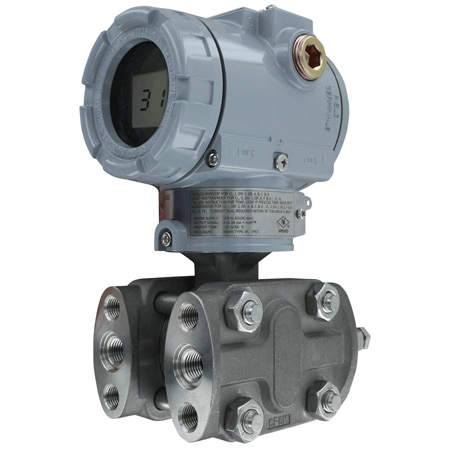
The Mercoid® Series 3100D Smart Differential Pressure Transmitter is a microprocessor-based, high-performance device designed for demanding industrial and hazardous area applications. Built for flexibility and ease of use, this differential pressure transmitter can be configured for differential pressure or level measurement using onboard zero and span pushbuttons, eliminating the need for a field calibrator and reducing installation time.
HART® communication enables advanced configuration, diagnostics, and integration into modern control systems. Internal software compensation corrects for thermal effects, improving long-term accuracy and stability across varying process conditions. Configuration data and sensor correction coefficients are securely stored in EEPROM, preserving settings during power loss or shutdowns.
With FM approval for use in hazardous locations and a wide 100:1 rangeability, the Series 3100D Smart Differential Pressure Transmitter can be tailored to fit a broad range of applications while maintaining reliable, repeatable performance.
Key Features
- Configurable via onboard zero and span buttons, no external calibrator required
- HART® communication for configuration and diagnostics
- Differential pressure or level measurement capability
- Thermal compensation for improved accuracy and stability
- EEPROM memory retains configuration and calibration data
- 100:1 rangeability for flexible application coverage
- FM approved for hazardous location use
Series PX3005-DIFF Rangeable, Differential Pressure Transmitter
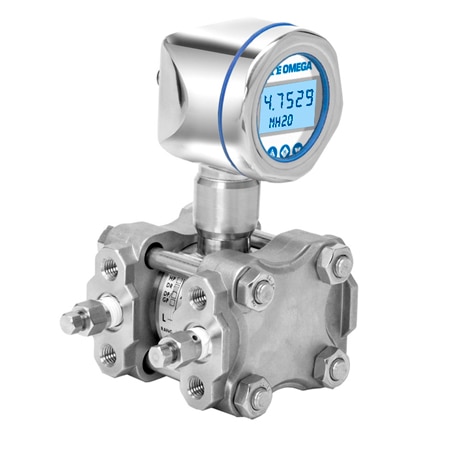
The PX3005-DIFF Rangeable, Differential Pressure Transmitteris a compact, high-accuracy instrument designed for reliable measurement in process automation, hydraulic systems, compressors, pumps, and tank level applications. The PX3005-DIFF Differential Pressure Transmitter combines a MEMS piezoresistive pressure sensor with advanced microprocessor-based signal conditioning to deliver excellent accuracy, stability, and overload protection in demanding industrial environments.
A unique encapsulated sensor construction enables the PX3005-DIFF Differential Pressure Transmitter to withstand high line pressures while providing superior protection against pressure spikes and overload events. A rugged 316 stainless steel enclosure with an IP67 rating makes the PX3005-DIFF Differential Pressure Transmitter suitable for washdown and harsh industrial installations.
A 5-digit backlit LCD provides clear, full-resolution indication of the process variable and can be configured to display pressure, output current (mA), or percent of span. The PX3005-DIFF Differential Pressure Transmitter supports linear or square-root output selection, adjustable pulsation dampening, and flexible field configuration of zero and span.
Wide rangeability allows the zero and span of the PX3005-DIFF Differential Pressure Transmitter to be adjusted from −100% to +100% of the Upper Range Limit (URL), with a minimum span of 30% URL. This capability allows unwanted fluid head offsets to be compensated for or enables the transmitter to be re-ranged to meet changing process requirements without replacing the instrument.
Key Features
- 0.075 % accuracy for precise differential pressure measurement
- Linear or square-root output for flow and differential pressure applications
- Adjustable pulsation dampening for unstable or noisy pressure signals
- 5-digit backlit LCD displays process variable, mA output, or percent of span
- Rangeable zero and span adjustment from −100 % to +100 % of URL (Upper Range Limit)
- MEMS piezoresistive sensor with encapsulated construction for overload protection
- 316 stainless steel, IP67-rated enclosure for industrial and washdown environments
DwyerOmega | Blog | What is a Pressure Gauge?
Written by: Dan Schultz
Updated on: October 30, 2025

DwyerOmega | Blog | What is an Intrinsically Safe Product?
Written by: Dan Schultz
Published on: March 30, 2026