


Thermocouples, which, when compared with other temperature sensors, have key advantages – such as wide temperature ranges, fast response times, and robust versatility – are commonly used throughout a wide variety of applications.
Mineral-insulated, integrally designed metal-sheathed (MIMS) thermocouples are particularly common due to their durability, high temperature tolerance, and accuracy. These thermocouples consist of matched thermocouple wires surrounded by insulating material – usually MgO.

This insulating material is compacted by rolling, drawing, or swaging until the sheath is reduced in diameter.
MIMS thermocouples have many advantages, including:
- Chemical isolation of wires from the surrounding atmosphere
- Shielding of thermoelements from sources of electrical interference
- Protection of the wires and insulation from damage due to shock
- Flexibility of the final assembly - allowing bending
However, MIMS thermocouples have their limitations. For applications operating at punishing temperatures, for example, issues – be it thermal drift, loss of mechanical integrity, or changes in electrical properties – start to become a major consideration, especially if particular care is not taken when selecting a thermocouple suitable for such an environment. When these issues are compounded, the thermocouple can fail. Changing out failed thermocouples costs money, slows down or cuts production, and can cause inconsistent product quality.
Examples of Thermocouple Failures
Hysteresis
Thermoelectric hysteresis is a significant factor contributing to instability in thermoelectric systems. This phenomenon involves a form of short-range order and disorder that manifests within a specific temperature range, typically between 200 and 600 °C, particularly in nickel-chromium (Ni-Cr) alloys, such as Type K thermocouples.
Hysteresis in this context refers to the lag between the input and output response of the material when subjected to thermal changes. As the temperature fluctuates within this range, the material may exhibit varying degrees of order and disorder, leading to inconsistencies in its thermoelectric properties. This behavior can result in a drift in accuracy, where the measured temperature deviates from the actual temperature being sensed.
Oxidation
Another important phenomenon that significantly impacts the accuracy of thermoelectric systems is oxidation. Specifically, nickel-chromium-aluminum (Ni-Cr-Al) alloys face substantial challenges when exposed to air at elevated temperatures, particularly above 500 °C. At these temperatures, the alloys undergo oxidative degradation, which not only shortens their lifespan but also adversely affects their thermal and electrical properties.
One noteworthy aspect of oxidation in these alloys is a specific form known as "green rot." This phenomenon occurs when chromium within the alloy is preferentially oxidized in environments with low oxygen content. In such conditions, the reduced availability of oxygen leads to uneven oxidation rates, primarily targeting the chromium component. This selective process can compromise the structural integrity of the alloy, resulting in increased brittleness and a loss of essential properties.
Contamination
Accuracy can also be significantly impacted by contamination, which poses a serious challenge for thermoelectric devices. In the case of MIMS thermocouples, the underlying design principle focuses on the uniform compression of finely divided mineral oxide insulation that surrounds the thermocouple wires and fills the protective sheath. This compression aims to create a tight seal for the internal volume, thereby minimizing the potential for contamination from external sources.
Typically, the insulation achieves a compression level of around 85% of its solid material volume through various manufacturing processes, such as swaging, rolling, or drawing. This high degree of compression is beneficial because it not only allows for the bending of the tubing—facilitating installation in tight spaces—but also enables the production of smaller diameter assemblies that are often required in specific applications.
However, this design also has inherent limitations. While compressed insulation is intended to create a barrier against contamination, it does not completely eliminate the risk of gas intrusion. Gases such as water vapor or air can still penetrate the insulation over time, which can lead to oxidation or other chemical reactions that compromise the material's integrity. Furthermore, the compression process can permit vapor diffusion of the elements that compose the thermocouple wires or the sheath material itself.
Research conducted by Bentley and Morgan highlights a particularly significant concern: the vapor-phase diffusion of manganese (Mn) through the magnesium oxide (MgO) insulation. Their studies indicate that this diffusion can have a profound effect on the calibration stability of the thermocouple.
As manganese diffuses, it alters the thermoelectric properties of the thermocouple, leading to inaccuracies in temperature measurements. This phenomenon underscores the critical need for careful consideration of material properties and environmental conditions when designing thermocouples.
Metal Fatigue
Metal fatigue significantly shortens the lifespan of thermocouples. This issue arises from the differing temperature coefficients of linear expansion between the sheath and the wires. When subjected to heating and cooling cycles, these materials expand and contract at different rates, creating internal strains.
As temperatures fluctuate, mechanical stress builds at the interface where the sheath meets the wires, leading to strain accumulation. Over time, this can result in microstructural changes and the formation of small cracks. Eventually, these cracks can propagate, causing catastrophic failure due to metal fatigue.
Humidity
There is a multiple effect of water vapor within the sheath. It is rapidly absorbed in the MgO, reducing the insulation resistance. Humidity intrusion can ruin a MIMS thermocouple assembly in as short a time as a few minutes. In lesser amounts, it destroys a protective oxide coating on Nickel-Chromium alloys, subjecting them to more rapid deterioration. The changes due to water vapor can be sufficiently severe as to make affected couples useless by reducing insulation resistance. This reduced resistance can result in misleading temperature readings, premature failure or even erroneous readings after open circuiting.
Water vapor can be introduced during thermocouple fabrication or repair, or even by changes in atmospheric pressure during air shipment or during long periods of storage (e.g., six months) at construction sites. Care must be taken of hermetic seals during shipment and installation.
Omega’s Super OMEGACLAD™ XL Thermocouple Probe
Omega’s Super OMEGACLAD™ XL Thermocouple Probe family represents a pinnacle shift in innovation for Mineral-Insulated (MI) cables and complete probe assemblies. These advanced temperature sensors are engineered to deliver exceptional performance even at minimal diameters, making them well-suited for use in harsh environments. Their design incorporates robust features that confer resistance to carburization, oxidation, and chlorination, ensuring reliability in demanding conditions.

The OMEGACLAD™ XL family excels in delivering superior performance despite its compact size, a fact supported by rigorous testing. Typically, Type K thermocouple probes with a diameter of 0.8 mm (0.032 inches) have a maximum exposure temperature of 700 °C (1260 °F). In contrast, Omega’s Super OMEGACLAD™ XL 0.8 mm probe has undergone extensive testing at 815 °C (1500 °F) for an impressive duration of three years, demonstrating seamless functionality throughout this period. Additionally, the probe has withstood exposure to temperatures as high as 1000 °C (1832 °F) for two months without any degradation in performance.
This remarkable durability not only extends the lifespan of the probes but also minimizes maintenance requirements, making them an ideal choice for applications demanding precision and reliability in extreme thermal environments.
Competitive Testing - The Study
In a controlled, comparative analysis, we conducted a series of long-term performance tests on our Super OMEGACLAD™ XL probes in comparison to similarly specified probes from several of our competitors.

This extensive evaluation focused on baseline accuracy, insulation resistance, and resilience under thermal shock conditions to assess performance and reliability.
Combatting Thermocouple Accuracy Drift
Accuracy drift is a significant challenge for industrial thermocouple probes. To address this issue, DwyerOmega utilizes high-purity fine grain powder magnesium oxide insulation, which minimizes stress on the thermocouple alloy wires during assembly. Additionally, our proprietary manufacturing process ensures that any moisture inside the sheath is eliminated before assembly, as even a small amount of moisture can expand and condense during temperature changes, leading to failures or inaccuracies. Furthermore, accuracy drift can occur when metal from the sheath leaches into the internal alloy wires over time. However, our Super Omegaclad®XL probes feature a dual-wall sheath designed to prevent such contamination, ensuring long-term reliability.
Baseline Accuracy Testing
Baseline accuracy, in the context of a thermocouple, refers to the inherent accuracy of a thermocouple’s output measurement when compared to a known or standard reference. Testing a thermocouple’s baseline accuracy essentially describes how closely the device’s temperature reading corresponds to the actual temperature – without any additional compensations or corrections applied to the measurement. Factors that can influence baseline accuracy include the measurement range of the thermocouple and environmental conditions – including noise, interference, and temperature gradients.
We performed baseline accuracy tests in which we evaluated the performance of our thermocouple probes at eight distinct temperature points, ranging from 100 oC to 1149 oC. Our insulation resistance testing involved measuring the baseline insulation resistance of thermocouples from various manufactures against our own Omega’s Super OMEGACLAD™ XL Thermocouple Probe family of products.

The testing was performed at ambient temperature using a 500 Vdc insulation resistance tester – a standard voltage level that is pivotal for assessing the integrity of insulation in real-world conditions, where robust performance is essential to ensure accurate and reliable temperature measurements.
This competitive testing allowed us to assess the precision and reliability of our probes across a broad spectrum of temperatures.
All 10 samples of the OMEGACLAD™ XL performed in spec, while 2 out of 3 competitors had failing samples – one competitor in particular had 5 samples fail (a 50% failure rate!).
Baseline Insulation Resistance
Baseline Insulation Resistance (BIR) is a measure of the integrity of electrical insulation, or its resistance to the flow of electric current. Essentially, BIR is a baseline measurement taken to assess the quality and effectiveness of the insulation in an electrical system or device – like a thermocouple.
BIR can assist in determining the health of the insulation before it undergoes any stress or degradation associated with application implementation.
We conducted a comprehensive baseline insulation resistance test on our Super OMEGACLAD™ XL thermocouples, as well as on several competitor probes, to assess the integrity of their insulation under standard conditions. The tests involved measuring the insulation resistance of each probe at ambient temperature using a 500 V DC source. This method is commonly employed to evaluate the dielectric strength of the insulation material and determine whether it can withstand electrical stress without failing. By performing this test, we aimed to compare the overall durability and reliability of our thermocouples in real-world environments.

Upon completing the series of tests, the results were clear: our Super OMEGACLAD™ XL probes exhibited zero insulation failures, showcasing their superior quality and performance. This is a testament to the high standards of manufacturing and the advanced materials used in our thermocouples, which ensure long-lasting, reliable insulation even under challenging conditions. In contrast, both of the competitor probes experienced insulation failures, highlighting the vulnerabilities in their designs. These failures could lead to inaccurate temperature readings, safety risks, and a reduced lifespan of the probes, making our product the clear choice for customers seeking dependable and high-performance thermocouples.
Thermal Shock
Thermal shock refers to the stress and potential damage that occurs in materials, including thermocouples, when they experience rapid temperature changes. For a thermocouple, thermal shock can lead to mechanical stress that may cause cracking or failure of the sensing elements. When a thermocouple is exposed to sudden temperature fluctuations, the differing expansion and contraction rates of its materials can compromise its structural integrity, leading to inaccurate readings or complete malfunction. This phenomenon is particularly critical in environments with extreme or rapid temperature changes, necessitating careful selection of materials and designs to mitigate the risks associated with thermal shock.

We performed a test in which we cycled the temperature for each probe with a 20 second heat up time from 29°C up to 1090°C and then a 40 Second cool down from 1090°C back to 29°C – and after 3 punishing rounds of 2000 cycles the DwyerOmega probes performed best in accuracy, durability and consistency.
Key Takeaways
These findings emphasize the pivotal role that the selection of high-quality materials and meticulous, purpose-driven design play in enhancing the performance, reliability, and durability of thermocouples in demanding and high-stress applications. The choice of materials is not merely a matter of accuracy and responsiveness; it is critical to the thermocouple's ability to maintain consistent and precise measurements over time, even in extreme and fluctuating conditions. The materials used influence key factors such as thermal conductivity, resistance to corrosion, and overall stability, all of which are essential for ensuring long-term functionality.
Equally important, the design and construction of the thermocouple are fundamental to its operational effectiveness. Careful consideration of factors such as mechanical integrity, insulation properties, and the potential for wear or degradation in harsh environments can significantly impact the device’s overall reliability and accuracy. A well-designed thermocouple is able to withstand the stresses of high-temperature, corrosive, or high-pressure settings, ensuring that it continues to perform as intended throughout its service life.
When selecting thermocouples for high-performance applications, investing in top-tier products, such as Omega's Super OmegaClad XL™ and standard Inconel probes, is critical. These products are specifically engineered to provide superior reliability and precise temperature measurements in a wide range of industrial environments, from power generation to aerospace, and from chemical processing to manufacturing. By choosing high-quality thermocouples that are built for resilience and performance, industries can achieve consistent, accurate temperature readings, improve operational efficiency, and reduce the risk of costly downtime or equipment failure.
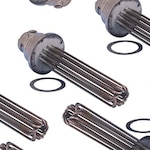
What Is An Immersion Heater? Types Of Immersion Heating Elements What is an Immersion Heater?
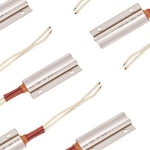
what is an industrial electric heater? What is an industrial heater?