


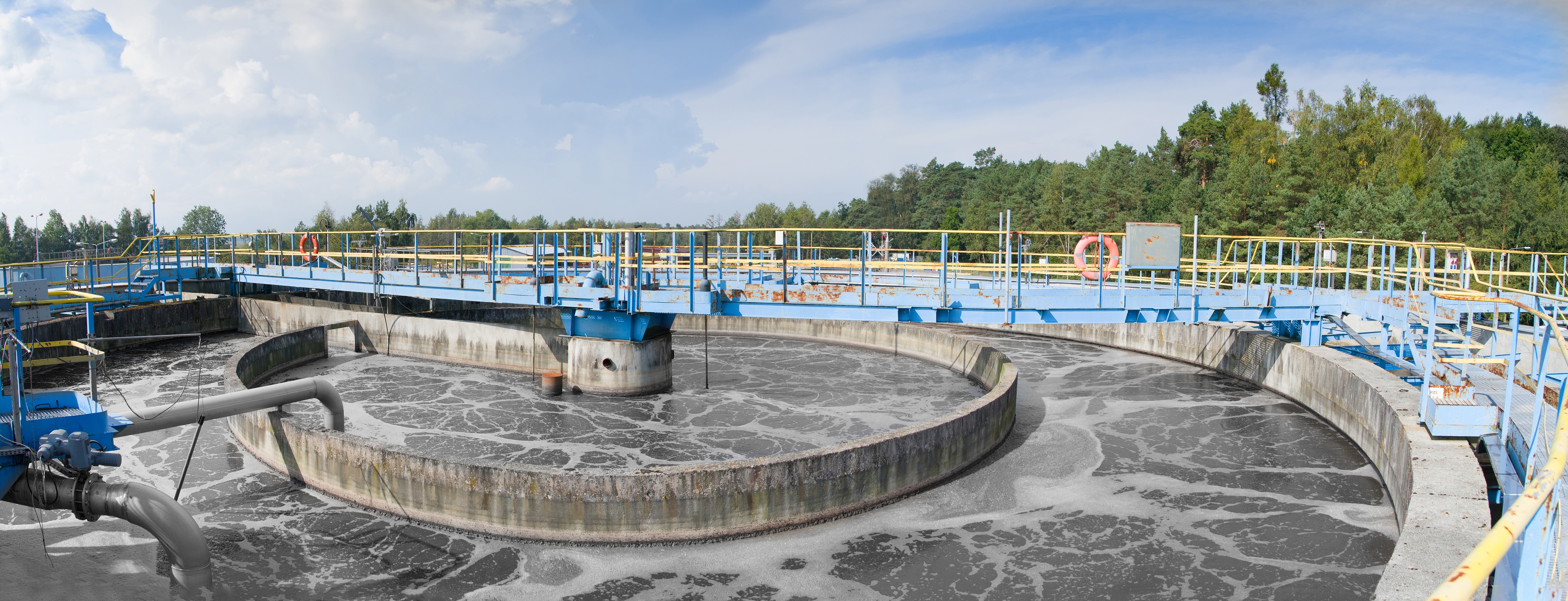
Submersible pressure transducers are designed to provide reliable water-level and pressure measurements while operating continuously in demanding underwater environments. Their construction helps protect against moisture and corrosion while allowing them to withstand the pressures and temperature variations encountered in submerged applications. When paired with electronic data recorders, these sensors enable continuous or near-continuous monitoring in wells, piezometers, surface water systems, and other underwater environments. This combination of durability, measurement accuracy, and continuous monitoring capability makes submersible pressure transducers valuable tools for collecting dependable data across a wide range of water monitoring and industrial applications.
A Deeper Understanding of Submersible Pressure Transducers
Electrical pressure transducers designed to be immersed in water (submersible pressure transducers) have been used by groundwater scientists since the early 1960s. These pressure-sensing devices, typically installed at a fixed depth in a well, sense the change in pressure against a membrane. Pressure changes occur in response to changes in the height, and thus in the weight of the water column in the well above the transducer. Substantial improvements in design, operation, and accuracy of electronic submersible pressure transducers and data recording systems have led to a significant increase in their use, replacing older systems in some applications.
Pressure Measurement & Control Solutions
Key Design and Selection Considerations
Selecting a submersible pressure transducer requires consideration of both the operating environment and the requirements of the measurement system. Material construction, sealing, depth and pressure limits, and signal output all play an important role in determining whether a transducer is suitable for a specific underwater application.
Material Selection
The choice of materials for a submersible pressure transducer impacts its durability and longevity in underwater conditions. Stainless steel is a common choice for shallow applications, while titanium offers superior corrosion resistance for deep-sea deployments

Sealing and Waterproofing
Proper sealing is essential to prevent water ingress, which can compromise sensor function. Hermetically sealed designs and robust cable entry points enhance the reliability of submersible pressure transducer in submerged environments.
Depth Rating and Pressure Limits
Selecting a submersible pressure transducer with an appropriate depth rating ensures it can withstand the intended operating conditions. Manufacturers specify depth and pressure limits based on sensor design, and exceeding these limits can lead to measurement errors or device failure.
Signal Output and Integration
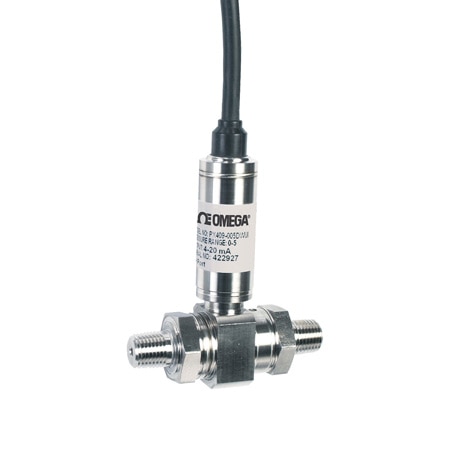
Submersible pressure transducer often provide analog (e.g., 4-20mA) or digital (e.g., RS-485) outputs. The choice of output type depends on the application’s data acquisition system and requirements for real-time monitoring and signal transmission over long distances.
Key Underwater Applications
Submersible pressure transducers are used across a wide range of underwater applications where reliable pressure and water-level measurements are essential. Their ability to operate while continuously submerged makes them well suited for monitoring conditions in environments ranging from groundwater systems to deep-water installations.
- Industrial Water and Wastewater Management
- Offshore Oil Drilling and Gas Exploration
- Groundwater and Wells
- Industrial Tanks
- Environmental Monitoring
Innovative Solutions from DwyerOmega
PX633 Submersible Pressure Transmitters with High Accuracy
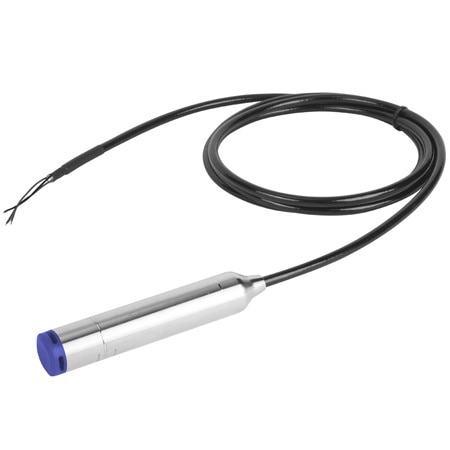
Designed for liquid-level measurement using hydrostatic pressure, the PX633 Submersible Pressure Transmitter combines high measurement accuracy with rugged construction for demanding submerged environments. Advanced microprocessor technology provides linear and temperature error compensation, while a fully potted design, dual sealing system, and reference tube condensation protection help maintain watertight integrity in turbulent process conditions.
The PX633 Submersible Pressure Transmitter features an IP68-rated 316 stainless steel housing and isolation diaphragm and is available in pressure ranges from 0 to 3 psi through 0 to 300 psi. Multiple accuracy classes are available, along with cable lengths suited to different installation depths. A 4 to 20 mA, two-wire output supports integration with monitoring and control systems, making the PX633 Submersible Pressure Transmitter well suited for applications requiring reliable, continuous liquid-level measurement.
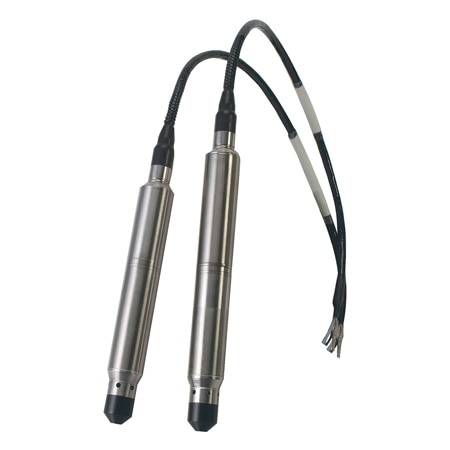
PX709GW Submersible Pressure Transducers with 4 Output Options
Designed for precision level, depth, and groundwater measurement, the PX709GW Submersible Pressure Transducer combines a precision micromachined silicon sensor with rugged 316L stainless steel construction for use in fresh water and compatible liquids. The series offers standard ±0.20% BSL accuracy or optional ±0.08% BSL high accuracy, with a 5-point NIST-traceable calibration included for reliable measurement performance.
The PX709GW Submersible Pressure Transducer is available with mV/V, 0 to 5 Vdc, 0 to 10 Vdc, or 4 to 20 mA outputs and supports gage, sealed gage, and absolute pressure configurations. A reinforced polyurethane cable and molded Neoprene boot support submersible installations, while optional lightning and surge protection is available on amplified models. With configurable cable lengths and measurement ranges from 10 inH₂O to 1000 psi, the PX709GW Submersible Pressure Transducer is suited for groundwater, surface water, tank level, well depth, wastewater, dewatering, and related monitoring applications.
DwyerOmega | Blog | What is a Pressure Gauge?
Written by: Dan Schultz
Updated on: October 30, 2025

DwyerOmega | Blog | What is an Intrinsically Safe Product?
Written by: Dan Schultz
Published on: March 30, 2026