Besoin d'aide? Appelez-nous: 1-800-663-4209



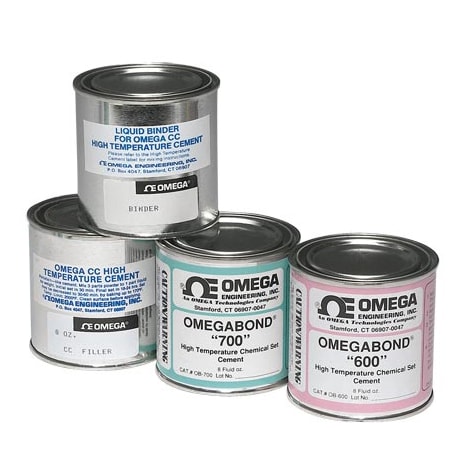
OB-BOND-CHEM-SET
Ciments haute température, à prise par réaction chimique
Modèles en stock
- Thermiquement conducteur
- Résistant aux chocs thermiques
- Isolant électrique
- Résiste aux huiles, aux solvants et à la plupart des acides
OB-BOND-CHEM-SET
À partir de
C$
46.74
Modèles en stock


Aperçu du produit
- ID de série OB-BOND-CHEM-SET
Les ciments chimiques durcissent ou se solidifient par une action chimique interne qui ne nécessite pas d'exposition à l'air. Les colles à prise chimique peuvent être utilisées dans des applications épaisses (épaisseur supérieure à 1/4")*.
CRITÈRES DE SÉLECTION DES COLLES
1. Type d'application † "Enrobage, scellement, encapsulation, assemblage, collage. Faut-il une couche épaisse ou fine de ciment ? Cela détermine si un ciment à prise à l'air ou à prise chimique peut être utilisé.
2. Considérations thermiques † "Quelle est la température maximale que le ciment doit supporter ? Quel degré de conductivité thermique est nécessaire ? Quel degré de dilatation thermique est autorisé ? Ces propriétés sont ensuite mises en correspondance avec le ciment approprié.
3. Solvant † " 10 % d'hydroxyde de sodium. Cependant, il est difficile d'éliminer le ciment durci.
4. Substrat † " Avec quels matériaux le ciment sera-t-il en contact ?
CRITÈRES DE SÉLECTION DES COLLES
1. Type d'application † "Enrobage, scellement, encapsulation, assemblage, collage. Faut-il une couche épaisse ou fine de ciment ? Cela détermine si un ciment à prise à l'air ou à prise chimique peut être utilisé.
2. Considérations thermiques † "Quelle est la température maximale que le ciment doit supporter ? Quel degré de conductivité thermique est nécessaire ? Quel degré de dilatation thermique est autorisé ? Ces propriétés sont ensuite mises en correspondance avec le ciment approprié.
3. Solvant † " 10 % d'hydroxyde de sodium. Cependant, il est difficile d'éliminer le ciment durci.
4. Substrat † " Avec quels matériaux le ciment sera-t-il en contact ?
PDF & Manuels

Afficher les évaluations et les avis
Rated 4 out of
5
by
John1157 from
Good but has limitations you have to consider
Works well, good adhesion. The grain size is fairly large so it can’t get into very fine gaps. This cement destroys glass fiber insulation on thermocouple wires which I found out only by wrecking several new thermocouples. I wish Omega would have indicated that before I wasted the time and money.
Date published: 2017-11-03
Rated 5 out of
5
by
Chuck from
Repair of Green Egg diffuser
Easy to follow instructions. Cement set up in advertised timeframe, and so far has held together well under high and long heat.
Date published: 2017-08-08
Rated 5 out of
5
by
Tomer from
OB600 product performed as advertised.
Product performed as advertised
Delivered more or less on time
Date published: 2017-06-16
Rated 4 out of
5
by
GoEl from
Good properties
I bought this for thermalcouple application and works good. Just be sure to purchase measurement tools to get the mixture correct (80/20 by weight). Once I was able to mix correctly the product works good.
Date published: 2017-01-09
Rated 5 out of
5
by
JimY from
Worked well, easy to use
Used to pot an RTD into a metal holder. Easy to use, worked fine.
Date published: 2026-09-15
Rated 5 out of
5
by
RCPG from
Aerospace Grade Cement
This cement bonding capacity is at par with published specifications. Have been using for over 5 years. So far each time, it has worked.
Date published: 2024-09-01
Rated 5 out of
5
by
RCPG from
Affordable Thermocouple Epoxy
This Epoxy is an economical solution for affixing Thermocouple/Strain Gages. We have used it over and over for several years. Never had any issues.
Date published: 2023-11-23
Rated 5 out of
5
by
Anonymous from
Fiber panel testing
Worked fine 2" above a 650C hot pipe, and kept my Thermocouples attached to fiber parts
Date published: 2023-03-01