One of the most important safeguards against contamination and spoilage in industrial food and beverage processing is, of course, proper temperature monitoring and control. From harvesting to packaging to distribution, temperature management is a critical control point that supports both operational reliability and regulatory compliance.
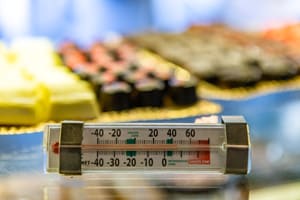
Foodborne Illness: Understanding the Risks
According to the CDC, 31 known pathogens can cause foodborne illness. In the United States, these organisms, including norovirus, Salmonella, and Staphylococcus aureus, account for 9.4 million illnesses each year. Beyond discomfort, these cases lead to approximately 56,000 hospitalizations and 1,300 deaths annually.
Rigorous and continuous monitoring and control of temperature is what helps prevent the growth of these pathogens.
Understanding the “Danger Zone”
Across all sectors of food and beverage manufacturing, the “danger zone” is the temperature range where bacteria multiply rapidly: 4 oC to 60 oC (40 oF to 140 oF). Raw meat, dairy products, ready-to-eat foods, produce, and partially cooked items are especially vulnerable when stored incorrectly.
In most systems, food moves through multiple temperature-controlled stages: receiving, prep, processing, chilling, packaging, cold storage, and transport. Precise monitoring and control parameters are needed at every one of these steps, limiting time in the “danger zone” and allowing harmful bacteria any time to multiply to unsafe levels.
Food Safety is a Process: Standards That Guide the Industry
Food safety is supported by a well-established regulatory framework. Oversight bodies such as the USDA, FDA, and FSIS set requirements for how ingredients and finished goods must be handled, and compliance is not optional; in fact, it is foundational to consumer protection and brand integrity.
A Systematic Approach to the Identification, Evaluation, and Control
One of the most widely adopted systems for managing food safety is Hazard Analysis and Critical Control Point (HACCP). HACCP provides a structured method for identifying biological, chemical, and physical hazards, determining where these hazards must be controlled, and establishing the limits and procedures required to ensure safety.
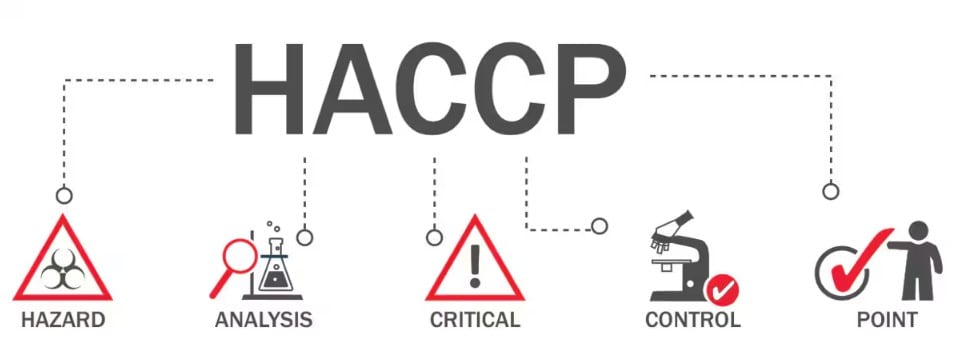
It is built around seven core principles that guide processors in preventing contamination and ensuring product safety.
- Principle 1: Conduct a hazard analysis
- Principle 2: Determine the critical control points (CCPs) - such as maintaining products below 4 °C (40 °F)
- Principle 3: Establish critical limits
- Principle 4: Establish monitoring procedures
- Principle 5: Establish corrective actions
- Principle 6: Establish verification procedures
- Principle 7: Establish record-keeping and documentation procedures
Innovative Solutions from

Series TS3 Digital Temperature Switch
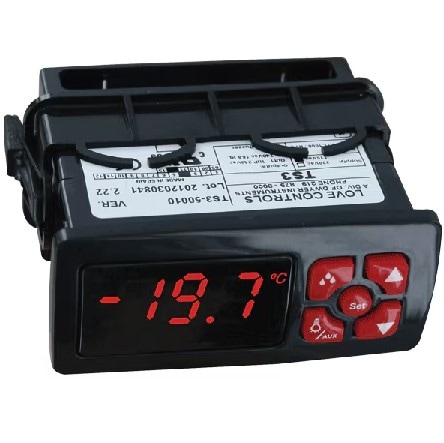
The Series TS3 Digital Temperature Switch is a compact, versatile digital temperature switch designed for accurate on/off control in industrial refrigeration, cold storage, and food processing environments.
Key Advantages:
- Field-selectable units and probe types streamline installation and standardization
- Built-in real time clock enables HACCP-compliant alarm logging
- Defrost cycle can start on a schedule or through the front panel
- Multiple power supply options simplify integration across diverse systems
- ± 1 % full scale accuracy and non-volatile memory for dependable operation
- Simple user interface with clear 3-digit display for easy configuration
Applications:
- Refrigerators and chillers
- Cold storage in food and beverage processing
- Food service equipment
- Medical sterilization and temperature-critical equipment
Grippers Introduction to Grippers