1-800-663-4209 | Bienvenue sur notre nouveau site Web, vous avez rencontré un problème ou un bug? Veuillez le signaler ici



PX26
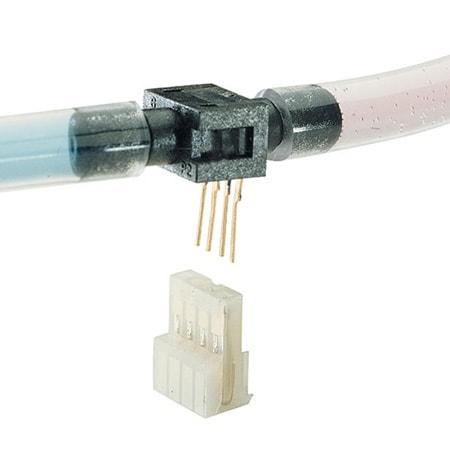
Capteurs de pression montés sur carte avec différentiel humide/humide
Modèles en stock
- Pression différentielle humide/humide
L'eau et de nombreux autres liquides peuvent être appliqués des deux côtés - Modèles à jauge et différentiel disponibles
- Conception miniature pouvant être montée sur carte PC
- Boîtier SIP à 4 broches
PX26
À partir de
C$
122.17
Modèles en stock


Aperçu du produit
- Précision ± 1 %
- Classe de précision > 0.25%
- Température compensée, max 50 °C
- Température compensée, min 0 °C
- Connexion électrique Broches
- Remarque sur la sortie électrique 1 psi = 16,7 mV ; 5 psi = 50 mV ; >5 psi = 100 mV ; 250 psi = 150 mV
- Type de jauge Capteur piézorésistif en silicium
- Hystérésis 0,2 % FS
- Résistance d'entrée 7,5 kΩ
- Matériaux en contact avec le fluide Fluorosilicone, Polyétherimide, Silicium
- Température de fonctionnement, max 85 °C
- Température de fonctionnement, min -40 °C
- Résistance de sortie 2500 Ω
- Signal de sortie Millivolt
- Taille du raccordement au process 5 mm
- Type de raccordement au process Tige
- Erreur de Répétabilité 0,2 % FS
- Temps de réponse 1 ms
- ID de série PX26
- Plage de réglage de l'amplitude ± 3,0 mV
- Stabilité 0,005
- Remarque sur la stabilité Stabilité sur 1 an : 0,5 % FS
- Tension d'alimentation 10 Vcc
- Effet thermique sur l'erreur zéro, max 1 mV, 1 % lecture
- Poids 2 g
Les capteurs de pression de la série PX26 d'OMEGA sont dotés d'une technologie silicium de pointe qui permet aux deux côtés du diaphragme de traiter des liquides. Un joint conducteur unique entre le diaphragme en silicium et le boîtier en plastique permet des applications humides/humides et des coûts de production inférieurs à ceux des capteurs en silicium à fil d'or classiques. Cette nouvelle construction dispose d'un diaphragme plus grand que les capteurs en silicium traditionnels, ce qui se traduit par une stabilité à long terme accrue.

Accessoires
accessories
Tube flexible en plastique, 100 pi, DI = 3/16 po, DE = 5/16 po
C$37.50 / spool
0 En stock
cables
Afficher les évaluations et les avis
Rated 3 out of
5
by
Jack2019 from
Sometimes OK but sometime not
We bought this a month ago for our water pressure loop test, initally it was good and be sensitive to pressure drop changes and read correctly.
However, after switching and squeeze air out of in and outlet lines, found the connection was easy to break and get wet so readings were really out of range.
Date published: 2019-01-23
Rated 5 out of
5
by
Cray from
Pressure measurements inside small ID thin tubing
We use these pressure gauges in combination with the PLATINUM™ Series Digital Panel Meters (DP8PT-006) to determine the pressure inside thin flexible tubing as water is flowing inside. WE use three of these pressure gauges along the tubing and can determine the pressure changes with the experimental conditions. They work well and are responsive.
Date published: 2024-02-14
Rated 5 out of
5
by
WJB ENTERPRISE from
Filter Supplies
This order and every one I have placed with Omega has been handled very efficiently.
Date published: 2023-03-15
What voltage regulator should be used for this transducer? Is there one commercially available?
Nominal excitation for the PX26 Series sensor is a regulated 10VDC. With 10VDC applied the output signal from the PX26 would be 0 to 16.7 mVDC for the 1 psi unit, 0 to 50 mVDC for the 5 psi unit and 0 to 100 mVDC for the 15, 30, 100, and 250 psi units. Current draw from the power supply would be 2 mA per unit. We offer a regulated power supply part# FAR-1 that would supply regulated 10VDC.
Date published: 2020-06-09
The PX26-001DV shows an output of 10mv/V, according to your selector menu on this web page, but all data sheets indicate 1 psi models as having 0-16.7 mV output when connected to a 10V DC power supply. Which is it?
The error is in the part number builder in the product page. The 1 PSI range units in both the Differential and Gage models have a 1.67 mV/V sensitivity. Having the error corrected
Date published: 2023-02-14
We are using the +- 1 psi differential pressure sensor. When we connect the pressure sensors as shown in the data sheet (with 10V input), we are measuring the ouput voltage to 2.6V. Do you know why, is it an off-set voltage?
Are you wiring the sensor differentially (power connections separate from signal connections). If the negative signal connection and the negative excitation are connected to a common point you will get a high voltage signal output. If the connects are not commoned together you most likely have damaged sensor sensor
Date published: 2021-04-22
I plan to use this transducer with electrically conductive liquids. Is this device electrically insulated from the fluid to prevent any short circuit between the fluid and the sensing circuit? Also, is it suitable for use under a magnetic field? Thanks!
It should be isolated from the media. As long the conductive liquid will not attack it. Input media are limited to those media which will not attack polyester, flurosilicone, or silicon, such as oils, lacquer thinner, hydraulic fluid, most petroleum products, water and salt water. Not recommended for freons. This can't be used under magnetic field.
Date published: 2025-10-24
I'm using a PX26-005DV to measure the pressure drop . At high flow rates, the sensor works but at low flow rates where pressure drop is 0.01 psi, the sensor gives negative value. Is it because of range of the sensor? would PX26-001DV solve the problem?
Hoomichi, you are trying to measure a pressure drop that is too low to be captured by this sensor. This is a low cost unit that can measure at quarter percent accuracy. Please see the PX409 differential series models for better measurement. For more questions please email pressure@omega.com
Date published: 2020-12-30
Do you have recommended NI DAQ to log pressure measured by PX26?
We would not have any information on what NI DAQ would work with the PX26 transducer.
Date published: 2023-07-06
We are using an omega sensor that looks to be from the PX26 family for differential pressure. The sensor is etched with the code 6BF60 and 201033N. We want to have a spare. Can anyone equate the sensor we have with a current model we can purchase?
Code 6BF6D is the equivalent to our PX26-005DV
Date published: 2021-05-19
This sensor says that it is for wet applications.... Is it possible to use this with air, or would that not work well/correctly?
Any of our sensors that we state are for wet application will also work fine use with gases. Air would be just fine.
Date published: 2021-04-08